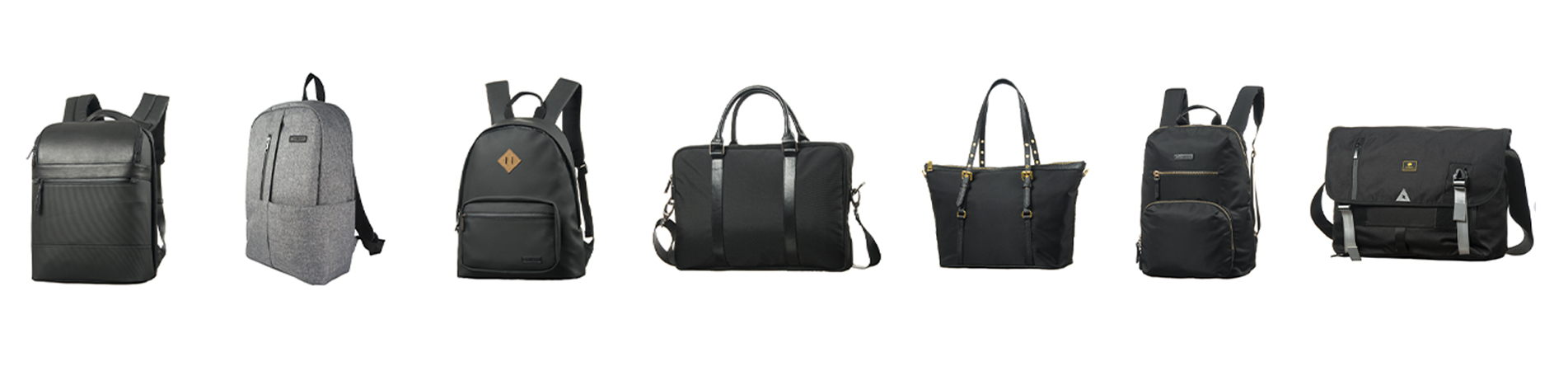
china backpack manufacturer
Home

Blog

Blog

  • What Is a TSA-Approved Makeup Bag? Full Guide 2026 From Cosmetic Bag Factory
    What Is a TSA-Approved Makeup Bag? Full Guide 2026 From Cosmetic Bag Factory Apr 10, 2026
    If you frequently fly, you've probably seen this scene at airport security: passengers frantically rummaging through their luggage to find skincare products, only to be told to discard their beloved cosmetics because they don't comply with regulations.   When the cosmetic bag fails the security check A TSA-approved makeup bag is the perfect solution to this problem. As a professional cosmetic pouch factory and cosmetic pouch manufacturer, we understand the huge market demand for compliant travel storage products. This article will provide a detailed breakdown of TSA-approved makeup bags, including their definition, size requirements, material selection, and how to create competitive products through factory customization.   I. What Is a TSA-Approved Makeup Bag?   Official Definition According to the U.S. Transportation Security Administration (TSA), a TSA-approved makeup bag is a clear, resealable, quart-sized bag designed for carrying liquids, gels, and aerosols through airport security. The core function of a clear quart-sized bag is to comply with TSA's famous "3-1-1 liquid rule": 3: Each liquid container must be no more than 3.4 ounces (100 ml) 1: All containers must fit into 1 clear bag 1: Each passenger is limited to 1 bag                                      TSA 3-1-1   Why Must It Be Transparent? TSA requires makeup bags to be completely transparent for three reasons: Faster security checks: Officers can inspect contents without opening the bag Prevent concealment: Transparent material ensures no prohibited items are hidden Standardized process: Uniform visual standards speed up security lines     II. TSA Makeup Bag Exact Size Standards   Official Size Requirements TSA is relatively flexible with size, but the key standard is a capacity of no more than 1 quart (~0.95 liters). The recommended flat dimensions are 6 × 9 inches (~15.2 cm × 22.9 cm). In practice, TSA officers usually make a visual judgment, so slightly larger sizes like 7 × 8 inches or 7.5 × 8.5 inches are generally accepted. Key Size Parameters Parameter Standard Requirement Suggested Factory Spec Notes Flat dimensions ~6" × 9" 7"-8" × 8"-9" Some flexibility allowed Depth/Thickness None 2"-3" (5-7.6 cm) Must fit flat in security tray Total capacity ≤1 quart (0.95 L) ~57.75 cubic inches Calculated: length × width × height Transparency 100% clear Clear PVC/TPU/EVA No colored or semi-transparent material Closure Resealable Zipper or snap Must close completely   Common Compliant Size Examples Basic: 6 × 9 × 1 inch (standard Ziploc bag)    6" × 9" × 1"Example   Practical: 7 × 8 × 2.8 inch (popular on Amazon)    7" × 8" × 2.8"Example Large capacity: 7.5 × 8.5 × 2 inch (suitable for long trips)    Large capacity example   III. TSA Makeup Bag Material Selection: Factory Production Guide   Material choice directly affects compliance, durability, and cost. Here's a comparison of three popular materials: 1.  PVC (Polyvinyl Chloride) Features: Extremely high transparency, meeting TSA visual inspection requirements  Low cost, suitable for mass production  Strong durability, reusable  Recommended Use Cases: Budget travel kits, promotional giveaways, airline custom products 2. TPU (Thermoplastic Polyurethane) Features: More environmentally friendly than PVC, chlorine-free and plasticizer-free  Good flexibility, does not harden easily at low temperatures  Naturally glossy surface, giving a premium feel  Recommended Use Cases: High-end brand customization, eco-friendly product lines, sales in cold regions 3. PEVA/EVA (Polyethylene Vinyl Acetate) Features: The most environmentally friendly option, PVC-free Excellent waterproof performance Soft texture, comfortable to the touch   Recommended Use Cases: Sustainable brands, maternity and baby market, collaborations with high-end beauty brands Material Selection Recommendations Customer Need Recommended Material Estimated Cost per Bag Production Lead Time Low-cost bulk PVC $0.50-$1.20 15-20 days Mid-High-end TPU $1.20-$2.50 20-25 days Eco-friendly PEVA $1.50-$3.00 20-25 days   IV.  2026 TSA Regulations Update & Product Opportunities   1. CT Scanner Technology In 2026, TSA will deploy advanced CT scanners at airports like ATL, JFK, and LAX. These scanners allow certain liquids over 100 ml to pass through security, currently limited to 11 specific items (e.g., medications, baby food).   Airport Luggage CT Scanner Implications for Manufacturers: The traditional 3-1-1 rule remains dominant; demand for clear makeup bags remains strong Opportunity to develop dual-size products: standard quart bag + large medical liquid bag Future selling point: develop "CT-scan-friendly transparent materials"   2. TSA PreCheck & CLEAR Membership Growth With more travelers using TSA PreCheck and CLEAR, demand for high-quality, durable makeup bags is increasing. These consumers are willing to pay extra for leak-proof designs, reinforced seams, and stylish appearances.   V.  Factory Customization Solutions: Creating a Best-Selling TSA Makeup Bag   As an experienced cosmetic pouch supplier, we offer comprehensive OEM cosmetic pouch and ODM cosmetic pouch services to help brands develop market-leading products. Our custom cosmetic pouch solutions cover every aspect from design to production. Core Design Elements A successful TSA makeup bag should include:   1. Structural Innovation Leak-proof design: triple-seal seams + waterproof zipper Stand-up bottom: allows the bag to stand on countertops Internal compartments: 2-3 small partitions to prevent bottles from colliding   2. Functional Details Reinforced handle: easy to pull from luggage Label printing: "TSA Approved" or "3-1-1 Compliant" for consumer confidence Easy-to-clean surface: smooth material for wiping cosmetic residues   3. Branding Space Transparent window + branded border for logo display Custom zipper pulls (metal or silicone) Compatible product sets: e.g., travel bottle kits   Production Specifications Suggestion Size: 7.5 × 6 × 2.5 inch or 7 × 8 × 2.8 inch Material: 0.3 mm TPU or 0.25 mm PVC Zipper: #5 nylon waterproof, matching bag opening Seas: high-frequency heat press + reinforced stitching, withstand 5 kg pull Printing: screen or UV printing, supports 4-color logo   For brands seeking personalized cosmetic pouch options, we provide flexible customization including size adjustments, material combinations, and unique branding elements. Whether you need private label cosmetic pouch solutions or designer cosmetic pouch collections, our team can bring your vision to life.   VI. FAQ   Q1: Must TSA makeup bags be fully transparent? Can they be colored? A: Must be fully transparent. TSA does not accept colored, printed, or semi-transparent bags. Edge, zipper, or handle accents can be colored.   Q2: Can I carry two TSA makeup bags? A: No. Each passenger is limited to one quart-sized bag. Extra liquids must go in checked luggage.   Q3: Do solid cosmetics (powder, lipstick) need to go in the TSA bag? A: No. Only liquids, gels, aerosols, and pastes follow 3-1-1 rules.   Q4: Can TSA PreCheck passengers use regular makeup bags? A: 3-1-1 rules still apply, though PreCheck passengers usually don't need to remove the bag for separate screening.   Q5: Can silicone bags (like Stasher) be TSA-approved? A: Yes, if they are transparent, quart-sized, and resealable. TSA focuses on visibility and capacity, not material.   Conclusion: Capturing the TSA Makeup Bag Market Opportunity   TSA-approved toiletry bags are not just travel essentials—they are a growing niche market. With global air travel rebounding and stricter security standards, demand for compliant, high-quality, well-designed clear makeup bags will continue to rise. As a professional cosmetic case factory offering comprehensive OEM/ODM services, our manufacturing process covers everything from material selection and structural design to brand customization. Whether you are a brand looking for OEM production or a retailer seeking white-label products, we can create high-quality bags that meet market demands in accordance with the latest TSA standards.     Author        

      Tags :

  • Why Your Travel Makeup Bag Fails: 5 Factory-Proven Fixes for 2026
    Why Your Travel Makeup Bag Fails: 5 Factory-Proven Fixes for 2026 Apr 09, 2026
    The best travel makeup bag combines TSA-friendly transparency, hotel-ready hanging design, and airline-grade drop protection — all engineered into one lightweight organizer. As an ISO 9001-certified OEM/ODM cosmetic bag factory with 15+ years of manufacturing experience, we've produced 2.3 million units for global beauty brands, retailers, and Amazon sellers. This guide reveals the 5 essential features that define a truly travel-friendly makeup bag, based on our production data, quality testing protocols, and feedback from 500+ B2B clients worldwide.   I. Five Essential Features of a Travel Makeup Bag   1. TSA-Friendly Design — For Seamless Airport Security What makes a makeup bag TSA-compliant? Transparent PVC window (≥90% light transmittance): Allows security personnel to identify contents without opening Independent liquid pouch: Dedicated 100ml refill bottle storage, compliant with TSA 3-1-1 rule Lay-flat construction: Completes security screening in under 30 seconds   Factory Manufacturing Standards vs. Low-Quality Products: Component Factory Standard Common Low-Quality Issues Transparent window 0.3mm eco-friendly PVC/TPU Cracks, yellowing, poor visibility Liquid compartment Waterproof TPU + sealed zipper Leakage contaminating other items Bottle securing system Elastic webbing or Velcro straps Bottles shift and collide during transit       SY-CB260128 PVC Bag       Independent Liquid Pouch       Bottle Fixing Strap      Our TSA-approved clear cosmetic bags are tested to reduce customs clearance time by 30% and comply with TSA, EU, and UK aviation security standards.      2. Hanging Storage System — For Hotel & Bathroom Use Hotel bathroom counters average less than 0.5 square meters. Our hanging makeup bag design with 360° rotating metal hook converts vertical space into organized storage. Engineered Three-Layer Structure: Top: Aircraft-grade aluminum hook (3kg load capacity, 360° rotation) Middle: Transparent TPU zippered compartment (frequently used items, instant visibility) Bottom: Anti-bacterial brush slots + breathable mesh partitions (dry/wet separation Back: Waterproof PE lining (prevents wall water stains) OEM Customization Available: Hook finish (matte black, rose gold, chrome), compartment configurations, and branded interior labels.   Hanging Makeup Bag 3. Pressure-Resistant Protection — For Checked Luggage Survival Checked baggage faces 20kg+ stacking pressure and rough handling. Our protection system uses scientifically engineered shock-absorbing materials, verified through ISTA 3A drop testing and compression resistance protocols. Two-Tier Protection System: Material Weight Waterproof Durability Best For 420D-600D Nylon/Polyester ⭐⭐⭐ Light ⭐⭐ Medium ⭐⭐⭐ High Daily travel, lightweight luggage Canvas/Cotton-Linen ⭐⭐ Medium ⭐ Low ⭐⭐ Medium Boutique hotels, artisanal branding Transparent PVC/TPU ⭐⭐⭐ Light ⭐⭐⭐ High ⭐⭐⭐ High TSA compliance, trend-forward design PU Leather / Vegan Leather ⭐⭐ Medium ⭐⭐⭐ High ⭐⭐ Medium Corporate gifts, premium positioning Recycled Ocean Plastic (rPET) ⭐⭐⭐ Light ⭐⭐ Medium ⭐⭐⭐ High ESG brands, sustainable marketing      Basic Protection               Hard-Shell Upgraded Version Ideal for: Glass serum bottles, powder compacts, and luxury skincare packaging.   4. Space Efficiency Engineering — 40% More Storage Traditional makeup bags waste 35-40% of vertical space. Our three-layer vertical architecture maximizes every centimeter: Bottom layer (15cm depth): Large-volume skincare, sprays, sunscreen — with removable rigid dividers to prevent tipping Middle layer: Daily skincare routine items — PVC/TPU windows with offset zipper openings for visibility without rummaging Top layer: Flat accessories — eyeshadow palettes, brushes, jewelry — with transparent mesh and waterproof backing Result: 20cm bag height delivers 40% more effective storage than conventional single-layer designs. Example of Scientific Organization     5. Modular Multi-Function Design — One Bag, Multiple Uses Modern travelers demand versatility. Our modular OEM/ODM system enables seamless scenario switching: Main bag emptied: Converts to clutch or handbag Internal pouches: Detachable as evening event bags or in-flight organizers Modular components: Mix-and-match compartments for custom product lines 2026 Innovation: We now support smart tracking integration (built-in AirTag/Tile pockets) and antibacterial silver-ion linings for health-conscious brands.       OEM/ODM Innovative Service: We support modular combination design, allowing clients to freely mix functional components to create differentiated products.   II.  Popular Travel Makeup Bag Materials in 2026 (Factory Tested)   Material Weight Waterproof Durability Best For 420D-600D Nylon/Polyester ⭐⭐⭐ Light ⭐⭐ Medium ⭐⭐⭐ High Daily travel, lightweight luggage Canvas/Cotton-Linen ⭐⭐ Medium ⭐ Low ⭐⭐ Medium Boutique hotels, artisanal branding Transparent PVC/TPU ⭐⭐⭐ Light ⭐⭐⭐ High ⭐⭐⭐ High TSA compliance, trend-forward design PU Leather / Vegan Leather ⭐⭐ Medium ⭐⭐⭐ High ⭐⭐ Medium Corporate gifts, premium positioning Recycled Ocean Plastic (rPET) ⭐⭐⭐ Light ⭐⭐ Medium ⭐⭐⭐ High ESG brands, sustainable marketing   Factory Recommendation: For long-haul travel, we recommend 420D-600D nylon base + TPU transparent windows — optimal balance of weight, durability, and compliance.   III.  Travel Makeup Bag Recommendations by Trip Type   Business Travel (1-3 Days) Profile: Efficiency-focused, professional aesthetic Configuration: Size: 20cm × 15cm × 7cm Structure: 1 main compartment + 1 divider pouch Material: Soft-touch PU leather Customization: Debossed logo, gift-box packaging 2. Vacation Travel (5-7 days) Profile: Full skincare routine, family use Configuration: Size: 30cm × 20cm × 12cm Structure: Hanging system + waterproof base Material: 420D nylon with water-resistant coating Customization: Resort-inspired color palettes   3. Outdoor Adventure (Camping/Hiking) Profile: Durability priority, quick access Configuration: Size: 20cm × 12cm × 6cm (compact) Structure: Single main compartment + quick-attach hook Material: 500D Cordura® nylon (military-grade abrasion resistance) Customization: MOLLE webbing, tactical colorways   4. Family/Parent-Child Travel Profile: Shared storage, easy cleaning, safety Configuration: Size: 30cm × 20cm × 18cm Structure: Color-coded compartments for individual family members Material: BPA-free, washable antibacterial fabric Customization: Kid-friendly patterns, spill-proof lining   IV.  From a Factory Perspective: How to Customize Your Travel Makeup Bag Brand   1. Week 1: Requirements & Strategy Target market analysis (US/EU/Asia compliance differences) Function priority matrix (hanging vs. transparent vs. waterproof) Budget framework & MOQ confirmation (500 units minimum)   2. Week 2: Design & Prototyping 3D rendering approval (2-3 design iterations included) Sample production (5-7 business days) Lab testing: color fastness, zipper durability, load capacity   3. Weeks 3-4: Mass Production Raw material inspection (fabric, hardware, zippers) Production line: Cutting → Sewing → Assembly → QC Pre-shipment inspection: AQL 2.5 standard (third-party inspection supported) Export packaging & documentation   Total Lead Time: 25-35 days standard | 15 days expedited (capacity permitting)   V. 2026 Innovation Pipeline: R&D Capabilities   Trend Technical Application Market Opportunity Smart Tracking Integrated AirTag/Tile pocket with signal-transparent lining Anti-loss anxiety, premium positioning Antibacterial Protection Silver-ion coated lining (99.9% E. coli/S. aureus reduction) Post-pandemic health consciousness EMF Shielding Copper/nickel conductive fabric lining Signal blocking, pregnancy-safe positioning Fully Washable Velcro-detachable entire lining Hygiene maintenance, extended product lifecycle Carbon-Neutral Recycled materials + carbon offset certification ESG compliance, corporate gifting   VI. Frequently Asked Questions (FAQ) Q1: What are the TSA compliance standards for travel makeup bags? A: TSA requires all carry-on liquids to fit in a 1-quart (≈1 liter) transparent sealed bag, maximum dimensions 7" × 8" (17.8 × 20.3 cm). As an OEM manufacturer, we ensure: Material: ≥90% light transmittance PVC or TPU Sealing: Double-slider waterproof zippers passing 45° tilt leak test (2 hours) Size precision: Finished dimensions controlled within ±2mm tolerance Certification: TSA compliance labels provided for EU/US shipments (improves customs clearance by 30%)   Q2: What is the difference between OEM and ODM for cosmetic bags? A: OEM (Original Equipment Manufacturing): You provide designs, specifications, and branding. We manufacture to your exact requirements. Best for established brands with design teams. ODM (Original Design Manufacturing): We provide existing designs from our catalog, customized with your logo, colors, and minor feature modifications. Best for new brands or fast market entry. Our MOQ: 500 units for ODM |500-1000 units for custom OEM designs   Q3: How much does it cost to manufacture custom makeup bags in China? A: Pricing depends on material, size, and order volume. Typical ranges: ODM standard designs: $2.50–$4.50/unit (500-1000 MOQ) OEM custom designs: $3.50–$6.50/unit (800+ MOQ) Premium materials (leather, smart features): $6.00–$12.00/unit Included: Sampling, production, standard QC, export packaging. Shipping and customs fees separate.   Q4: How do you ensure product quality and compliance? A: Our quality system includes: Certifications: ISO 9001, BSCI, Sedex audited Material testing: SGS-certified fabrics, REACH-compliant chemicals In-process QC: 3-stage inspection (cutting, sewing, finished goods) Final inspection: AQL 2.5 sampling standard Compliance: CE, FDA, CPSIA for target markets   Q5: What is the optimal size for a travel makeup bag? A: Personal use: 20–25cm length (fits TSA liquids + daily essentials) Extended travel: 25–30cm length (full skincare + makeup collection) Family use: 30–35cm length (shared storage)     Author        

      Tags :

  • Five Core Advantages of Cambodia Bag Manufacturing VS Vietnam
    Five Core Advantages of Cambodia Bag Manufacturing VS Vietnam Apr 08, 2026
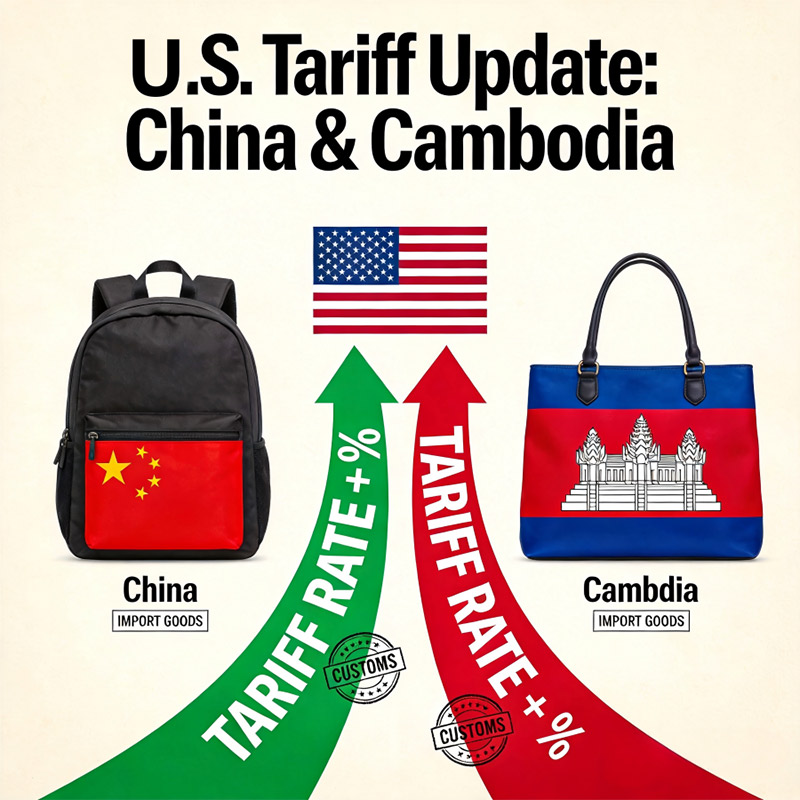
      Why More Global Brands Are Choosing Cambodia as Their Bag Manufacturing Base Instead of Vietnam Bag Factories   Amid the ongoing restructuring of global supply chains, Cambodia is rapidly emerging as a rising powerhouse in bag manufacturing. While Vietnam bag manufacturers have long been regarded as the benchmark for Southeast Asian manufacturing, latest data reveals that Cambodia is demonstrating unique competitive advantages in the Travel Goods sector. In 2025, Cambodia's bag exports exceeded $2 billion, with the entire GFT (Garment, Footwear, Travel Goods) industry hitting a historic high of $16 billion in total exports. This article provides an in-depth analysis of the five core advantages Cambodia holds over Vietnam bag factories, offering data-driven insights for your supply chain decisions.   I. Significant Cost Advantage: Labor Costs Remain Competitive vs Vietnam Bag Manufacturers   Cambodia's minimum wage stands at just $210/month (2026 standard), significantly lower than Vietnam bag factories' current labor costs. Despite annual adjustments by the Cambodian government (the 2026 increase was only $2 to $210), this gradual approach balances worker welfare with industrial cost competitiveness. For labor-intensive products like bags, this cost differential translates directly into a 15-20% manufacturing cost advantage over Vietnam bag manufacturers. Notably, Cambodia's labor productivity continues to rise steadily, with industrial sector productivity reaching $2,424 per worker in 2019.   II. Exclusive Tariff Benefits: GSP Preferences Unlock Market Access Unavailable to Vietnam Bag Factories   This represents Cambodia's most strategically valuable differentiator compared to Vietnam bag manufacturers. Since 2016, Cambodia has enjoyed U.S. GSP (Generalized System of Preferences) status, allowing travel goods (including luggage, backpacks, handbags, and wallets) to enter the U.S. market duty-free. In contrast, similar products from Vietnam bag factories face MFN (Most Favored Nation) tariffs of 10-30%. Even with the 19% U.S. tariff imposed on Cambodia in 2025, labor cost advantages enable Cambodian bag manufacturing to remain competitive with Vietnam bag manufacturers and Thailand. Additionally, Cambodia benefits from: EU EBA (Everything But Arms) status: Zero tariffs, zero quotas into the EU market China-Cambodia Free Trade Agreement: Further reducing export costs to China RCEP (Regional Comprehensive Economic Partnership): Cumulative origin advantages across the Asia-Pacific region These preferential trade arrangements provide bag exporters with cost savings of 12-33% on tariff expenses compared to Vietnam bag factories.   U.S. & EU Market: Tariff Comparison from Vietnam Bag Manufacturers and Cambodia Quantifying Tariff Costs: This is the most direct cost competitiveness comparison against Vietnam bag manufacturers. In the U.S. market, Cambodian bags enjoy 0% duty under GSP, while Vietnam bag factory products face an average 17.5% MFN tariff (ranging 10-30%). The EU market is equally favorable: Under EBA status, Cambodia enjoys zero tariffs in the EU market; while Vietnam bag manufacturers, despite EVFTA benefits, still pay an average 2.7% duty. For the low-margin bag industry, this 2.7% difference is substantial at scale.   Risk Note: While U.S. GSP policy carries uncertainty (historically intermittent), Cambodian bag manufacturing maintains overall cost competitiveness with Vietnam bag factories even under the 2025 19% tariff scenario, thanks to labor cost advantages. Moreover, EU EBA benefits are guaranteed through at least 2029, providing certainty for mid-to-long-term planning.   III. Specialized Industry Cluster: Vertical Deep-Dive Beyond Vietnam Bag Factory Capabilities   Cambodia has established dedicated GFT industrial clusters (Garment, Footwear, Travel Goods). As of 2024, the country hosts approximately 1,600 GFT factories, employing over 800,000 workers, 75.5% of whom are female. Unlike Vietnam bag factories' broad-spectrum manufacturing base, Cambodia has developed highly specialized divisions in bag manufacturing: Travel Goods Specialized Factories: Accumulated rich expertise in specific bag-making techniques (adhesive bonding, edge painting, heat stamping, etc.) Scalable Capacity: Companies like SYNBERRY BAG CAMBODIA employ nearly 2,000 workers with monthly capacities reaching 500,000 bags. Fully audited and compliance with BSCI/SMETA/ISO/C-TPAT/GRS/ICS/FCS and so on. Integrated Supply Chain: Complete in-house production capabilities from fabric cutting, sewing, various logo techniques, in-house lab testing, through final inspection, bag disinfection, and packaging. Under Cambodia's GFT Industry Development Strategy 2022-2027, the government is actively pushing upgrades from pure CMT (Cut-Make-Trim) models to OEM/ODM capabilities, meaning Cambodian factories now possess the capacity to undertake design development and high-value-added orders that rival Vietnam bag manufacturers.   IV. Flexible & Agile Supply Network: The Optimal Choice vs Vietnam Bag Factories for Smaller Batches & Quick Response   Compared to Vietnam bag factories' structure dominated by mega-factories, Cambodia's factory scales are more flexible, providing unique advantages for smaller batch sizes, greater style variety, and faster turnaround bag orders. Data shows typical Cambodian factory MOQs range from 3,000-5,000 pieces per style. Companies like SYNBERRY BAG CAMBODIA can meet major brands' quality and capacity requirements while maintaining flexible OEM/ODM manufacturing capabilities for small-to-medium brands seeking alternatives to Chinese production and large-scale Vietnam bag manufacturers.   V. Political Stability & Strategic Positioning: A Safe Haven for Long-Term Investment vs Vietnam Bag Factory Risks   The Cambodian government treats manufacturing as an economic pillar, with the industrial sector projected to grow 8.6% in 2025, marking the second consecutive year of 8%+ growth. This policy stability provides safeguards for long-term investment.   Compared to Vietnam bag manufacturers' exposure to trade friction risks, Cambodia retains Least Developed Country (LDC) status through 2029, enjoying special international trade treatment during this buffer period. Even after LDC graduation, Cambodia can maintain zero-tariff EU market access through compliant GSP+ programs, provided human rights and environmental standards are met—aligning perfectly with responsible brand value propositions. Conclusion: Cambodia—The Strategic High Ground for Bag Manufacturing vs Vietnam Bag Factories For bag brands seeking cost optimization, tariff advantages, and flexible capacity, Cambodia offers a value proposition that Vietnam bag manufacturers struggle to replicate. Particularly in the U.S. market, GSP zero-tariff benefits (if policy continues) can directly translate into 10-30% price competitiveness over Vietnam bag factory imports. Official import-export data confirms Cambodia's manufacturing advantages over Vietnam bag manufacturers: Over the past five years, Cambodian Travel Goods exports have shown exponential growth, jumping from $1.25 billion in 2020 to $2 billion in 2025—a cumulative increase of 60%. By contrast, while Vietnam bag manufacturers maintain absolute volume advantages ($4.8 billion), growth has significantly decelerated, with only 26% total growth over the past 5 years, indicating market saturation signs as early as 2021. While Vietnam bag factories retain advantages in infrastructure sophistication, for labor-intensive, relatively standardized bag products primarily exported to U.S. and EU markets, Cambodia undoubtedly represents the more strategically forward-looking choice compared to traditional Vietnam bag manufacturers. Therefore, for brands evaluating supply chain layout, we recommend a "China + Cambodia" dual-base strategy: retaining high-complexity or highly flexible production requirements in China, while shifting standardized bag product lines to Cambodia to maximize tariff benefits and cost advantages over Vietnam bag factory options.   Ready to Optimize Your Bag Supply Chain Beyond Vietnam Bag Manufacturers ?   Whether you're considering shifting existing orders from Vietnam bag factories or establishing Southeast Asian manufacturing capacity for the first time, our team provides end-to-end support—from factory audits, sample development, through to mass production and delivery. Contact us today: Email: [email protected]  Whatsapp: +86-139-5921-4481 (All data sources: Cambodia Ministry of Commerce, EuroCham Cambodia, GMAC (Garment Manufacturers Association in Cambodia), Asian Apparel Industry Observatory Report (2024-2025)

      Tags :

  • What is the best brand of pencil cases?
    What is the best brand of pencil cases? Apr 07, 2026
    Based on our years of experience producing pencil cases for major brands, an outstanding pencil case is far more than just a storage tool—it embodies a combination of material craftsmanship, ergonomics, and brand aesthetics. There is a wide variety of products on the market, ranging from best-selling practical models to creatively designed innovative ones, with each brand having its own core strengths and suitable use scenarios. To this end, based on our manufacturing experience, we have compiled a “Top 10 Pencil Case Brands” list and conducted an in-depth analysis of their core strengths and technological barriers. The aim is to provide brand owners and supply chain managers with industry insights for product upgrades and procurement decisions.   I.  Top 10 Pencil Case Brands   1.  LIHIT LAB (Japan) — A Textbook of Functional Aesthetics Brand Profile: Founded: 1938, Osaka  Core Strengths: 87 years of office supply manufacturing experience, expanding from file binders to pencil cases  Technical Highlights: LIHIT LAB’s Stand Book Pen Case represents the pinnacle of Japanese stationery craftsmanship. Its patented book-type design uses a double-layer polyester structure combined with a custom YKK zipper system, enabling a standing “desktop workstation” function. The 2024 PuniLabo Animal Silicone Series applies medical-grade silicone technology to stationery, winning the ISOT 2016 Functional Award.  Manufacturer Review: The modular “Smart Fit” internal layout demonstrates Japanese precision in maximizing space—every cubic millimeter is engineered. Why It’s on the List: Scientific organization: Multi-compartment designs with elastic bands and insert pockets keep stationery organized and accessible. Some models can stand upright, transforming into desktop storage stations.  Durable materials: High-density, wear-resistant nylon or polyester is commonly used.  Practical aesthetics: Colors are generally subdued and professional, with simple and clean shapes that balance functionality and visual appeal.  Stand Book Pen Case                                               PuniLabo   2. KOKUYO (Japan) — Century-Old Innovation Brand Profile: Founded: 1905, Osaka  Market Position: Japan’s largest office supply brand Technical Highlights: The C2 Tray Pencil Case leverages structural mechanics from furniture manufacturing. Its wide-opening tray design adapts architectural load-bearing principles to stationery. Collaborations with illustrator Noritake, like the Haco Haco series, use Cordura nylon from outdoor gear for high durability.  Manufacturer Review: KOKUYO’s Campus transparent PVC series overcomes yellowing issues, with material stability standards exceeding the industry average. Why It’s on the List: Convenient opening: Innovative “bi-fold” and “one-touch” designs allow one-handed access.  Thoughtful details: Dedicated label slots, silicone strips for notes, hidden expansion spaces solve everyday minor issues.  Durable quality: Strict quality control on stitching and zippers ensures long-term reliability.  Professional aesthetics: Clean, soft colors, neutral style suitable for various contexts.    C2                                                        HACO·HACO                                                     Campus   3. Smiggle (Australia) — Experts in Sensory Marketing Brand Profile: Founded: 2003, Melbourne  Retail network: Hundreds of standalone stores + shop-in-shop globally  Technical Highlights: Smiggle’s multi-sensory strategy integrates visual impact (glitter, glow-in-the-dark, holographic materials), olfactory cues (fruit-scented inks), and tactile feedback (3D silicone shapes). The Flow Series Shark Pencil Case uses EVA thermoforming, balancing complex 3D shapes with production consistency.  Manufacturer Review: Pioneering the “shop-in-shop” model, Smiggle demonstrates how stationery retail can be entertaining. Why It’s on the List: Strong fashion and personal expression: Extensive use of bright colors and contrasting designs, combined with trendy elements and themed collections (such as dreamy, sparkling, fruity, etc.), making them more like fashionable accessories.  Creative shapes: Pencil cases often feature three-dimensional designs, such as candy, animals, or food, making them highly recognizable and conversation-worthy.  Multi-sensory and playful design: Many products incorporate elements like scents, glitter, elastic textures, and detachable charms, going beyond visual appeal to offer tactile and olfactory fun.  Practicality with colorful options: Beneath their playful exterior, the pencil cases offer solid storage functionality and an extremely wide variety of styles to suit different personal preferences.            Trailblazer                                                Radiant Hardtop                                                           Triple Hardtop      4. Kipling (Belgium/USA, VF Corporation)  Brand Profile: Founded: 1987, Antwerp  Technical Highlights: Kipling’s signature Crinkle Nylon is a key part of the brand’s technical edge. This patented fabric offers tear resistance, water repellency, and machine washability, with density ranging from 120D to 420D to suit different product needs. Each bag comes with a playful monkey keychain, exemplifying Kipling’s emotional branding—every monkey is named after a global employee, with over 425 unique designs developed to date. Manufacturer Review: As VF’s global bag division core brand, Kipling’s supply chain response is an industry benchmark—8 weeks from design to shelf. Why It’s on the List: Distinctive brand symbol: Each product comes with the classic plush monkey keychain, a signature of Kipling that adds a playful personality and high recognizability.  Lightweight and durable: Made from Kipling’s signature Crinkle Nylon, a fabric that is exceptionally lightweight, wrinkle-resistant, abrasion-resistant, and water-repellent, making it easy to maintain.  Reliable quality and craftsmanship: As a renowned bag brand, Kipling maintains high standards for hardware, zippers, and stitching, ensuring long-lasting durability.  Creativity Large Pouch   5. Herschel Supply Co. (Canada) — Vintage Canvas Aesthetic Brand Profile: Founded: 2009, Vancouver  Founders: Jamie & Lyndon Cormack  Technical Highlights: Herschel’s iconic striped lining has become a key part of its visual identity. In 2023, the brand introduced an eco-friendly line made from 100% recycled polyester—sourced from post-consumer plastic bottles and processed through five steps: shredding, cleaning, melting, spinning, and weaving. Manufacturer Review: In 15 years, built a retail network in 44 countries, proving cross-cultural appeal of “vintage-modern” design. Why It’s on the List: Classic look, high recognition, neutral and versatile colors.  Internal organization: multiple pockets and compartments.  Details: thick handles, smooth zippers, internal water-resistant coating.  Strong brand appeal as a lifestyle symbol, not just a storage tool.  Herschel Settlement   6. ZIPIT (Israel) — Fun and Innovative Brand Profile: Origin: Tel Aviv student project by Ishai Halmut  Core Patent: Single-zip 3D formation technology  Technical Highlights: Monster Pencil Case creates 3D storage from a single zipper and polyester panel, minimizing material waste.  Manufacturer Review : From the perspective of manufacturing economics, ZIPIT’s case reveals a structural opportunity in the stationery industry: when funnstitutes an effective intellectual property barrier. For manufacturers seeking differentiated competition, ZIPIT’s approach demonstrates that turning engineering constraints into design features is often the optimal solution to break through the homogenization dilemma.ctional innovation reaches its ceiling, form-based innovation can still open up a blue ocean market. Although its single-zipper technology has been partially imitated by some manufacturers, the core patent portfolio still co Why It’s on the List: Disruptive creativity and interactive fun: The brand’s signature feature is using a single continuous zipper as the main structure of the pencil case. When unzipped, it functions as a regular pencil case; when fully zipped, it transforms into a three-dimensional plush monster or fantastical creature with “teeth,” offering dramatic visual impact and playfulness. Strong personal expression: Each design is bold and quirky, completely unlike traditional pencil cases, serving as a distinct symbol for users to showcase their unique taste and rebellious personality. Rich themes and emotional connection: The product line features numerous “character” designs—from monsters and animals to mythical creatures—each with its own personality and story, evoking emotional resonance and a desire for collection. Excellent craftsmanship and materials: Despite the playful designs, the materials are solid; zippers are smooth and durable, and the plush fabrics are soft to the touch, ensuring dual quality as both a “toy” and a “storage tool.” Precise trend positioning: ZIPIT is more than just a pencil case; it is a trendy toy and social currency. It quickly becomes a conversation starter and is especially popular among young people who seek uniqueness and are engaged in subcultures and creative communities. Zipit Monster Pouch   7. kikki.K (Sweden/Australia) — Lifestyle Transformation Brand Profile: Founded: 2001, Australia  Philosophy: Swedish minimalism, “form follows function”  Technical Highlights: Kolour Luxe series uses vegan leather and mesh; Neoprene series uses flexible wetsuit material. Offers letter embossing customization.  Manufacturer Review: Transitioned from stationery to “lifestyle organization solutions” with complex SKU management. Why It’s on the List: Iconic Nordic minimalist design: The design language is clean and soft, making extensive use of low-saturation colors such as pink, blue, gray, and white, paired with simple lines and geometric shapes, creating a calm and cozy visual experience. Outstanding quality and craftsmanship: Materials such as soft-touch PU leather, refined Neoprene, or eco-friendly fabrics are often used, complemented by delicate hardware, foil stamping, or embossed logos. The overall texture is premium, stitching is precise, and details are carefully handled, reflecting a “gift-level” quality standard. Emotional connection: The product design embodies the philosophy of “encouraging writing” and “recording beautiful moments,” aiming to enhance the daily user experience with pleasure and a sense of ritual. Clear lifestyle positioning: kikki.K promotes the “Organised Life” concept. Its pencil cases are not merely stationery—they represent and carry a beautiful, orderly lifestyle. kikki.K Neoprene Pouch   8. Blue Q (USA) — Art in Every Design Brand Profile: Founded: 1988, Boston  SKU Strategy: 450 core SKUs, 150 annual updates  Technical Highlights: Blue Q’s use of 100% post-consumer recycled materials is rare in the industry. Its pencil case and zipper pouch series utilize RPET (recycled polyester) fabrics combined with artist-collaborated designs, achieving a balance between sustainability and commercial appeal. Additionally, 1% of sales are donated to environmental initiatives through a “manufacturing + charity” model, enhancing the brand’s premium value. Manufacturer Review: Small independent brand, rapid SKU rotation counters large brand scale advantages. Why It’s on the List: Signature humor and irony: The designs are full of satire, puns, vintage illustrations, and witty slogans, conveying attitudes in a direct and humorous way. They create strong visual impact and discussion potential, standing in sharp contrast to typical fresh or business styles. Blue Q’s aesthetic leans toward retro, quirky, and pop-art influences, making it a tool for expressing unique personality.  Strong commitment to sustainability: The brand guarantees that all products are made from 100% recycled plastic bottles, putting its environmental principles into practice.  Distinct brand attitude and community identity: Its designs are more than decoration—they express values and personal identity. Users often use them to find like-minded people, forming cultural communities.   Practical functionality: (Text seems cut off, but likely refers to well-designed internal space and usability.) Blue Q Hide And Go Read   9. Totem Bags (South Africa) — Local Manufacturing Excellence Brand Profile Founded: 1996, Cape Town Founder: Antonio Ferreira, former professional surfer Technical Highlights: Materials: Uses high-density recycled nylon with waterproof coating, providing durability, stain resistance, and easy cleaning. Functionality: Thoughtful compartmentalization and storage design, e.g., Totem’s Ariana Triple Pencil Case features three detachable pockets, secured by a clever clip system. The lean manufacturing practices are also noteworthy. Totem adapted vacuum bag compression techniques from surfboard production to stationery manufacturing, raising the material utilization rate of the Triple Flatti from the industry average of 78% to 94%. The Cape Town factory is equipped with a solar drying system, leveraging the region’s 3,200 annual sunshine hours to reduce energy consumption in fabric pre-treatment by 41%. Uniquely, the company implements a “surfer work schedule”—flexible shifts allowing employees to adjust working hours according to surf forecasts. This founder-inspired benefit has reduced annual employee turnover to below 4%, significantly lower than the South African manufacturing industry average of 22%.    Totem Bags Ariana Triple Pencil Case Manufacturer Review: Example of local manufacturing surpassing global standards. Why It’s on the List: Outstanding Eco-Friendly and Functional Materials: The brand’s core products use 500D CORDURA® fabric made entirely from post-consumer recycled plastic bottles. This material is renowned for exceptional abrasion resistance, tear strength, and water repellency, balancing sustainability with practicality.  Reliable Structure: Designs emphasize durability, with robust stitching, making them suitable for high-intensity use in outdoor and travel scenarios.  Modular Design Thinking: Products often feature internal functional compartments and can be combined with other brand bags, reflecting a systematic approach to storage and organization.  Distinct Brand Values: Rooted in environmental responsibility, the brand focuses on creating products “meant to last a lifetime,” promoting sustainable and conscientious consumption.   10. Yokico (South Africa) — Creative, Colorful, Inspired Brand Profile Founded: 2012, Johannesburg  Core Mission: Encourage children to put down electronic devices and pick up pencils  Market Position: South Africa’s fastest-growing stationery brand; projected to become the top domestic brand in market share by 2024  Technical Highlights:  Yokico’s classic series uses TPU (thermoplastic polyurethane) soft shells combined with long-pile plush, designed to support tactile development in children.  The Swans Fold-over Pencil Case features a three-layer composite design: Outer layer: rPET fabric made from locally recycled PET bottles ,Middle layer: 1.2 mm recycled cardboard structural insert ,Inner layer: Food-grade silicone coating. This combination provides the protective qualities of a hard-shell pencil case while maintaining the flexibility and soft feel of a plush case. The hook-and-loop flap design replaces traditional zippers; opening and closing force has been ergonomically tested for children aged 5–8, precisely controlled between 0.8–1.2 N to allow independent use. Manufacturer Evaluation: Yokico’s rise highlights an emerging-market manufacturer’s opportunity for “values arbitrage.” When the global stationery industry became trapped in functional homogeneity, Yokico turned the social issue of “digital detox” into a product narrative, successfully creating premium positioning in developed markets. The Johannesburg factory’s apprenticeship training system is also noteworthy: a targeted program in collaboration with South African design schools increased the proportion of skilled technical workers from 31% in 2018 to 67% in 2024, providing a model for sustainable talent development in local manufacturing. Reasons for Listing: Brand Background and Philosophy: A South African stationery brand focused on creative, colorful, and inspiring designs. Its slogan, “My World. My Yokico”, encourages children to express themselves through fun stationery, fostering creativity. Unique Creative Series: Collections such as Octo Adventure and Magical Midnight are particularly popular among children and teenagers. Combination of Fun and Practicality: Bright colors and innovative styles make the products more than just stationery—they serve as a way for children to showcase their personalities. Innovative Features: Certain series, like Press & Pop, integrate functional elements such as built-in pencil sharpeners, small stationery drawers, mini calculators, and compartments for erasers or paperclips. Swans Fold over Pencil Case   II.  Guide to Choosing a Pencil Case   1. Choose According to Usage Scenario Students: Prioritize compartmentalization and durability.  Lower elementary school: Brands like Yokico and ZIPIT are suitable due to their fun designs and ease of use. Soft materials and zipper-free designs help prevent accidental injuries.  Middle school and above: Brands like Herschel and kikki.K balance aesthetics with practicality, providing ample storage for focused study.  Art students: Look for Blue Q’s large flat designs or Totem Bags’ modular solutions, convenient for carrying markers, rulers, and other specialized tools.  Professionals: Opt for understated designs. LIHIT LAB’s medical series or KOKUYO’s business line fits formal settings, while kikki.K’s Neoprene cases combine protection with portability for commuting. Frequent travelers may benefit from Totem Bags’ CORDURA® fabric products, whose stain-resistant properties are ideal for travel.    2. Choose According to Material Characteristics Hard-shell materials (e.g., EVA cases, traditional metal boxes) provide the best protection, suitable for drawing instruments or delicate electronics, but come with inherent weight and rigidity.  Fabric materials: CORDURA® nylon (Totem Bags) represents durability at the high end.RPET recycled fabric (Blue Q) leads in environmental performance. Neoprene (kikki.K) offers soft, flexible tactile experience. ZIPIT’s single-zipper technology proves that material innovation itself can be a core selling point, not just a carrier.    3. Filter According to Value Orientation Environmental perspective: Sustainable manufacturing is now a standard among leading brands. Totem Bags’ 94% scrap utilization, Blue Q’s 100% recycled material commitment, and Yokico’s local PET recycling system exemplify technology-driven, declaration-driven, and community-driven approaches to sustainability. Consumers can verify claims via material traceability codes or brand annual impact reports.  Manufacturing ethics: KOKUYO’s century-long supply chain control, Totem Bags’ “surfer work schedule,” and Yokico’s apprenticeship program provide labor welfare models beyond compliance. These hidden costs are reflected in product premiums but also support brand loyalty.    4. Pitfalls to Avoid Beware of OEM traps in “designer brands.” Some emerging brands borrow Nordic or Japanese aesthetics but use generic molds and fabrics; the price gap comes from marketing, not production. Key indicators include: transparency of manufacturing base, availability of material specifications, and verifiable functional patents.  Beware of functional redundancy. Multi-layer folding structures or magnetic modular components may look attractive in marketing but can complicate frequent daily use. LIHIT LAB’s medical series demonstrates that simplicity often outperforms over-engineering.  Summary: A pencil case is a high-frequency personal item. Selection should focus on whether it can disappear into use: requiring no special adaptation, causing no anxiety, and naturally integrating into daily routines. In this regard, the iterative refinement of century-old brands and the contextual expertise of regional manufacturers often provide more reliability than chasing trendy features.   III.  Frequently Asked Questions   Q1: Which materials are best for pencil cases? What are their advantages? A: We offer five mainstream material solutions: Material Core Advantages Suitable Scenario Certification Polyester/Nylon Waterproof, durable, vibrant colors Students, outdoor use REACH, CPSIA Canvas/Cotton-Linen Eco-friendly, biodegradable, good printability Creative brands, eco themes GOTS, OEKO-TEX PU/PVC Leather Premium texture, easy to clean Business gifts, premium lines EN71, ASTM Silicone Soft, safe, versatile shapes Young children, creative products FDA, LFGB EVA Hard Shell Impact-resistant, structured Electronics accessories, premium stationery RoHS Example of Conventional Materials   Q2: Pencil Case or Pencil Pouch – which should I choose? A: Pencil pouches are lightweight and flexible, suitable for limited spaces. Pencil cases provide better protection and structure. Choose based on required protection and carrying capacity.   Q3: Can custom functional designs be made? (e.g., multi-layer storage, built-in accessories) A: As a professional OEM/ODM pencil case manufacturer, we support full customization of structural and functional features, with common value-added designs including: Layered storage: main pocket + mesh pocket + pencil slots + hidden zip pocket  Built-in accessories: calculator, sharpener, eraser tray, timetable slot  Carrying options: handle, strap hole, backpack hook  Opening mechanisms: zipper, magnetic clasp, snap button, flip-over buckle    For deeper discussions on craftsmanship, material selection, or production optimization for specific product categories, we provide professional guidance and support from the manufacturing side. Contact us to turn the next market-leading idea into a tangible product.   Author        

      Tags :

  • What is the Best Material for a Cosmetic Bag
    What is the Best Material for a Cosmetic Bag Apr 01, 2026
      15 years of making cosmetic bags for luxury beauty brands taught us this. Material choice is not about finding the "best" fabric. It is about matching your brand soul with real-world use. It also means keeping an eye on the budget.   I. Fabric Classification and Cost Tiers   Material Characteristics Target Positioning Cost Range Polyester (300D, 600D, 900D, with or without Ripstop) Wear-resistant, easy maintenance, high color saturation Mass-market, promotional items Low-Medium Nylon (420D, 840D) Soft hand-feel, tear-resistant, elegant gloss Mass-market Medium-High Canvas (12OZ, 14OZ, 16OZ, 20OZ) Rich texture, printable, eco-friendly attributes Natural aesthetic, DTC/independent brands, Luxury brands Medium-High PVC Leather Waterproof, easy-clean, leather-like appearance Fashion styles, transparent designs Medium PU Leather Premium leather texture and nice hand-feel Fashion-forward styles Medium-High Tyvek/DuPont™ Tyvek® Ultra-lightweight, tear-resistant, unique tactile feel Designer collections, differentiated products High Jacquard Fabrics Appearance-focused to match brand DNA Luxury positioning High Velvet Smooth, soft touch with substantial luxurious texture Classic vintage, high-end positioning High   Material Examples   Ⅱ.Waterproof Requirements:   Outer Layer Fabric: For men’s toiletry bags or practical, function-first brands, choose durable materials. Use TPU-laminated polyester or nylon. You can also use PU-coated Oxford fabric. These options resist abrasion well and are easy to clean. For fashion cosmetic bags: Prioritize visual-branding synergy. Beyond printed or jacquard fabric, you can also make a better first impression. Use screen printing, embroidery, hot-fix crystals, or embossed logos. Inner Lining: Client feedback and industry research show a common issue. Many women find the inner lining hard to clean, especially in cosmetic bags. While PEVA lining leads the market because it wipes clean easily, beauty-focused users often want more attractive materials.We recommend TPU-coated treatments on any lining substrate. This solves cleaning issues and keeps the designer’s original look. Waterproof Requirements Structural Support: Rigid Structure: Sandwich 2-3mm EPE foam between outer fabric and inner lining; Semi-Rigid Structure: Use 2–3 mm sponge foam for a soft, semi-rigid shape. It stands upright without feeling stiff. It keeps a gentle silhouette. Soft Structure: Fabric + lining only, no interlining, maintaining lightweight portability   Rigid Structure                                     Semi-Rigid Structure                                     Soft Structure   III. Key Accessories Selection   Accessory Selection Criteria Risk Notes Zippers Nylon zipper, plastic zipper prioritize nylon/plastic zipper or demand rust-proofing treatment if you still prefer metal zipper Mesh Dividers inside Medium density mesh for compartment dividers Mesh density affects visibility; 30-50 denier offers optimal balance EVA Windows Eco-friendly transparent EVA (CPSIA & REACH compliant) Average abrasion resistance, but fully adequate for internal compartment applications Hardware Alloy electrophoresis coating or eco-friendly zinc alloy rust-proofing treatment on all metal components   IV. Compliance & Environmental Certification Alignment   (Typically mandatory for major brand clients) GRS certificate if recycled fabric is involved: Fabric contain ≥50% recycled polyester (rPET) should have valid TC (Transaction Certificate) FSC Requirements: For paper hangtags or carton packaging, ensure certified paper sourcing Chemical Testing: All prints/coatings must pass REACH SVHC (223 substances) and CPSIA (lead content) Martindale Abrasion: When specified, typically ≥10,000 cycles (ISO 12947-2 standard)   V. 2026 Design Trend of Cosmetic Bags: Detachable Inner Liner System   We observe a rising trend in detachable/removable inner liners (storage compartment). The liner connects to the outer shell via rivets or Velcro fasteners, enabling: Exterior consistency with interchangeable interior personalities Simplified cleaning—just detach the liner for washing while the outer bag no need frequent cleaning. Detachable Inner Liner System   Author        

      Tags :

  • What size backpack does a high school student need
    What size backpack does a high school student need Mar 24, 2026
    For high school students, a backpack is not just a container for books, but a daily "partner" that accompanies them through their journey. It needs to fit heavy textbooks and exam papers, navigate crowded hallways, and even squeeze into increasingly narrow lockers. Choosing the right-sized high school student backpack is not only about comfort; it directly impacts the spinal health of students who are in a critical stage of development. In today's increasingly segmented bag industry, how can we combine industry standards with our own needs to find the "perfect fit" backpack? This article will explore the underlying logic of choosing a backpack for high school students from the following dimensions.   Ⅰ, Dimensions According to industry standards, the size of the backpack should be tailored to the user's height, ensuring that the selected backpack meets ergonomic requirements in terms of height, width, and depth. This ensures that it not only meets functional needs but also effectively reduces the physical burden on students, avoiding excessive pressure.   1. Backpack Height The height of the backpack should be selected based on the student's height. Generally, it should not exceed the distance from the shoulders to the waist, as this can prevent the weight of the backpack from being overly concentrated. Therefore, the backpack height is usually recommended to be between 40-50 cm.   2. Backpack Width The selection should be based on the student's shoulder width. A width that is too wide may cause discomfort when carrying the backpack, affecting back balance, while a width that is too narrow may not accommodate enough items, impacting the backpack's practicality. Generally, the width of the backpack should be kept between 30 to 35 centimeters.   3. Backpack Depth A backpack that is too deep can cause an unstable center of gravity, making it prone to tilting to one side and increasing the load on the student. A backpack with an appropriate depth can better distribute the weight of the items and avoid discomfort while carrying. Therefore, the depth of the backpack is generally controlled between 15-20 cm.   Here is a more detailed guide for selecting the size: Height(cm) Backpack Height(cm) Backpack Width(cm) Backpack Depth(cm) 155-165 40-45 30-33 15-18 165-175 42-48 32-35 16-20 Above 175 45-50 33-35 18-20   Ⅱ, Storage Capacity In the bag industry, capacity is another critical dimension, usually measured in liters(L). The formula to calculate a backpack's capacity is as follows: Capacity (L) = Height (cm) × Width (cm) × Depth (cm) ÷ 1000   For high school students, their learning needs are more complex, often requiring them to carry more textbooks, notebooks, stationery, and other items. Therefore, choosing a backpack with the appropriate capacity not only ensures that students can carry all the essentials but also helps reduce the burden on their body, avoiding unnecessary physical stress.   Based on industry experience and widespread user feedback, there is a general consensus both within and outside the industry that a backpack capacity of 25-30L is the most suitable range for high school students. The specific choice of capacity should still depend on the student's individual needs, usage habits, and the amount of items they need to carry daily.   1. 25L Backpack: The corresponding dimensions are approximately 45 cm (height) x 30 cm (width) x 18 cm (depth) This is the ideal choice for most high school students. It offers ample storage space while maintaining a relatively light carrying feel, avoiding unnecessary pressure on the shoulders and back due to an oversized capacity. For most basic items required for classes, a 25L backpack is more than enough to meet daily needs.   2. 30L Backpack: The corresponding dimensions are approximately 48 cm (height) x 32 cm (width) x 20 cm (depth) This is suitable for students with heavier academic workloads or those who need to carry additional items, such as extracurricular books, sports equipment, or other materials. Although a 30L backpack has a larger capacity, which allows for more storage, it's essential to pay attention to the backpack's design to ensure the weight is effectively distributed, preventing concentrated pressure that could cause strain on the shoulders and spine.   Ⅲ, Application Scenario High school students backpacks now need to adapt to multiple scenarios. Below is an expansion of backpack requirements for different scenarios:   1. Commuter Students For commuter students, the backpack mainly carries textbooks, stationery, and personal essentials. A capacity of 20-25L is usually most suitable. This size is enough to hold the necessary study materials and small personal items such as a phone, keys, and other essentials.   In addition to capacity, the comfort of the backpack is particularly important, as it needs to be carried for long periods every day. Therefore, the design of the shoulder straps must be ergonomically designed to reduce the burden. Additionally, multiple compartments and storage designs are crucial, as they help students quickly find the items they need, improving efficiency.   2. Boarding Students Compared to commuter students, boarding students have more complex backpack needs. Since they need to carry more items (such as clothes, daily necessities, etc.), the required backpack capacity is larger, typically ranging from 30-35L.   Their backpacks not only need more storage space but also require a well-organized internal compartment design to categorize and store different types of items, preventing things from being scattered and reducing search time. Additionally, the backpack for boarding students should be durable enough to withstand the weight of heavier items.   Ⅳ, Electronic Device Compartment Size When choosing a backpack for high school students, the size of the electronic device compartment is an important consideration. With the widespread use of technology, more and more high school students need to carry laptops, tablets, or other electronic devices. These devices are not only tools for learning but also help improve classroom efficiency. Therefore, the backpack must provide enough space to store these devices and include dedicated compartments to protect them from collisions and scratches.   1. Laptop As education gradually shifts towards digitalization, many high school students need to carry laptops for classroom learning and after-school assignments. Generally, backpacks with a capacity of around 30L are suitable for carrying 13-15 inch laptops. This size not only accommodates the laptop but also provides enough space to store textbooks, stationery, and other learning tools.   2. Tablets and Other Electronic Devices Compared to laptops, tablets and other electronic devices are smaller in size, so the required backpack capacity is relatively lower. Backpacks with a capacity of around 25L are typically suitable for carrying a tablet. This size provides enough room to store the tablet, some basic study supplies (such as notebooks and folders), and other small electronic devices.   Ⅳ, Other specific suggestions for high school students and parents.   1. Always try it on Pack the bag with items that approximate the actual weight it will carry (you can bring your own books to the store), adjust all straps, and check if it fits the contours of your back.   2. Choose lightweight nylon or polyester materials These materials are not only tear-resistant and durable but also lightweight. If the backpack itself is too heavy, even with the right capacity, it will unintentionally add to the load.   3. Check the details Check if the zipper is smooth and the hardware is durable, the stitching is solid (especially at stress points), and the bottom is reinforced with wear-resistant material.   4. Shoulder Strap Width Shoulder straps that are too thin can dig into the shoulders like a knife. Industry standards recommend that the shoulder strap width should not be less than 5 cm, with thick padding inside to help distribute the pressure on the shoulders.   5. Waist and Chest Straps These are not just for outdoor backpacks. Many high-end student backpacks now come with adjustable chest and waist straps that transfer some of the weight from the shoulders to the pelvis, improving stability by up to 40%.   6. Reflective Strips  Considering that high school students may walk home in the dark after evening study sessions, the front, sides, and shoulder straps of the backpack should be equipped with reflective materials at least 20 mm wide. This is an important feature for ensuring safety during nighttime travel.   7. Safety Standards When purchasing, pay attention to the product label to ensure the backpack meets relevant safety requirements. This is the basic guarantee that the backpack is non-toxic, harmless, and of acceptable quality.   8. Beware of Misconceptions Never fall into the trap of "bigger is better." A study by the American Academy of Pediatrics points out that when the weight of a backpack exceeds 10% of a student's body weight, it significantly increases the risk of back pain and posture problems. For example, for a high school student weighing 65kgs, the maximum safe weight is 6.5kgs. A fully packed 35L backpack can easily reach this limit.   9. Balance budget and quality A high-quality backpack should last 2-3 school years with reasonable use. Mid-range brands priced between 300-600 RMB usually offer a good balance between quality, functionality, and design.   10. Pay attention to usage habits Develop a daily habit of organizing your bag, removing unnecessary items, and avoid carrying it on one shoulder, as this can lead to posture imbalance over time.   Choosing synberry backpack for high school students may seem like purchasing an everyday item, but in reality, it’s about selecting a healthy habit, a learning method, and a form of personal expression. The bag industry is moving towards a more scientific, personalized, and sustainable direction, with the core focus always being: supporting teenagers in carrying their dreams on their academic and growth journey, without letting the burden hinder their development. With a properly sized and scientifically designed backpack, every high school student can confidently move towards their future.   Author        

      Tags :

  • Why are JanSport backpacks so popular
    Why are JanSport backpacks so popular Mar 20, 2026
    When it comes to everyday backpacks, few brands can match the recognition and reputation of JanSport. For over 50 years, JanSport has been a must-have for students, travelers, hikers, and anyone in need of a durable and practical backpack.  What exactly makes JanSport backpacks so enduring? This article will analyze from various perspectives why JanSport backpacks continue to dominate the market, becoming a household name and maintaining their leading position. Catalogue: Brand History Product Durability Functional Practicality Personal Expression Cultural Symbols Pricing Positioning Marketing Evolution   1.Brand History In 1967, in Seattle, three young individuals—Murray McCory, Jan Lewis (the "Jan" in the brand name), and Skip Yowell—founded JanSport in a garage. Their original goal was simple: to create lightweight aluminum-frame backpacks for mountaineering enthusiasts. At the time, most mountaineering backpacks were bulky and expensive, but JanSport’s innovation made outdoor adventures more accessible. The real turning point came in 1984—students at the University of Washington discovered that these backpacks, originally designed for hiking, were perfect for carrying books! JanSport quickly recognized this trend and launched the JanSport SuperBreak Backpack series, specifically designed for campus use.   This is considered the first “true” school backpack in history and marked JanSport’s strategic shift from an outdoor brand to a lifestyle brand. Period Brand Positioning Milestone Products Market Strategy 1967–1980s Professional Outdoor Gear Aluminum-Frame Hiking Backpacks Outdoor Stores 1984–2000s Campus Student Backpacks SuperBreak, Right Backpack Campus Bookstores 2000s–2015 All-Scenario Lifestyle Laptop Bags, Travel Bags Department Stores 2015–Present Retro Trend Culture Collaborations, Limited Editions Social Media   2.Product Durability (Lifetime Warranty) Product durability is the core competitive advantage of JanSport Bags. Since its founding in 1967, the brand has consistently offered a lifetime warranty, a rarity in the backpack industry. Whether it’s a broken zipper, a torn shoulder strap, or loose stitching, JanSport will repair or replace the backpack for free. This absolute confidence in product quality gives consumers peace of mind when making a purchase.   Many users report that a JanSport backpack can easily last over ten years, sometimes accompanying them from their student years all the way into the workplace. Such longevity is especially valuable in today’s fast-consumption era. This durability is reflected in every detail: Material Selection: ① 600D High-Density Polyester: Tear resistance is three times higher than ordinary fabrics. ② CORDURA® Nylon: Military-grade abrasion-resistant material, used in premium series. ③ Custom YKK Zippers: Smoothness tested for over 100,000 open-and-close cycles.                                  600D high-density polyester fiber                                                     CORDURA®    Structural Reinforcement: ① Double Stitching: All load-bearing areas use double-needle stitching. ② Bar-Tack Reinforcement: Stress points are additionally reinforced to prevent tearing. ③ Right Pack Suede Bottom: Designed in 1975 and still used today, it has become part of the brand’s DNA.       Bar-Tack                                                                                                     Right Pack suede sole    3.Functional Practicality Perfect Balance of Classic Design and Practical Features: Take the SuperBreak series as an example. This design, born in the 1980s, has remained largely unchanged, with no added padded compartments, yet it continues to be a best-seller. Its simple rectangular shape, front pocket, and dual-zipper main compartment have no unnecessary embellishments, yet they perfectly meet the needs of daily commuting, campus classes, and short trips. The JanSport Right Backpack, with its iconic suede bottom, is not only a symbol of retro aesthetics but also a thoughtfully designed practical feature. This material is naturally abrasion-resistant and protects the bag when frequently placed on the ground, preventing wear and stains and significantly extending the backpack’s lifespan. Multi-Functional Compartment System: With the advent of the digital age, JanSport has not remained tied to tradition but has continuously optimized its internal structure. Modern styles typically feature padded laptop compartments accommodating 13–15 inch devices; dedicated tablet pockets, pen slots, key rings, and water-resistant side pockets ensure that electronics, water bottles, and umbrellas all have their place. The Big Student series further increases capacity to 34 liters, featuring a dual main-compartment design and reinforced shoulder straps. The front pocket includes an organizer with thoughtful details such as headphone ports and ID windows, making it a compact mobile workstation. Jansport Big Student Backpack   All-Weather Adaptability: Another practical highlight of JanSport backpacks lies in their material treatment. High-density polyester is treated with a water-resistant coating, protecting the contents from everyday rain splashes. Certain outdoor series, such as Agave and Hatchet, feature more advanced water-repellent fabrics and rain flap designs, suitable for light hiking and outdoor commuting. This seamless transition from classroom to the great outdoors allows a single backpack to cover up to 90% of a user’s scenarios, eliminating the need to purchase multiple bags for different activities.                 Jansport Agave Backpack                                 Jansport Hatchet Backpack    Ergonomic Evolution: Although JanSport is renowned for its classic designs, its improvements in the carrying system have never stopped. From the early simple shoulder straps to today’s S-shaped shoulder straps, breathable mesh back panels, and adjustable chest and waist straps, the brand has continuously applied outdoor backpack technology to everyday models.    The Odyssey series, specifically designed for hot climates, features a 3D ventilated back panel that separates the back from the bag, creating an air circulation channel. Even when fully loaded in summer, the backpack remains relatively cool and comfortable. This dedication to ergonomic detail explains why many users choose the same backpack day after day, rather than frequently switching to a new one.             SuperBreak                                                Jansport Odyssey Backpack    4.Personal Expression Diverse Color Options: Each year, the brand releases over 300 color variations: ① Classic Series: Black, Navy, Burgundy (timeless choices) ② Seasonal Series: Mint Green, Coral Orange, Lavender Purple (seasonally inspired) ③ Patterned Series: Starry Sky, Camouflage, Floral, Geometric (for personal expression) ④ Collaboration Series: Disney, Marvel, Harry Potter, artist collaborations (collector’s value)   User Co-Creation Culture: JanSport encourages users to personally customize their backpacks: ① Graffiti Culture: Drawing on solid-color backpacks with markers. ② Pin Culture : Decorating shoulder straps and backpack surfaces with    pins and badges.   This “classic + trend” dual-track strategy not only ensures the loyalty of long-time users but also continually attracts younger consumers. A single backpack can become an extension of personal style, and JanSport provides a sufficiently rich canvas for self-expression.   Material Innovation: While maintaining its classic appearance, JanSport continuously explores the possibilities of new materials. The Recycled SuperBreak series, launched in 2019, is made from 100% recycled polyester, with each backpack consuming approximately 20 recycled plastic bottles. It retains the brand’s signature durability while addressing younger consumers’ interest in sustainable fashion.    The See Through series, made with transparent PVC, boldly breaks from tradition, allowing contents to be visible—making it a popular choice for music festivals and security checkpoints. Meanwhile, the use of reflective materials in the night cycling safety series cleverly combines personalization with functionality, providing a distinctive visual signature in low-light conditions. Iterative Innovation: JanSport while maintaining its signature style, the brand continuously introduces fresh structural variations that catch the eye. The JanSport Mini Backpack series recreates the iconic SuperBreak design at 70% scale, perfectly tapping into the current "mini bag" trend and becoming a must-have accent for street style influencers.   The Cool Student series, meanwhile, builds on the traditional backpack by incorporating vintage bowling bag elements—cylindrical side pockets and contrasting zippers—which preserve brand recognition while injecting a streetwear edge. The Draw Sack series completely reimagines the conventional backpack with a drawstring closure and minimalist cylindrical silhouette, offering a new option for users seeking lightweight, effortless carry—whether it’s for gym clothes or weekend market runs, items can be stowed in a relaxed, casual manner. This approach keeps longtime fans engaged with constant novelty while ensuring the brand’s DNA remains intact.   5.Cultural Symbols A Backpack That Grows With You:JanSport is more than just a brand—it’s a symbol of growing up. If you grew up in North America, chances are you owned a JanSport backpack, or at the very least, saw one in nearly every classroom. It represents growth, independence, and the cherished memories created during school years, road trips, and spontaneous adventures.   Nostalgia-Driven Loyalty: For many people, their first JanSport backpack is more than just a practical item—it is a vessel carrying cherished memories. This emotional connection keeps customers loyal to the brand as they grow older, and they may even pass the backpack down to younger siblings or their own children. Founder’s Vision and Company Structure: The design heritage of the JanSport brand originates from its founders, and today, this spirit is carried forward by a dedicated in-house design team. This structure is common among major brands, ensuring that every product aligns with the core philosophy of the brand. The team operates under the larger VF Corporation, which also owns other well-known brands such as The North Face and Vans, allowing them to share resources and gain deep insights into global trends.   JanSport’s design process balances the brand’s origins with the demands of the global market. From selecting seasonal fabrics and colors to developing new backpack models, the in-house team manages every step. They must maintain the classic reliability that customers expect while continually innovating to attract new audiences. For the brand’s owners, this “innovation within tradition” organizational structure exemplifies the power of building a strong internal creative vision.   6.Price positioning One of JanSport’s biggest strengths is offering high-quality backpacks at affordable prices. Most JanSport backpacks fall in the $35 to $80 range. Entry-level models, like the SuperBreak, can be snagged for around $35 during sales. More feature-packed backpacks—those with laptop compartments or crafted from premium materials—cost around $100. Whether you’re a parent buying for multiple children or a budget-conscious college student, JanSport delivers outstanding value. It’s hard to find a backpack that combines such reasonable pricing with excellent craftsmanship and reliable warranty service. Pricing is one of the most challenging aspects of launching a backpack brand. You need to strike a balance between material costs, labor costs, and the value you provide to your customers. JanSport excels in this area. Their pricing strategy centers on affordability. Core products are priced reasonably to meet the needs of their primary target audience—students.   7.Marketing Evolution JanSport’s marketing strategy has evolved over time, demonstrating remarkable adaptability: 1.0 Era: Channel Dominance (1967–2000) ① Campus ambassador program: Recruiting student representatives at universities. ② Bookstore channel monopoly: Exclusive partnerships with chains like Barnes & Noble. ③ Organic word-of-mouth: Relying on spontaneous recommendations driven by product quality.   2.0 Era: Digital Transformation (2000–2015) ① E-commerce development: Building the official online store. ② Social media seeding: Platforms like Instagram and Pinterest. ③ KOL collaborations: Working with campus influencers and lifestyle creators   3.0 Era: UGC Marketing (User-Generated Content) (2015–Present) A classic example is the 2023 TikTok campaign: ① #JanSportChallenge: Encouraging users to share their “oldest JanSport” backpacks. ② Collaborations with retro aesthetic influencers: Promoting the “Y2K campus style” (vintage American school vibe). ③ Limited “Back to School” color releases: Creating scarcity and excitement. Results: Single-day sales hit a record high in brand history. Generation Z grew from 12% to 31% of the customer base. JanSport has proven that a heritage brand can successfully leverage new traffic channels—provided it finds the right balance between brand DNA and platform tone.   Conclusion: JanSport’s success is about more than just backpacks—it’s about trust, functionality, heritage, and everyday stories. From its beginnings as a mountaineering gear brand to becoming the backpack of choice for millions of students and travelers worldwide, JanSport has earned people’s love and a place in their closets.   This proves that sometimes simplicity, quality, and reliability outweigh fleeting trends. Whether you’re gearing up for a new school year, planning a weekend adventure, or simply looking for a dependable, durable backpack, JanSport is a brand you can trust.   Looking to create a product with the reliability and cultural impact of JanSport? SYNBERRY specializes in crafting high-quality, durable backpacks that perfectly reflect your brand image and values. Whether you’re aiming for affordable student backpacks or custom high-performance professional packs, we are here to bring your vision to life—stitch by stitch. Let’s create timeless classics together. Contact us today to start your next essential backpack design journey.     Author        

      Tags :

  • Are Lululemon Backpacks Good for College
    Are Lululemon Backpacks Good for College Mar 18, 2026
    College students spend most of their time moving between classrooms, libraries, cafeterias, and gyms, and a backpack is almost an indispensable companion in their daily lives. It needs to hold a laptop and textbooks, may also need to fit a set of gym clothes, and sometimes even serve as luggage for short trips.   When people mention lululemon, the first thing that usually comes to mind is comfortable yoga wear. However, in recent years, lululemon backpacks have been appearing on college campuses more and more frequently.   This raises an important question: Are lululemon backpacks good for college?   Are they simply fashionable accessories with good looks, or are they practical backpacks that can truly meet the needs of college life?   As a bag manufacturer with many years of experience, Synberry will analyze from a professional perspective—focusing on product structure, functional design, and usage scenarios—to explore whether lululemon backpacks are worth buying for college students.   I About Lululemon: More Than Yoga — A Lifestyle Brand   Lululemon (officially Lululemon Athletica) is a sportswear brand founded in Vancouver, Canada, best known for its premium yoga apparel and performance athletic clothing.   As the athleisure trend has grown worldwide, Lululemon has gradually expanded its product range beyond apparel. Today, the brand also offers a variety of lifestyle accessories, including: Lululemon backpacks Lululemon tote bags Lululemon shoulder bags Lululemon belt bags   Unlike many traditional bag brands that focus primarily on storage, Lululemon approaches design from a different perspective. Their philosophy combines functionality, modern aesthetics, and lifestyle integration.   In other words, a Lululemon backpack is not just designed to carry items—it is also meant to complement the user’s overall style and daily routine. This balance between practicality and fashion is one of the key reasons why Lululemon bags have become increasingly popular among younger consumers, especially on college campuses.     II What Are the Most Popular Lululemon Backpack Models?    1. Lululemon Everyday Backpack 21L     The Everyday Backpack 21L is one of the most classic and widely recognized backpacks from Lululemon. It is known for its clean, minimalist design and highly practical internal organization, making it a popular choice for everyday use. Capacity & Size: 21L (approximately 29 × 15 × 42 cm), which falls into the standard size range for daily commuting backpacks. Key Features: The interior includes a padded laptop sleeve that fits up to a 16-inch laptop, along with multiple zippered pockets and mesh compartments. These storage sections make it easy to organize electronics, accessories, and everyday essentials. Material: Made from 100% recycled nylon fabric with water-repellent properties, helping protect belongings from light rain and daily wear. Best For: Ideal for daily commuting, city life, or college campus use. It’s considered a well-balanced entry-level backpack suitable for a wide range of users.   Highlights: Classic design + practical organization, making it one of the most popular everyday backpacks in the lineup.   2. Lululemon New Crew Backpack 22L     The New Crew Backpack 22L from Lululemon blends sporty aesthetics with everyday practicality, making it a versatile option for people who need one bag for multiple situations. Capacity: With a 22L capacity, it offers slightly more space than a typical commuter backpack, providing extra room for daily essentials. Key Features: The backpack features a spacious main compartment along with multiple interior pockets that help keep electronics, accessories, and small personal items neatly organized. Exterior Design: On the outside, it includes a front zip pocket and two side pockets for quick access to frequently used items. Adjustable webbing straps above the pockets add both functionality and a distinctive design element. Comfort: A breathable back panel and padded shoulder straps enhance carrying comfort, especially during extended wear.   Highlights: A sport-meets-everyday design, making it well suited for gym sessions, commuting, and campus life.     3. Lululemon Everywhere Backpack 22L Campus      This backpack is designed specifically with campus and study environments in mind, offering an organization system that suits the needs of students. Capacity: With a 22L capacity, it falls into the medium-size range, providing enough room for daily academic essentials without feeling bulky. Key Features: The bag features a single spacious main compartment with a clear and practical internal layout. It can easily hold a laptop, textbooks, and folders, making it well suited for study and classroom use. Storage Layout: A front zippered pocket provides quick access to smaller items, while an elastic side pocket is ideal for carrying a water bottle or umbrella. Design Positioning: The overall design strikes a balanced combination of practicality and modern style, making it both functional and visually appealing.   Highlights: A campus-friendly design that works particularly well for college students and academic settings.     4. Lululemon Wunderlust Backpack 25L      The Wunderlust Backpack 25L is designed with an emphasis on sporty lifestyles and travel, offering a larger capacity and more versatile functionality than standard commuter bags. Capacity: At 25L, it provides noticeably more space than a typical day-to-day backpack—ideal for users who need extra room. Key Features: One of the standout elements is the external adjustable strap, which allows you to secure a yoga mat, jacket, or other bulky items on the outside of the bag. Travel-Friendly Details: It includes a trolley sleeve that slides over a suitcase handle, making it particularly convenient for airport travel or short business trips. Material: Crafted from recycled nylon, the bag combines durability with eco-conscious design.   Highlights: A yoga- and travel-friendly backpack that’s well suited for workouts, active lifestyles, and short trips.     5. Lululemon Cruiser Backpack 26L      The Cruiser Backpack 26L from Lululemon focuses on enhanced carrying comfort and efficient organization, making it suitable for users who need to carry more gear throughout the day. Capacity: With a 26L capacity, it falls into the larger range of everyday backpacks, offering plenty of room for work, school, or daily activities. Key Features: The backpack is equipped with a sternum strap and a supportive back panel, which help improve weight distribution and stability when the bag is fully loaded. Practical Details: Thoughtful design elements include a structured sunglasses pocket, side water bottle pockets, and compression straps that help stabilize the contents and keep the bag compact. Material: Made from durable nylon with a TPU coating, providing water-repellent protection and improved durability for daily use.   Highlights: A more performance-oriented carrying system, ideal for people who regularly carry heavier loads or more equipment.     6. Lululemon Triple‑Zip Backpack 28L      The Triple-Zip Backpack 28L is one of the largest backpacks in the Lululemon lineup, designed with a strong focus on multi-compartment organization and high storage capacity. Capacity: With a 28L capacity, it offers ample space for users who need to carry a larger number of items throughout the day. Key Features: Its triple-zip compartment design allows for more structured and detailed organization, making it easier to separate electronics, documents, clothing, and everyday essentials. Carrying System: The backpack includes both a sternum strap and load-lifter straps on the shoulder harness, which help improve weight distribution and overall carrying stability. Travel-Friendly Design: A built-in trolley sleeve allows the backpack to slide over a suitcase handle, making it convenient for commuting, airport travel, or short trips.   Highlights: A three-compartment structure combined with large capacity, making it a great option for people who need to carry more gear or stay highly organized on the go.     III What Kind of Backpack Do College Students Really Need?    For college students, a backpack is far more than just an accessory—it’s an everyday essential used throughout the day. From a practical standpoint, a good college backpack should generally meet several key requirements:   1. Functionality   Students typically carry a variety of items, such as laptops, textbooks, tablets, chargers, and water bottles. For this reason, a well-designed college backpack should include: A dedicated laptop compartment that fits a 15–16 inch laptop Multiple internal organizer pockets for smaller items External quick-access pockets for frequently used essentials   These features help keep belongings organized and prevent clutter, making daily use much more efficient.   2. Durability   Textbooks and laptops can be surprisingly heavy. If a backpack isn’t built with durable materials, it may quickly develop problems such as bottom abrasion, broken zippers, or torn fabric.   That’s why a reliable college backpack is typically made from abrasion-resistant nylon or polyester, often with water-repellent properties to protect belongings from light rain or accidental spills.   3. Carrying Comfort  Since students may carry their backpacks for long periods of time, comfort is extremely important. Poorly designed shoulder straps can easily cause fatigue or discomfort.   Quality backpacks usually feature: Padded shoulder straps A breathable back panel Weight-distribution design to reduce pressure on the shoulders   Some larger backpacks even include a sternum strap to improve stability and support when carrying heavier loads.   4. Design and Style    Beyond functionality, many students also care about how their backpack looks. College users often prefer minimalist designs, modern color palettes, and versatile styles.   A backpack that balances practicality with style can easily match everyday outfits while still feeling appropriate for a campus environment—helping students maintain a clean, youthful, and energetic look.   IV Are Lululemon Backpacks Suitable for College Students?    From a design perspective, Lululemon backpacks meet many of the needs that college students look for in a daily-use bag.   Functional Design:   Most Lululemon backpacks feature a 16-inch laptop compartment and multiple internal organizer pockets, making them well-suited for carrying textbooks, electronics, and other academic essentials.   Material Quality:   Lululemon typically uses recycled nylon or polyester, which is lightweight, durable, and eco-friendly, aligning with the brand’s sustainability philosophy.   Comfort:   Many models include padded shoulder straps, breathable back panels, and sternum straps, ensuring a comfortable carrying experience even during long days on campus.   Design & Style:   One of the standout advantages of Lululemon backpacks is their clean, modern aesthetic. For many students, the bag is more than just a practical tool—it’s also a fashion statement that complements their personal style.   V Which Lululemon Backpack Is Best for College Students?    The ideal Lululemon backpack depends on a student’s daily needs and lifestyle. In general: 21–22L backpacks are perfect for daily classes and light use. 25L or larger backpacks are better suited for students who carry gym gear, sports equipment, or travel items.   Use Case Recommended Model Capacity Daily classes Everyday Backpack 21L Study-focused Everywhere Backpack Campus 22L Campus + sports New Crew Backpack 22L Study + gym Wunderlust Backpack 25L Heavy textbooks Cruiser Backpack 26L Study + travel Triple-Zip Backpack 28L   VI Pros and Cons of Lululemon Backpacks    Pros   ✔ Stylish design – clean, modern aesthetics suitable for campus and everyday use ✔ Well-organized storage – multiple compartments and pockets for efficient organization ✔ Lightweight and durable materials – easy to carry while still long-lasting ✔ Versatile for both sports and commuting – suitable for gym, classes, and short trips   Cons    ✖ Relatively high price – premium quality comes at a cost ✖ Some models have limited capacity – may not fit larger loads or bulky items ✖ Less specialized functionality than outdoor brands – not ideal for heavy-duty hiking or travel   VII Conclusion: Are Lululemon Backpacks Worth Buying for College Students?    Overall, Lululemon backpacks offer a well-balanced combination of functionality and style, making them a strong option for college students.   When choosing a specific model, it’s important to consider your own daily needs, including capacity, organization, and special features. After all, a backpack that truly fits college life should not only look good but also be practical and reliable for everyday use.     Author        

      Tags :

  • What is the best laptop backpack
    What is the best laptop backpack Mar 13, 2026
    In today's era where mobile work has become the norm, a laptop backpack is no longer just a “container” but a mobile workstation for professionals. Choosing or customizing a high-quality, suitable laptop backpack requires consideration across multiple dimensions. This article provides a comprehensive guide for procurement managers, retailers, and brand buyers, helping them make informed decisions.   Table of Contents • Overview of Must-Have Features for Top Laptop Backpacks • Durability and Protection • Comfort • Storage and Organization • Water Resistance • Security • Frequently Asked Questions When Choosing a Laptop Backpack   Overview of Must-Have Features for Top Laptop Backpacks A high-quality laptop backpack should include the following five essential features: durability, comfort, storage efficiency, water resistance, and security. These features collectively form the core criteria for professional users when selecting a backpack—each is indispensable. Durability ensures the backpack can withstand frequent business trips and daily commuting wear and tear, while comfort directly affects long-term use during extended periods of carrying.   1. Durability and Protection • High-Quality Materials: When choosing a laptop backpack, opt for durable materials such as nylon or polyester. These materials are known for their abrasion resistance and are well-suited for daily use. Additionally, check whether the backpack features reinforced stitching and sturdy zippers, as these details contribute significantly to its overall durability. 900D Waterproof Oxford Fabric  900D High-Density Waterproof Nylon • Padded Laptop Compartment: Ensure that the laptop compartment in your backpack has thick padding to provide maximum protection for your device. The padding should be substantial enough to absorb impacts and prevent damage from accidental bumps or drops. Some backpacks also feature additional padding at the bottom of the compartment for extra support. Take SYNBERRY / SY-LB18047 as an example                           5mm Thick Padded Laptop Compartment                  Anti-Shock Cushion on the Other                               Side of the Compartment • Reinforced Bottom: To enhance durability and protect your laptop from impact, it is recommended to choose a backpack with a reinforced bottom. The reinforced base provides extra support, preventing the backpack from sagging when placed on the ground or other surfaces. This feature helps maintain the backpack’s shape and extends its lifespan.   Padded and Reinforced Bottom • Reinforced Handle: The reinforced handle helps distribute the weight of your laptop and other items, preventing the handle from breaking or tearing and extending the backpack’s lifespan. It also reduces pressure and fatigue on your hands.   Metal  Handle 2. Comfort • Padded Shoulder Straps and Back Panel: A laptop backpack with thick shoulder straps and a padded back panel significantly enhances comfort. The extra padding helps distribute weight evenly, reducing pressure on your shoulders and back. Choose a model with adjustable straps to find the carrying position that best fits your body.   • Breathable Materials: Choose a back panel made of breathable materials such as mesh or ventilated foam, which effectively promote air circulation and reduce sweating and heat buildup on your back. Especially during summer or long periods of use, good breathability greatly enhances comfort and prevents discomfort caused by accumulated sweat.                       Thick Shoulder Straps and Back Panel               Breathable Mesh Fabric   • Ergonomic Design: An ergonomic design ensures that the backpack conforms to the natural curves of your body, helping to reduce strain and fatigue. When choosing a backpack, pay attention to its contour design so that it fits snugly against your back. This design helps maintain proper posture and enhances overall comfort.   • Weight Distribution and Balance: A well-designed laptop backpack should feature a balanced weight distribution system. This means heavier items, such as your laptop, are placed closer to your back to prevent unnecessary strain. Additionally, symmetrical side pockets are important to avoid tilting caused by uneven weight.   Take SYNBERRY / SY-LB18047 as an example 3. Organized Storage The core of organized storage lies in rational space planning and easy access. A high-quality laptop backpack should function like a precision toolbox, providing a dedicated place for each item while ensuring frequently used items are within easy reach. Key storage features should include the following:   SYNBERRY / SY-LB18047 Fully Loaded Example   • Multi-Functional Compartments: Multiple compartments are the foundation of organized storage. When choosing a backpack, look for models with separate sections to store your laptop, tablet, phone, power bank, books, and other accessories. This ensures that each item has its own dedicated place, making it easy to quickly find what you need.   • Main Compartment: It should feature a dedicated laptop sleeve with thick padding to prevent your device from rubbing or colliding with other items. For added stability, consider a laptop compartment with straps or a separate protective case. For frequent international travelers, a dedicated TSA-friendly laptop compartment that can lay flat at 180° greatly improves airport security clearance efficiency. A key feature is the suspended design of the laptop sleeve (not touching the bottom), which provides cushioning in case the backpack is dropped.   • Document Compartment: A 180° fully opening design is recommended, along with multiple A4-sized pockets, making it easy to quickly access contracts, reports, and other important documents.   • Front Panel Area: The front panel area can be equipped with multiple layered pockets. The outer pockets are ideal for items that need immediate access, such as business cards or pens, while the inner pockets can store accessories like power banks and charging cables. Transparent mesh pockets or elastic straps enable visible and organized categorization. Such meticulous accessory storage often reflects a professional standard. For business travelers, the backpack should also feature expandable side pockets for water bottles and slots for folding umbrellas, with a waterproof bottom to prevent leaks.                                  Organized Inner Compartments             Expandable Water Bottle Pocket    • Upgraded Design: Proper cable management should not be overlooked. The backpack features an external USB charging port on the side, paired with a dedicated internal pocket for a power bank, allowing users to charge their devices anytime without searching through the bag.   NBERRY / SSY-LB17108 Example: Built-in USB Port   • Recommended Capacity: For carrying only a laptop,Choose a capacity of 8–15 liters, suitable for 13–15 inch laptops. For daily commuting, a 15–25L backpack is recommended, which can hold 15–15.6 inch laptops and daily essentials. For short trips, a 28–32L backpack is ideal, providing extra space for 1–2 days of clothing and a toiletry bag.   4.  Waterproof Function Waterproof performance is a crucial feature of laptop backpacks, directly related to the safety of electronic devices. During commuting, sudden rainfall, accidental coffee spills, or splashes from wet surfaces can occur. Effective waterproof design can prevent valuable devices from being damaged, making it an essential protective feature for professional-grade backpacks. The following are solutions from different dimensions:   • Waterproof Treatment at the Material Level: High-end laptop backpacks generally adopt two types of waterproof strategies. The first is using fabrics that are inherently waterproof, such as nylon or polyester treated with a TPU coating. These materials have a high fiber density, making it difficult for water droplets to penetrate. The second approach is to apply a waterproof coating to conventional fabrics, commonly PU or PVC coatings. Among these, PU coatings are both environmentally friendly and flexible, making them particularly suitable for business backpack scenarios.   TPU waterproof fabric                                 PU waterproof fabric                                     PVC waterproof fabric      • Waterproof Rating: When choosing a backpack, attention should be paid to the fabric’s waterproof rating. An IPX4 rating can resist splashes, IPX5 can withstand low-pressure water jets, and the professional outdoor-level IPX6 can endure strong water jet impacts.   • Structural Waterproofing Details: Beyond the materials themselves, a backpack’s waterproof performance relies heavily on precise structural design. The zipper system is the most vulnerable point when it comes to water resistance. High-quality backpacks often feature waterproof pressure-sealed zippers or zipper rain covers, creating a complete seal when the zipper is closed. Seam lines should be heat-sealed with waterproof tape to prevent needle holes from becoming pathways for water seepage. For the bottom, which frequently comes into contact with the ground, it is recommended to use materials with enhanced waterproof properties, such as rubberized bases, waterproof ballistic nylon, or double-layer reinforced oxford fabric. Some high-end models also incorporate roll-top designs at the backpack opening, using physical folding methods to block rainwater intrusion.   • Functional Waterproof Compartments: For extreme weather or water-crossing scenarios, some professional backpacks feature an additional independent waterproof pouch or wet-dry separation compartment inside the main compartment. As a core protected area, the laptop compartment in some products adopts a fully enclosed waterproof inner sleeve design, ensuring that even if the outer layer of the backpack is completely soaked, the device inside remains dry. For users who frequently travel through rainy areas, a detachable rain cover is a practical value-added feature. It is usually stored in a hidden pocket at the top or bottom of the backpack and can be quickly deployed to cover the entire surface when it rains, providing 360-degree protection.   • Waterproof Performance Verification and Maintenance: During the procurement evaluation phase, a simple test can be conducted to check waterproofing: sprinkle a small amount of clean water on the backpack's surface and observe whether the water beads up and rolls off like on a lotus leaf, rather than soaking in quickly. With long-term use, the fabric's waterproof coating will gradually wear away. It is recommended to use a specialized waterproof spray for maintenance every 6 to 12 months to restore the surface's hydrophobic properties. A key distinction to make is that water resistance and being fully waterproof are fundamentally different. The former is suitable for brief, light rain, while the latter is necessary for enduring persistent heavy rain. When procuring, product selection should be accurately matched to the target user's usage scenarios.   5. Safety Features In business travel and daily commuting, a backpack's safety performance is directly related to the protection of valuable electronic devices and important documents. A laptop backpack equipped with comprehensive safety features can effectively prevent the risk of theft, data leakage, and accidental loss, providing professional users with complete peace of mind. Here are some key safety features to look for:   • Anti-Theft Structural Design: Physical protection is the fundamental safeguard of safety features. Consider choosing a backpack with anti-theft functions, such as one with hidden pockets or compartments. These hidden spaces provide you with a discreet area to store valuables. Some high-end models are also equipped with TSA-approved combination locks or steel cable locks, allowing the backpack to be secured to fixed objects like seats or luggage racks, which is especially useful in scenarios where the bag is temporarily left unattended, such as in airport lounges or cafes. The design of the zipper pulls is also worth considering; two-way zippers combined with a lock-hole structure allow users to add a small padlock, creating dual-layer protection.   • Anti-Slash Materials: Choosing backpacks with reinforced stitching and slash-resistant fabrics can effectively deter theft risks.   • RFID Information Protection: With the rise of contactless technology, protecting personal information from unauthorized scanning is crucial. Choose a laptop bag/backpack with RFID protection functionality, which can block the transmission of data from credit cards or passports. It is recommended that the internal layer of electronic device compartments be lined with conductive fabric. This provides core functions such as electromagnetic interference (EMI) shielding, RFID signal blocking, preventing electronic device signal leakage (TEMPEST protection), and electrostatic discharge (ESD) protection.   • Smart Tracking and Positioning: Some innovative backpacks integrate Bluetooth tracking modules or feature dedicated hidden pockets for trackers like AirTags. In the event the backpack is lost or stolen, users can check its real-time location via a mobile app. Advanced models even come equipped with GPS positioning systems and geofencing capabilities, automatically triggering an alert notification when the backpack leaves a preset area. For corporate procurement, deploying smart tracking backpacks in batches can also facilitate the digital upgrade of asset management.   • Nighttime Safety Visibility: For commuters or cyclists who travel at night, reflective strip designs significantly enhance passive safety levels. Some business backpacks feature high-visibility reflective materials on the shoulder straps, front, and sides, creating a conspicuous warning when illuminated by vehicle headlights, thereby reducing the risk of traffic accidents. Certain products adopt a detachable reflective accessory design, balancing a professional appearance during the day with necessary safety features at night.   • Comprehensive Evaluation of Safety Features: During the procurement process, it is advisable to establish a multi-dimensional evaluation system for safety performance. This system should include indicators such as the strength of physical protection, the coverage of electronic shielding, the practicality of smart functions, and ease of use. It is important to note that the accumulation of safety features often leads to an increase in both weight and cost. Therefore, configurations should be tailored based on the core risk scenarios of the target user group. For instance, financial professionals may be more concerned with RFID protection, while users who frequently travel internationally need to prioritize a combination of TSA-approved locks and slash-resistant materials. By precisely matching safety features to user scenarios, an optimal balance between protective effectiveness and user experience can be achieved.   Frequently Asked Questions When Choosing a Laptop Backpack:   • Q: How do I determine if a backpack fits my laptop's size? ① Check the laptop's official dimensions (diagonal inches).   ② Measure the laptop's actual length and width (some 14-inch laptops with narrow bezels can be smaller than traditional 13-inch ones).   ③ Choose a compartment that is 0.5 to 1 inch larger than the laptop for easy access.   • Q: What specific protective designs are needed for the laptop compartment?  ① Shock-absorbing materials: EVA foam, memory foam, or air cushions.   ② Suspension design: The bottom of the laptop compartment is elevated 2-3 cm off the ground to protect the corners in case of a drop.   ③ Velvet lining: Prevents scratches on the laptop casing.   • Q: How can I avoid shoulder and neck pain when carrying the backpack for a long time? ① Shoulder straps: Width should be ≥6 cm, with breathable mesh and sponge padding.   ② Back panel: Breathable sandwich mesh fabric with a three-dimensional groove design to reduce heat buildup.   ③ Chest strap/waist belt: Helps distribute weight; essential when the load exceeds 5 kg.   ④ Center of gravity adjustment: The backpack should fit snugly against the back without tilting backward.   • Q: What is the appropriate weight for a backpack itself? ① Daily commuting: Recommended 0.8–1.2 kg ② Business travel: Acceptable 1.2–1.8 kg (requires a stronger support structure)   • Q: Which laptop backpack brands are recommended? According to market reviews, the following are some of the top-rated laptop backpack brands: ① JanSport Authority Deluxe Laptop Backpack: Offers spacious interior, padded laptop compartment, ergonomic shoulder straps, and multiple storage pockets. ② 2Matein Travel Laptop Backpack: Features a USB port design for convenient charging on the go; has a padded dedicated laptop compartment; made with water-resistant materials. ③ The North Face Recon Backpack: Known for its durable construction, comfortable padded shoulder straps, and various storage pockets and compartments. ④ Patagonia Refugio Backpack: Combines functionality and sustainability, made from thick recycled polyester fabric, offering ample storage space and a stylish design. ⑤ Matein Laptop Backpack with USB Port: Provides a plush-lined tech compartment, multiple pockets for organization, and ergonomic shoulder straps for a more comfortable carrying experience.     Author        

      Tags :

  • How Parents Can Choose the Right School backpack for Children: A Professional Buying Guide
    How Parents Can Choose the Right School backpack for Children: A Professional Buying Guide Mar 10, 2026
    As the new school year approaches, choosing a new school backpack for children is an important part of the 'back-to-school ritual' for many families. However, standing before a wide variety of school backpacks with diverse designs, functions, and prices, making the right choice is not an easy task. This is not just a simple shopping decision, but also involves the child's health, safety, study habits, and even aesthetic development. Today, we will provide a multi-dimensional school backpack buying guide from a professional perspective in the bag industry, tailored to children's growth needs.   Ⅰ,  Health and Ergonomics: The Core Essence of a School backpack   This is the primary principle when choosing a school backpack, and its importance far outweighs that of appearance and brand.   1. Back Panel Structure If you pick up a school backpack and find that the back panel is a stiff, flat surface with no curvature, and pressing it with your hand shows no flexibility, put it down immediately. The human spine has a natural curvature, not a straight line. Professional spine-protecting school backpacks typically feature a U-shaped three-dimensional design. The center is lower, while the sides are higher, ensuring a better fit along the child's back while avoiding direct pressure on the spine. This design distributes the pressure to the muscles of the shoulder blades and waist. Additionally, the back panel is often paired with high-elastic, breathable foam or honeycomb ventilation channels, providing strong support without causing sweating.   2. Shoulder Strap Standards Narrow shoulder straps are the main cause of shoulder marks and soreness in children. Thin straps concentrate the weight of the school backpack, similar to how a "thin string lifts heavy objects," placing pressure directly on the clavicle area. Industry standards recommend shoulder straps with a width of no less than 4-5 cm, with internal padding made of high-elasticity foam. This helps increase the pressure distribution area, reduce pressure, and provide cushioning. Additionally, parents should pay attention to the quality of the shoulder strap adjustment buckle. High-quality adjustment buckles are typically made of smooth plastic, which not only resists rust but also prevents skin scratches. Furthermore, the stitching around the buckle area should be reinforced to avoid the straps suddenly slipping off when the child is running, which could lead to a fall.   3. Fixing System A chest buckle and waist belt are essential, especially for children under 144 cm tall. This is a key feature that distinguishes a regular school backpack from a professional spine-protecting school backpack. Many school backpacks only have two shoulder straps, which can cause the bag to sway or shift when worn. The chest buckle helps fix the left and right straps in place, preventing the school backpack from sliding to the sides, while the waist belt is the core element. It transfers 30%-50% of the weight from the fragile shoulders and spine to the stronger pelvis (hip bones), preventing slouching and spinal misalignment.   4. Weight Limit The empty weight of the school backpack should ideally not exceed 1 kg; the lighter, the better. When fully packed, the total weight should be kept within 10% of the child’s body weight. A larger capacity is not always better. The school backpack size should be chosen based on the child’s age and the items they need to carry daily. This helps prevent the child from unconsciously overpacking unnecessary items, which could lead to excessive weight.   Ⅱ,  Materials and Safety: The First Line of Defense for Health   School backpacks are in direct contact with the skin, making material safety a crucial consideration, especially for younger children who have weaker self-control, are prone to sweating, or even tend to bite things. Ensuring that the materials used are safe is the baseline requirement.   1. Check the Labels Look for a brand, certification, compliance standards, and material descriptions. Avoid products that lack proper labeling or are "three-no" products (no brand, no certification, no standards).   2. Smell the Odor If the school backpack emits a strong plastic or fragrance odor upon opening, it could indicate excessive levels of formaldehyde, benzene, or phthalate plasticizers. This is particularly concerning for school backpacks with overly bright patterns and low-quality plastic decorations. Prolonged skin contact or exposure through hand-to-mouth behavior can disrupt the child's endocrine system.   3. Inspect the Material and Details Prioritize materials that are durable, environmentally friendly, and odor-free, such as high-quality polyester or nylon fabrics. Check if the stitching is tight and secure, ensuring durability. The zippers should be smooth and long-lasting (brand zippers like YKK are typically more reliable). Ensure that the buckles are strong and not prone to breaking.   4. Safety Warnings Look for reflective strips on the front and sides of the school backpack to enhance visibility during early morning or evening commutes, reducing potential traffic risks.   Ⅲ,  Size and Structural Design: The Key to Functionality and Durability   Buy one size bigger, and use it for a few more years" is a common mindset among many parents when purchasing school backpacks for their children. However, an ill-fitting school backpack not only causes discomfort while carrying, but over time, it can also increase the risk of spinal misalignment.   1. "Tailored Fit" for School backpack Size The most accurate way to determine the right size is by having the child try on the school backpack. The height of the school backpack should not exceed one-third of the child’s height. The top edge of the school backpack should not go higher than the child's shoulders, nor should it hang too low, to avoid restricting arm movement. The bottom of the backpack should align with the child's waist (pelvis), and it should never hang down to the hips. Kindergarten Stage (90-110 cm): School backpack height 25-30 cm Primary School Lower Grades (110-130 cm): School backpack height 30-35 cm Primary School Upper Grades (130-150 cm): School backpack height 35-40 cm Middle School Stage (150 cm +): School backpack height 40-45 cm   2. Scientific Partitioning Modern student school backpacks have developed a refined functional partition design. Main Compartment: For textbooks and exercise books. Flat Compartment: For protecting electronic devices. Front Pocket: For stationery, tissues, and other frequently used items. Side Pockets: For water bottles and umbrellas. Top Pocket: Hidden design, usually for storing keys, access cards, and other small items.   Ⅳ,  Age-Appropriate Selection   The functional focus of school backpacks varies at different stages, so don't blindly pursue larger or more expensive options.   1.  Kindergarten Stage (3-5 years) Capacity: 8-12L, only for carrying change of clothes, water bottle, and small toys Design Highlights: Cartoon designs, large opening for easy access, lightweight (<300g) User Needs: Foster independence, develop the habit of organizing and returning items to their designated place.   2.  Primary School Lower Grades (6-8 years) Capacity: 15-20L, for carrying change of clothes, water bottle, books, and stationery Design Highlights: Cute animal patterns, functional compartments, comfortable shoulder straps, chest buckle essential User Needs: Foster a sense of responsibility, encourage organizing items, and promote independence.   3.  Primary School Upper Grades (9-12 years) Capacity: 20-25L, for carrying more textbooks, stationery, water bottle, and umbrella Design Highlights: Professional spine protection, reinforced weight distribution, minimalist modern design, multiple compartments User Needs: Foster organizational skills, promote independent carrying, and enhance self-management abilities.   4.  Middle School and Above (12+ years) Capacity: 25-35L, for carrying more textbooks, folders, electronic devices, and personal items Design Highlights: Fashionable and simple design, durable zippers, large capacity User Needs: Develop time management skills, organize school supplies, and increase carrying capacity. Special Reminder: Lower-grade students should use trolley school backpacks with caution. Pulling them up and down stairs can easily cause tripping, either for the child or others. Additionally, long-term use of one arm to carry the school backpack may result in uneven muscle strain on both sides of the spine, potentially leading to posture issues.   Ⅴ,  Price and Value: You Get What You Pay For   Low Price (<100 RMB): These are usually made from regular nylon fabric with thin back panels. They generally lack spine protection features and may have unpleasant odors or a risk of hardware rusting. Mid-Range Price (150-500 RMB): This is the price range for most mainstream spine-protecting school backpacks. At this price point, school backpacks start to feature U-shaped back panels, wider shoulder straps, chest buckles, waist belts, water-resistant fabrics, and proper reflective strips. High Price (>600 RMB): Typically, these school backpacks carry international ergonomic certifications (e.g., German IGR certification, AGR certification). They use superior materials (such as lighter and stronger Cordura fabric), and the carrying system is biomechanically validated (e.g., reducing shoulder pressure by up to 66%). These school backpacks also tend to have more sophisticated designs and finer attention to detail.   From a professional perspective in the bag industry, a good student school backpack is a mobile learning space, a guardian of health, and an initiator of independence. It combines ergonomics, material science, safety protection, and design aesthetics. As parents, when we take our children to choose a school backpack, we should not only ask if it looks good or if the child likes it, but also check if the back panel is U-shaped, see if the shoulder straps are wide enough, find where the chest buckle and reflective strips are, and let the child feel if the school backpack fits well. Choosing the right school backpack is a "burden-reducing" gift for the child's growth journey, and a silent guardian of their future posture.   Author        

      Tags :

  • The 5 Best Duffel Bags of 2026
    The 5 Best Duffel Bags of 2026 Mar 03, 2026
    Whether it's for a weekend getaway, storing your gym gear, or a multi-day business trip, a practical, durable, and stylish travel bag is an essential companion. Today, we’ll dive into a detailed review of five popular travel bags from top brands—The North Face, Nike, Patagonia, Vera Bradley, and Adidas—evaluating them across four key dimensions: structure, material, comfort, and capacity, to help you find the perfect travel "buddy" that suits your needs.   1.The North Face Duffel Bag :   The story of The North Face began in 1966, when climbers Douglas Tompkins and his wife Susie Tompkins Buell founded the brand in San Francisco. The name "The North Face" was inspired by the coldest and most challenging face of a mountain, symbolizing the spirit of pushing one's limits. Among its iconic products, the Base Camp Duffel has gone through three significant stages of development: 1979: The North Face introduced its first soft luggage, which is considered the prototype of the Base Camp Duffel. 1985: The product was officially named the "Base Camp Duffel." The name holds deep meaning— in mountaineering terms, the "Base Camp" is the final supply station before reaching the summit, serving as the adventurer's main base. 1986: The flagship product was officially released. The original design was clear: to create an almost indestructible gear transport solution for high-altitude expeditions, such as those in the Himalayas. The North Face Base Camp Duffel: 1.1 Structure: The Base Camp Duffel has a cylindrical shape with no sharp edges, making it less likely to get stuck or scratched in tight spaces. The top features a wide U-shaped zipper opening that flips open like a suitcase lid, making it easy to access and store items. Additionally, four compression straps wrap around the body of the bag, allowing for easy tightening and securing when the bag is overpacked. 1.2 Material: All Base Camp Duffel bags are made from ballistic nylon, which is extremely durable and tough. This means the fabric is relatively stiff and may require some effort to open fully, but the advantage is that it provides excellent protection for your gear. Additionally, the nylon material is water- and moisture-resistant, capable of withstanding rain and snow, ensuring that your belongings stay dry inside the bag. 1.3 Comfort: The Base Camp Duffel is highly functional, and unlike traditional travel bags that can be uncomfortable when carrying heavy items on one shoulder, this duffel is equipped with detachable shoulder straps, which perfectly solve this issue. The straps can be threaded through plastic buckles on the bag, and they come with comfortable padding, providing extra support for a more comfortable carrying experience. 1.4 Capacity: The The North Face Base Camp Duffel is available in six sizes, ranging from XS to XXL. Among them, the most popular sizes are S, M, and L, which is understandable as they offer the greatest flexibility for everyday  S (50L): The ideal choice for a weekend getaway. It offers ample space, easily fitting 2-3 days' worth of clothes or 3-4 medium-sized toiletry bags. Each size of the travel bag features an internal mesh pocket in the lid for convenient storage of smaller items. If you're taking this bag on a flight, it can also comfortably fit a warm scarf, a neck pillow, and a few magazines. M (69L): The medium Base Camp Duffel is the most popular size among all options. It offers a large capacity, spacious interior, and is easy to carry. If you're planning a week-long domestic trip or going camping, the medium size is the perfect fit. As shown in the image below, this medium-sized duffel can easily fit a tent, sleeping pad, sleeping bag, a medium-sized storage bag, a waterproof bag filled with various small gear, and a set of trekking poles. Even with all these items packed, there is still plenty of room inside the bag—about 85% to 90% of its total capacity is used. Size L (95L): The 95L Base Camp Duffel offers a massive capacity, making it the perfect choice if you're planning international travel, extended camping trips, or engaging in extreme outdoor activities. It provides ample space to store all your gear, including sports equipment, and remains comfortable to carry. Even when fully packed, it doesn't feel overly bulky. As shown in the image, the large version can easily fit clothes, an 80-meter rope, a full set of traditional climbing gear, harness, helmet, and two pairs of climbing shoes—and still have leftover space. With this large Base Camp Duffel, your camping trips become much easier and more convenient. All your gear fits into one bag that you can comfortably carry on your back, making it easy to hike to your campsite. The spacious design is perfect for storing tents, sleeping bags, clothes, and camping cookware. Items that don't fit inside can also be attached to the outside of the bag, providing extra space for all your essentials.   2.  Patagonia Duffel :   Patagonia is a top-tier outdoor gear brand in the United States, founded in 1973 by Yvon Chouinard. Known for producing high-quality outdoor equipment for surfing, climbing, and mountaineering, Patagonia is often referred to as the "Gucci of outdoor gear." The brand's design philosophy leans toward simplicity and practicality, focusing on dynamic human adaptability, making its products ideal for extended hikes, climbing, and multi-scenario use. Patagonia's core technology includes the self-developed H2No® waterproof and breathable technology, and it extensively uses eco-friendly materials like recycled polyester fibers. In 1990, Patagonia began producing early luggage bags, though their designs were bulky and not optimized. It wasn't until 2004 that the iconic Patagonia Black Hole Duffel was introduced. The Evolution of the Patagonia Black Hole Duffel: Initial Release (2004): The Black Hole Duffel was first launched in 2004, making waves with its innovative TPU (Thermoplastic Polyurethane) coated fabric. This coating gave the bag a unique glossy, plastic-like appearance while offering excellent waterproof and abrasion-resistant qualities without adding significant weight. Product Line Expansion (2004–2018): Over the next decade, the Black Hole Duffel grew from a single product into a complete collection, offering various capacities including 40L, 55L, 70L, and 100L. The product line expanded to include backpacks, tote bags, and rolling luggage, catering to a wider range of outdoor and travel needs. Complete Use of Recycled Materials (2019): In 2019, Patagonia announced that all Black Hole bags would be made with 100% recycled materials. They recycled over 10 million plastic bottles to create the fabric used in the Black Hole series. Both the bag body and straps were constructed from recycled materials, aligning with Patagonia's commitment to sustainability. Latest Upgrade (2023-2024): The newest version of the Black Hole Duffel features a 100% recycled TPU coating, marking one of the biggest material upgrades in the history of the Black Hole series. This further enhances the bag's durability, waterproof properties, and eco-friendliness. Patagonia Black Hole Duffel : 2.1 Structure: Like The North Face Base Camp Duffel, the Black Hole Duffel features a traditional horizontal cylindrical design, resembling a horizontally positioned barrel. This is the classic shape for duffel bags. The top is equipped with a U-shaped zipper opening, allowing the bag to fully open, providing easy and quick access to all items in the main compartment. 2.2 Material: The Black Hole Duffel, aptly named for its durability, is made from weather-resistant, tear-resistant polyester fabric, coated with a TPU film. This gives the bag exceptional waterproofing and durability. As mentioned earlier, the materials used are entirely recycled, which is a unique eco-friendly feature of the Patagonia Black Hole Duffel. This commitment to sustainability not only makes the bag tough but also environmentally conscious. 2.3 Comfort: The 55L capacity offers three carrying options: a top handle, detachable shoulder straps, and a side handle. When using or not using straps The 70L capacity also offers three carrying options: in addition to the detachable shoulder straps and side handle, like the 55L, the travel bag features sturdy handles at both ends, making it easy for two people to lift or carry together. Overall, the Patagonia Black Hole Duffel offers multiple carrying options to suit various usage scenarios. However, a drawback is that the top handle lacks padding, which can reduce comfort when carrying heavy loads. 2.4 Capacity: The Black Hole Duffel is available in four sizes: 40L, 55L, 70L, and 100L, with the 55L and 70L being the most popular options. 55L: The "golden" capacity, perfect for 3-4 night trips, weekend getaways, sports, and fitness, making it versatile for various everyday uses. Additionally, it can be folded and stored in its own built-in pocket, making it easy to carry and save space when not in use. In terms of storage functionality, it features only one main compartment and one pocket, which can be accessed from both the inside and outside of the bag. This pocket can also expand into the main compartment, providing additional space for slightly larger items. The inside of the flap has a mesh zipper pocket, perfect for storing smaller items.   70L: Ideal for long trips, a week-long journey, family camping, or group gear. It's the best choice for professional users who need more space for their equipment and supplies. This duffel offers a spacious interior, making it perfect for long-distance hiking, camping, family vacations, or any occasion where you need to carry a large amount of gear. It also features both internal and external zipper pockets, as well as a mesh zipper pocket on the top flap for added organization.   3. NIike Duffel Bag :   Nike's predecessor, "Blue Ribbon Sports," was founded by Phil Knight and Bill Bowerman. Initially, the company primarily acted as a distributor for Japanese Onitsuka Tiger running shoes. In 1971, the Nike brand was officially established, named after the Greek goddess of victory, and the famous "Swoosh" logo was designed. After 1980, with Nike's success in the running shoe market, the brand expanded to a full range of sports equipment and accessories, including items like sports bags, to serve various sports such as running, basketball, and tennis. Among them, the Brasilia series is Nike's most classic and best-selling gym bag product line. From its early versions to the current Brasilia 9.5, this series is known for its convenience and functionality. NIKE Brasilia 9.5 Gym Bag: 3.1. Structure: The NIKE Brasilia 9.5 Gym Bag features a classic barrel shape, resembling the traditional duffel bag style. Its cubic cut design optimizes internal space utilization, allowing the bag to remain upright even when fully packed. The top also uses a D-shaped zipper opening, enabling it to open like a suitcase. 3.2. Fabric: The Brasilia 9.5 is made of at least 65% recycled polyester (rPET), which is derived from recycled plastic bottles. This aligns with Nike's "Move to Zero" initiative, aiming for zero carbon emissions and zero waste. Additionally, the bottom fabric has been upgraded with waterproof treatment for added durability. 3.3. Comfort: The shoulder straps can be adjusted in length to accommodate different heights and carrying habits, but the hand-held and shoulder straps lack cotton padding, resulting in average comfort when carrying weight, suitable for lighter daily training needs. Therefore, the 41L capacity of this series is the most popular.  3.4 Capacity: The NIKE Brasilia 9.5 is available in five sizes, ranging from XS to L. However, as mentioned above, the most popular size is S (41L).   Brasilia 9.5 41L: With a 41-liter capacity, this space perfectly meets your weekend travel needs or holds all your gear for a single gym session:   Main Compartment:The NIKE Brasilia 9.5 gym bag features a spacious main compartment with an interior zippered pocket, where small, important items like keys and wallets can be safely stored. Aside from this, there are no additional pockets for organizing smaller items. Therefore, if you plan to use it for travel, we recommend purchasing a small toiletry bag separately for better organization. Side Pockets: The NIKE Brasilia 9.5 features two side pockets with different designs. The left side pocket has an open mesh design with a zippered compartment on the back, making it ideal for storing water bottles, umbrellas, or protein powder. If you're heading to the beach after your workout, this mesh pocket also comes in handy for carrying flip-flops. On the other side is a shoe compartment with a small ventilation opening on top. This design is especially practical if you need to squeeze in a workout during your busy schedule. Not only does it prevent dirt from your shoes coming into contact with other items in the main compartment, but it also allows for ventilation after exercise. Therefore, as a daily gym bag, the Brasilia 9.5 is an excellent choice.   4.  Adidas Duffel Bag:   In 1952, Adidas launched its first sports bags, which featured simple and practical designs primarily aimed at providing athletes with basic equipment-carrying functions, mostly made of canvas. During the 1970s and 1980s, with the rise of the fitness craze, the demand for sports bags surged, and bag designs began to emphasize functional compartments (such as shoe compartments and wet pockets). After 1991, Adidas started introducing professional-grade sports bags, evolving from simple "sports sacks" into multifunctional, refined carrying equipment. According to product reviews and market feedback, the most popular among them is the Adidas Defender series. Adidas Defender 5.0 Gym Duffel Bag: 4.1 Structure: The pocket design of this Defender backpack is very traditional. Like the three models mentioned above, it features a cylindrical shape, and the main storage compartment has a U-shaped zippered opening, making it ideal for storing and organizing larger items. 4.2 Material: The Adidas Defender 5.0 features a main body made of 100% polyester fabric combined with a TPE waterproof bottom material. This composition maintains a lightweight feel while significantly enhancing durability, offering a cost-effective fabric choice for sports bags. However, a drawback is that the body fabric does not provide good waterproofing, making it more suitable for use in the gym, indoor sports training, daily commuting, etc. After 15 minutes of simulated rainfall, the Defender Bag was completely soaked through, and the items inside were also drenched. 4.3 Comfort: Like most traditional travel bags, the Defender Bag does not have backpack straps. Instead, it is equipped with classic luggage-style handles and a single detachable shoulder strap. When the bag is heavily loaded, the shoulder strap is not very comfortable and lacks padding. 4.4 Capacity: The Adidas Defender 5.0 is available in three sizes: Small (42L), Medium (59L), and Large (100L), with the lightweight Small size being the most popular. 4.5 Adidas Defender 5.0 Small: The main compartment of the Small size is very spacious, easily fitting items such as a foam roller, a lunch box, several sports jerseys, two water bottles, and a pair of shoes. There are two smaller zippered storage pockets at each end of the backpack. These pockets do not take up space in the main compartment, so they can be easily used even when the main compartment is fully packed. Compared to the Defender 4.0, the 5.0 adds a ventilated shoe compartment and a small front pocket. The ventilated pocket can hold a pair of shoes or damp clothing, while the other small pocket is perfect for storing small items.   5. Vera Bradley Duffel Bag    The Vera Bradley brand was born from a chance encounter at an airport in March 1982. Founders Barbara Bradley Baekgaard and Patricia R. Miller, while waiting for a flight at Atlanta's airport, noticed that the luggage available at the time was overly masculine and lacked the colors and patterns that women desired. They decided on the spot to create a brand of colorful luggage designed specifically for women. The brand was named after Barbara's mother, Vera Bradley, who had been a model for Elizabeth Arden in the 1930s and embodied elegance and timelessness. The design features French Provençal-style fabrics combined with the classic elongated diamond quilting technique. Among its most iconic products is the Original Duffel Bag. Vera Bradley  Original Duffel Bag: 5.1 Structure: It features a classic barrel bag structure with straight sides and rounded corners, which softens the overall lines and adds a feminine touch. The top closes with a straight zipper. 5.2 Material: The core material of the Original Duffel Bag is 100% cotton. The diamond quilting technique is not only a signature of the brand but also enhances the structural stability of the bag. Seasonal print updates keep the classic fabric looking fresh and stylish. 5.3 Comfort: The Original Duffel Bag does not have backpack straps, only hand-carry straps, making it unsuitable for heavy loads. However, its padded, quilted handles are designed for added comfort during short trips. 5.4 Capacity: The Original Duffel Bag is available in Small (22L), Medium (40L), and Large (58L), with the Large size being the most popular. Large Original Duffel Bag (58L): This size is quite spacious, making it ideal for long trips, as a gym bag, or for occasions when you need to carry a large number of items. In the summer, it can hold approximately 6-8 adult T-shirts and pants. For winter travel, it can accommodate 2-3 heavy coats. It features one front slip pocket and two side slip pockets on the exterior, along with three interior slip pockets.   Ultimate Comparison Summary   Dimension   TNF Base Camp   Patagonia Black Hole   Nike Brasilia 9.5   Adidas Defender 5.0   Vera Bradley Original   Best Uses Outdoor Adventure / Expedition Eco-Friendly Travel / Multi-Scenario Fitness / Daily Use / Student Professional Fitness / Strength Training Stylish Weekend Getaway / Women Durability ⭐⭐⭐⭐⭐ ⭐⭐⭐⭐⭐ ⭐⭐⭐⭐ ⭐⭐⭐⭐ ⭐⭐⭐ Lightweight ⭐⭐⭐ ⭐⭐⭐⭐ ⭐⭐⭐⭐⭐ ⭐⭐⭐⭐⭐ ⭐⭐⭐⭐ Carry Comfort ⭐⭐⭐⭐ ⭐⭐⭐⭐ ⭐⭐⭐ ⭐⭐⭐ ⭐⭐⭐⭐ Organization Design ⭐⭐⭐⭐ ⭐⭐⭐⭐⭐ ⭐⭐⭐ ⭐⭐⭐⭐ ⭐⭐⭐⭐ Eco-Friendliness ⭐⭐⭐ ⭐⭐⭐⭐⭐ ⭐⭐⭐⭐ ⭐⭐⭐⭐ ⭐⭐⭐   Conclusion   In summary, none of these five bags attempt to please everyone. Many customers blindly pursue "high denier" or "high-tech fabrics" when selecting materials, but in reality, the value of the material lies in its fit with the intended use scenario. As manufacturers, we understand that being "good at everything" often means doing nothing well. Successful bag brands dare to simplify—by giving up a portion of their audience, they can deeply serve another. This is why, when developing products for our clients, we repeatedly emphasize "define the user first, then define the product." Whether you aim to create the next "The North Face Base Camp Duffel" level of outdoor legend, replicate the cost-performance myth of "NIKE Brasilia," or create a fashion icon with strong recognition like "Vera Bradley," we offer full-chain support from design and prototyping to mass production, looking forward to working with you to create the next classic.   Author        

      Tags :

  • Canvas: From Sails to Modern Bag Artistry
    Canvas: From Sails to Modern Bag Artistry Feb 26, 2026
      Canvas, this ancient and resilient fabric, has played an indispensable role in the course of human civilization. Having endured the tumult of the seas and the dust of the land, it has undergone an artistic transformation from a practical material to a fashion symbol. Its unpretentious appearance and delicate texture allow it to stand out in modern design, becoming the soul material of countless classic bags. Whether it's a vintage-style travel bag, a minimalist and elegant handbag, or a casual cross body bag for everyday use, canvas perfectly complements various design languages, showcasing a unique warmth and personality.   Ⅰ, The definition of canvas, main advantages and disadvantages.   1. Definition: Canvas is a thick, durable fabric made from cotton, linen, or cotton-linen blends, woven in a plain weave or multi-ply thread structure. Originally used for making sails (hence the name "canvas"), it is now widely applied in various fields.   2. Main advantages Durable and Wear-resistant, Long-lasting: The high-density, multi-ply woven structure provides excellent abrasion resistance, making it resistant to everyday scratches and less prone to damage. Good Breathability, Not Stuffy or Damp: The natural fiber structure creates a micro-circulation layer that continuously promotes air flow, effectively expelling moisture and heat, preventing stuffiness. Highly Malleable, Easy to Shape: Canvas is washable, dyeable, printable, and can be coated, offering high compatibility for various processes and the ability to create diverse aesthetic effects. Eco-friendly and Biodegradable: Unlike traditional synthetic fabrics, natural materials like cotton and linen biodegrade under suitable conditions, breaking down into environmentally harmless substances after disposal. Good Water Resistance: Uncoated canvas already possesses basic water-repellent properties due to the fiber characteristics and density, and its water resistance is further enhanced when treated with wax or coatings. Unique Texture: The rugged and natural texture not only displays a simple, vintage aesthetic but also exudes a warm, handcrafted charm.   3. Main disadvantages Heavy: Compared to lightweight synthetic fabrics, canvas is heavier and lacks the lightweight properties. Prone to Wrinkles: Canvas is easily wrinkled, especially after washing, and requires ironing to restore its smoothness. Slow Drying: Due to its strong moisture absorption, canvas products take longer to dry once wet. Prone to Mildew: In damp environments, canvas is prone to mildew and developing unpleasant odors, requiring storage in a dry place. Prone to Fading and Yellowing: Dark-colored canvas can fade with prolonged sun exposure, while white or light-colored canvas may turn yellow due to oxidation. Prone to Shrinkage and Deformation: After washing, canvas may shrink or lose its shape, affecting the original fit and size stability of the bag.   Ⅱ, The Origin and Evolution of Canvas   It was originally woven to hold up sails, to resist the salt and storms of the sea, with its threads filled with the ambition of voyagers and their yearning for unknown lands. Later, sailors carried it ashore, where it served on docks, in military camps, and on the shoulders of postmen, absorbing the scents of motor oil, coffee stains, and rain, earning a patina of time. When the whistle of the Industrial Revolution sounded, canvas was cut into tool bags, saddle bags, and explorers' backpacks, accompanying people across deserts, rainforests, and snow-capped mountains, carrying maps, tobacco, and dreams. During World War II, it transformed into military tents and airdrop supply bags, passing on the belief in survival amidst gunpowder and mud. In peacetime, it was covered in graffiti by rock youth, patched by hippies, and silk-screened with pop art faces by artists. The rough threads began to reflect neon, swinging between the streets and the stage in impromptu rhythm. Entering the new millennium, canvas was brought by designers to the runways of Paris and Milan. Karl Lagerfeld recreated the sailor bag, Issey Miyake folded it into geometric modules, and Stella McCartney wove it with recycled plastic for an eco-friendly statement. Today, it lies in the aprons of baristas, the handbags of fashionistas, and the cross body bags of commuters, continuing to collect the warmth of the city.     Ⅲ, The main application scenarios of canvas in the bag industry.   1. Daily commute and casual bags   Tote Bag: The canvas tote bag is undoubtedly a classic interpretation of this material. With ample storage space and durable characteristics, it easily adapts to a variety of everyday usage scenarios. Single Shoulder Cross body Bag: Continuing the minimalist design of the canvas collection, this bag combines lightness and practicality, offering enough room for daily essentials. Its smooth lines and casual wearing style not only free up the hands but also blend seamlessly into casual outfits. Backpack: The canvas backpack is a popular choice among students and commuters. It is more artistic than nylon and lighter and more durable than leather. Often paired with leather trim, it enhances the overall texture and style.   2. Professional and Tool Bags   Camera Bag: Early camera bags were often made of canvas, as its natural thickness provides a soft yet reliable cushion to protect delicate equipment from bumps and scratches. Tool Bag, Electrician's Bag: The durability and easy-to-clean nature of canvas make it ideal for carrying heavy-duty tools. Its strength ensures that tools are safely transported while remaining organized and easily accessible. Military Bag: In the field of military gear, thick canvas has long been the core material for making backpacks. This fabric is not only resistant to abrasion and tearing but also capable of withstanding harsh environments and high-intensity use.   3. Travel and Outdoor Bags   Travel Bag, Luggage Bag: Large canvas bags, with their spacious interiors, easily accommodate clothing for multi-day trips. They are highly durable and resistant to impact, making them an ideal choice for short trips and sports gear bags. Outdoor Backpack: While modern high-end outdoor backpacks often use advanced nylon materials, canvas backpacks remain popular in urban exploration due to their vintage appearance and sufficient functionality. Picnic Bag, Lunch Bag: The natural texture and rustic feel of canvas perfectly complement the relaxed atmosphere of outdoor activities. Whether for picnics, camping, or casual gatherings in the park, canvas bags provide the perfect combination of lightness, breathability, and durability, accompanying every outing with ease.   4. Eco-friendly and Promotional Items   Eco-friendly Shopping Bags: With the implementation of plastic restrictions, canvas shopping bags have become the preferred choice for environmentally friendly, reusable alternatives. They can be customized with printed patterns, making them ideal for brand promotion or as event giveaways. Promotional Gift Bags: With relatively low costs and strong practicality, canvas promotional bags are a common choice for businesses looking to customize logos as corporate gifts. These bags are useful, durable, and offer excellent visibility for brand promotion.   5. Cultural and Creative Bags   The natural texture and vintage charm of canvas perfectly complement the handmade warmth and artistic expression of cultural and creative products. Whether used as illustration bags, art accessories, or handmade creations from independent designers, canvas enhances creative patterns with its simple base, conveying a unique aesthetic and storytelling quality.   6. Fashion and Design Brand Bags   Many luxury and designer brands (such as Burberry, Dior, and Hermès with their Herbag) also incorporate a mix of canvas and leather in their collections. The canvas used in these bags is typically woven with finer threads, specially treated, and often adorned with the brand's iconic monogram or patterns. This combination blends durability with luxury aesthetics, creating not just a functional item, but also a symbol of status and sophistication. The fusion of canvas and leather represents both practicality and exclusivity, making these bags highly sought after in the world of high fashion.   Ⅳ, The Future of Canvas   In today's world, where sustainability and personalization are thriving, the ancient material of canvas is embarking on a new evolutionary path. In the future, canvas will not only continue to carry its classic charm of naturalness, durability, and vintage appeal, but it may also innovate in the following dimensions.   1. The Fusion of Materials and Technology   Sustainability Enhancement: The application of recycled cotton, organic hemp, and biodegradable coatings will further enhance the eco-friendly properties of canvas, promoting a fully green supply chain from raw materials to finished products. Functional Upgrades: Through nano-level coating treatments and the integration of lightweight composite fibers, canvas is expected to retain its distinctive texture while enhancing practical functions such as waterproofing, antimicrobial properties, and UV resistance, making it suitable for a wider range of applications.   2. Expansion of Design and Expression   Customization and Digitization: The combination of digital printing, eco-friendly dyeing techniques, and personalized customization services will turn canvas into a vibrant medium for artistic creation and brand storytelling, fulfilling consumers' desire for unique expression. This digital transformation will allow for endless creative possibilities, with each canvas product becoming a personalized work of art that speaks to individual tastes and values. Cross-disciplinary Innovation: Canvas is poised to break free from traditional bag shapes, incorporating modular designs, foldable structures, or even integrated smart systems. This evolution will enable canvas products to seamlessly transition between outdoor, commuting, and urban lifestyles, adapting to the needs of modern, dynamic consumers. The future of canvas could see it morph into multifunctional pieces that blend aesthetics, functionality, and technology.   3. Emotional and Value Continuity Long-lasting Design Philosophy: Canvas products will increasingly emphasize the long-term value of "repair ability and longevity," offering services such as repair and upcycling programs to deepen the emotional connection between users and their belongings. This approach will encourage consumers to view canvas items not as disposable, but as enduring companions that can be maintained, repaired, and cherished over time. Cultural Symbol Revival: As a representation of retro aesthetics and the spirit of craftsmanship, canvas will continue to bridge traditional artistry with modern life. In an era dominated by fast consumption, canvas will become a symbol of "slow consumption," emphasizing the value of quality, sustainability, and the appreciation of handmade goods. This revival will not only honor craftsmanship but also resonate with consumers seeking more meaningful and lasting relationships with the products they use.   Ⅴ, Conclusion   From the massive sails swept by the sea breeze to the gentle bags resting on our shoulders, canvas has undergone a transformation—from conquering nature to becoming a companion in our daily lives. In the world of bags, it is both a democratized symbol of fashion and a humble declaration of craftsmanship; a material choice for environmentalism and a silent vessel for personal stories. Each canvas bag is not merely a tool for carrying belongings, but a woven tapestry of history, attitude, and a commitment to a sustainable future. It reminds us that the most enduring strength often lies within the simplest, most resilient forms.     Author        

      Tags :

1 2 3 4 5 6
A total of6pages
Contact Us
Address : Unit 905, Block B, Jinri Building, No. 88 Anling Second Road, Huli District, Xiamen, Fujian, China
Get in Touch

Please Read On, Stay Posted, Subscribe, And We Welcome You To Tell Us What You Think.

Linkedin WhatsApp Facebook instagram

Copyright @2024 Synberry Bag & Package Products Co.,Ltd All Rights Reserved. Network Supported

Sitemap / Blog / Xml / Privacy Policy

Contact Us

Contact Us
Hi there, I hope you're having a lovely day! Thank you for reaching out to us at Synberry --- where 30 years of craftsmanship meets everyday style. With three decades of expertise in bag manufacturing, we don't just make bags --- we build trust, stitch by stitch. Whether you're looking for timeless design, durable quality, or a partner who truly understands your needs,feel free to talk to us.
submit

home

products

WhatsApp

Contact Us