What is salt spray testing?
Aug 28, 2026
Table of Contents:
The essence of salt spray testing
Electroplating layer thickness
Substrate selection
Interpretation of test results
From standards to practice — recommended testing standards for different handbag categories
Industry evolution — environmental regulations and new technologies
FAQ
Conclusion
1. The Essence of Salt Spray Testing
1.1 What is salt spray testing?
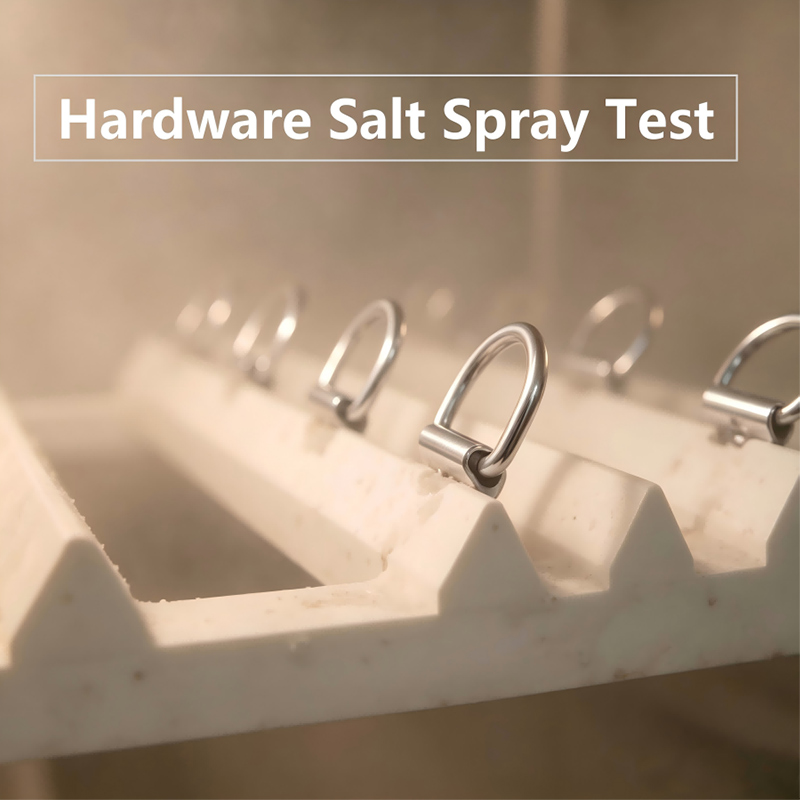
Salt spray testing (Salt Spray Test / Salt Fog Test) is an accelerated aging method that simulates corrosive environments under laboratory conditions. Its core principle is that, under controlled temperature, humidity, and salt concentration conditions, corrosion phenomena that would originally take months or even years to appear can be compressed and observed within several hours to several days.
It is important to first clarify one point: the results of salt spray testing cannot be directly converted into the actual service life of a product.
Corrosion in natural environments is affected by multiple factors, including ultraviolet radiation exposure, temperature cycling, alternating wet and dry conditions, air pollutants (such as SO₂), and mechanical wear. However, the laboratory salt spray environment represents a single condition of continuous moisture and high concentrations of chloride ions. Therefore, the true value of salt spray testing lies in:
Process stability verification: Whether hardware components from the same production batch demonstrate consistent corrosion resistance performance;
Supplier capability benchmarking: Comparing the protective performance levels of different electroplating factories or different process routes;
Defect screening: Quickly identifying manufacturing defects such as coating porosity, poor adhesion, and incomplete pretreatment.
1.2 The Standard System of Salt Spray Testing
Neutral Salt Spray (NSS) testing is currently the most widely used testing method in the handbag hardware industry. It mainly follows the following three standard systems:
Standard Number
Applicable Scope
Core Parameters
ISO 9227
International standard
5% NaCl, pH 6.5–7.2, 35°C ± 2°C
ASTM B117
North American market
5% NaCl, pH 6.5–7.2, 35°C ± 2°C
QB/T 3826-1999
China light industry sector
5% NaCl, pH 6–7, 35°C ± 2°C, deposition rate 1–2 mL/80 cm²·h
These three standard systems are highly consistent in terms of test environment parameters. The main differences lie in equipment calibration and result recording formats.
In handbag OEM/ODM manufacturing, we usually adopt the ISO 9227 testing standard.
1.3 Differentiation of the Three Salt Spray Tests Under the ISO 9227 System
ISO 9227 actually specifies three testing methods, with increasing levels of severity:
NSS (Neutral Salt Spray): The most basic accelerated corrosion test, suitable for routine quality control of the majority of handbag hardware components.
AASS (Acetic Acid Salt Spray): Glacial acetic acid is added to a 5% NaCl solution to reduce the pH to approximately 3.1–3.3. The corrosion rate is about three times that of NSS and is commonly used to evaluate the performance of zinc coatings in mildly acidic environments.
CASS (Copper Accelerated Acetic Acid Salt Spray): Copper chloride is added on the basis of AASS, and the test temperature is increased to 50°C. The corrosion rate is approximately eight times that of NSS. It is mainly used for rapid verification of high-end decorative chrome-plated and nickel-plated components.
In the daily quality control of handbag hardware, NSS testing remains the absolute mainstream method. AASS and CASS are more commonly used for rapid screening during the introduction of new materials or process changes, rather than for batch shipment inspections.
2. Electroplating Layer Thickness
2.1 Materials and Thickness Classification of Electroplating Layers
Electroplating layer thickness is measured in micrometers (μm, 1 μm = 0.001 mm). In the field of handbag hardware, this value directly determines the passing duration of salt spray testing. The industry’s empirical rule is that electroplating thickness has an approximately linear relationship with corrosion resistance time — when the thickness is doubled, the protective lifespan is roughly doubled.
Layer Level
Material
Typical Thickness
Function
Strike Layer
Copper or Nickel
0.5–2 μm
Improves substrate adhesion and fills microscopic surface defects
Barrier Layer
Nickel
1–3 μm
Blocks migration of substrate metal ions and provides the primary corrosion protection capability
Decorative Layer (Color)
Gold / Palladium / Chromium / Imitation Gold
0.1–3 μm
Provides surface color and gloss
Top Coat
Clear coating / Nano ceramic coating
5–15 μm
Seals the entire system and protects against sweat, scratches, and oxidation
2.2 Different Thickness Levels Corresponding to Different Testing Standards
According to industry practices, the electroplating quality of handbag hardware can be divided into four grades. The differences in coating thickness and salt spray performance are significant:
Quality Grade
Total Coating Thickness
Typical Salt Spray Passing Time
Application Scenario
Economy Grade
<1 μm
16–24 hours
Fast fashion, promotional products, internal accessories
Mid-range Grade
1–2 μm
24–48 hours
Regular product lines of mainstream brands
High-end Grade
2.5–5 μm
More than 48 hours
Designer brands, premium product lines
Luxury Grade
5–10+ μm
More than 96 hours
Top luxury brands such as Hermès and LV
Most standard handbags only need to meet a 24–48 hour requirement. However, the specific testing threshold should be dynamically adjusted according to the product’s actual usage environment and application scenario.
2.3 Key Misunderstandings
Misunderstanding 1: Focusing only on the thickness of the decorative layer while ignoring the barrier layer
Many buyers, when evaluating suppliers, only focus on “how many micrometers thick the surface decorative layer is,” while overlooking the thickness of the nickel barrier layer. In fact, the nickel layer is the core protective barrier against corrosion. If the nickel layer is too thin (<1 μm), even if the decorative layer reaches 1 μm, white rust may still appear within 24 hours during salt spray testing — because the decorative layer itself contains microscopic pores, allowing corrosive media to penetrate through the decorative layer and directly reach the substrate.
Misunderstanding 2: Ignoring the protective layer (Top Coat)
Clear coating or nano ceramic protective coating acts as the “raincoat” of hardware components. Electroplated parts without a protective layer may still discolor quickly after long-term contact with human sweat (which contains salt and mild acids), even if they pass a 24-hour NSS test. A high-quality protective layer can extend the service life of hardware components by 2 to 5 times.
Misunderstanding 3: Confusing “rack plating” and “barrel plating” processes
Rack plating suspends individual hardware components on electroplating racks for processing. It provides uniform coating, controllable thickness (typically 0.1–0.5 μm or above), and high surface finish quality, making it the standard process for mid-to-high-end handbags.
Barrel plating places large quantities of small components into rotating barrels for batch processing. Collisions between parts can cause microscopic scratches and uneven coating thickness (typically only 0.01–0.05 μm), making it suitable only for concealed components such as rivets and magnetic snaps.
3. Substrate Selection
3.1 Corrosion Characteristics of Three Mainstream Substrates
The performance ceiling of an electroplated coating is largely determined by the substrate material. The three commonly used substrates for handbag hardware each have their own advantages and disadvantages:
Zinc Alloy (Zamak)
Approximately 80%–90% of fashion handbag hardware is manufactured through zinc alloy die casting.
Its advantages include good fluidity, ease of achieving complex designs, and moderate cost. However, zinc alloy itself has a porous structure. If the pretreatment process before electroplating (polishing, degreasing, acid cleaning) is not thorough, residual gases and impurities inside the pores may form “plating blisters” after electroplating, becoming the starting points of corrosion during salt spray testing.
Brass
A preferred substrate material for high-end handbags. Brass has a dense structure, high mechanical strength, and a smaller electrochemical potential difference with plated metals such as nickel and gold, resulting in a lower tendency toward electrochemical corrosion. Classic hardware components from top luxury brands such as Hermès and Chanel often use brass substrates.
The disadvantages of brass are its higher density (approximately 15% heavier than zinc alloy at the same volume), higher cost, and the possibility of dezincification if the alloy composition is not properly controlled. After long-term exposure, this may cause pink-colored spots to appear on the surface.
Stainless Steel (304/316)
The most corrosion-resistant substrate material, especially 316 stainless steel, which performs exceptionally well in marine and high-humidity environments due to its molybdenum content. Stainless steel hardware can usually be used directly without electroplating (such as brushed or mirror-polished finishes), or used as a substrate for PVD (Physical Vapor Deposition) coatings.
Its disadvantages include high processing difficulty, limited design flexibility, and higher cost. It is mainly used for functional load-bearing components in luggage and outdoor backpacks.
3.2 Pretreatment: A More Critical Process Than Electroplating
Regardless of how high-quality the substrate material is, the electroplating layer will fail if the pretreatment process is inadequate. A standard pretreatment process includes:
Mechanical polishing: Removes die-casting burrs and surface oxide layers. The surface roughness must be controlled below 0.4 μm;
Ultrasonic degreasing: Removes polishing wax and fingerprint oils;
Acid cleaning and activation: Removes microscopic oxide films and increases surface activity;
Water rinsing and drying: Prevents cross-contamination.
A frequently overlooked detail is that zinc alloy die-cast components require a “cold flow mark” inspection before electroplating. Cold flow marks are surface defects formed when the leading edge of molten metal cools during the die-casting process. They are difficult to detect with the naked eye, but they become obvious dents after electroplating and serve as potential entry points for corrosion.
4. Interpretation of Test Results
4.1 Identification of Failure Modes
After salt spray testing, hardware components commonly show three types of corrosion phenomena:
White Rust
White rust is a corrosion product of the coating itself. It usually appears on the surface of zinc or nickel coatings and presents as white powdery or mist-like deposits. The appearance of white rust indicates that the coating has been penetrated, but the substrate has not yet corroded.
During testing, the time point at which white rust appears reflects the density and thickness of the coating. For multi-layer electroplating systems, white rust may appear on the nickel layer surface, indicating that the nickel layer has pores or insufficient thickness.
Red Rust
Red rust is a corrosion product of the substrate (iron or steel), appearing reddish-brown in color. The appearance of red rust indicates that the entire coating system has completely failed and is considered a serious quality failure.
In handbag hardware, if red rust appears on zinc alloy substrates, it is usually accompanied by large-scale coating blistering or peeling.
Blistering / Peeling
This is a typical manifestation of poor adhesion. Blistering is usually caused by incomplete degreasing during pretreatment or hydrogen embrittlement during the electroplating process. Peeling may be related to excessive internal stress within the coating or insufficient bonding strength between the base layer and the substrate.
Components with blistering often develop red rust within a short peri
4.2 ISO 10289 Rating Standard
After the test is completed, the corrosion area must be evaluated according to ISO 10289:
Rating
Corrosion Area Percentage
Quality Assessment
10
No defects
Perfect
9
≤0.1%
Excellent
8
≤0.25%
Good
7
≤0.5%
Acceptable
6
≤1%
Critical
≤5
>2.5%
Unqualified
In the actual quality control of handbag hardware, the rating is usually required to be no lower than Grade 7 (corrosion area ≤0.5%), and red rust is not allowed. Some high-end brands’ internal standards require a rating of Grade 9 or above.
5. From Standards to Practice — Recommended Testing Standards for Different Handbag Categories
Product Category Differences Determine Testing Thresholds
Different types of handbags face significantly different corrosion risks for their hardware components, and testing requirements should therefore be adjusted accordingly:
Backpack
Backpack hardware typically includes zippers, buckles, D-rings, and adjustment buckles. Since backpacks are often used in outdoor environments and exposed to rainwater and sweat, it is recommended that the NSS testing baseline should be no less than 24 hours with no red rust and no blistering.
For orders targeting tropical markets or marine climate markets, it is recommended to increase the requirement to more than 48 hours.
For backpack OEM purchasers with special requirements for hardware corrosion resistance, the testing duration and failure criteria can be clearly defined with the backpack manufacturer during the sampling stage in advance, avoiding disputes caused by unclear standards during mass production.
Handbag
Handbag hardware is primarily decorative, with functionality as a secondary consideration. It includes components such as locks, chains, bag feet, and magnetic snaps.The usage environment of handbags is relatively mild (mainly indoors), but consumers have extremely low tolerance for visible appearance defects. It is recommended that NSS testing should achieve 24 hours with no visible corrosion spots.
For handbag OEM purchasers, chains and locks are key control components for verifying changes during long-term use and wearing conditions, and they should be included as mandatory inspection items for every production batch.
Cosmetic Bags & Toiletry Bags
The hardware components of cosmetic bags are usually smaller (such as zipper pulls and small fasteners), but the usage environment is relatively harsh — high humidity in bathrooms, chemical ingredients in cosmetics (such as alcohol, oils, and fragrances), as well as mechanical wear caused by frequent opening and closing.
For cosmetic bag OEM purchasers, conducting a 24-hour NSS test for cosmetic bags and toiletry bags is a mandatory requirement.
Luggage & Business Bags
Hardware components such as telescopic handles, wheel bases, and locks are subject to both mechanical loads and corrosion challenges. Standards such as ISO 9227 provide clear salt spray testing requirements for luggage hardware. In general, a 24-hour NSS test is conducted according to the standard. However, high-end business bag brands often have internal requirements of more than 48 hours.
6 . Industry Evolution — Environmental Regulations and New Technologies
6.1 From Hexavalent Chromium to Trivalent Chromium
In traditional electroplating processes, hexavalent chromium (Cr⁶⁺) passivation layers were widely used due to their excellent corrosion resistance. However, hexavalent chromium is classified as a Substance of Very High Concern (SVHC) under the EU REACH regulation and is carcinogenic. Its use in handbag hardware has therefore been strictly restricted.
The current industry trend has shifted toward trivalent chromium (Cr³⁺) passivation. Although its corrosion resistance is slightly inferior to hexavalent chromium under certain extreme conditions, equivalent NSS testing performance can be fully achieved by increasing coating thickness and optimizing sealing processes.
For bag OEM orders exported to the EU, we recommend that products provide REACH compliance certification.
6.2 PVD: A High-End Alternative to Electroplating
Physical Vapor Deposition (PVD) is a process that deposits metallic or ceramic materials onto substrate surfaces in a vacuum environment. Compared with electroplating, PVD coatings have hardness approximately 10 times higher than traditional electroplated coatings, are almost impossible to scratch or fade, and do not require the use of harmful chemical solutions.
In the field of handbag hardware, PVD is currently mainly applied to:
High-end brand black/gunmetal hardware (such as Hermès “So Black” series);
Functional components made from stainless steel substrates;
Zippers and fasteners requiring extremely high wear resistance.
The limitations of PVD include high equipment investment costs, extremely high requirements for substrate surface smoothness (usually requiring a nickel electroplating base layer and mirror polishing beforehand), and less flexibility in color selection compared with electroplating.
Therefore, in the next 5 to 10 years, electroplating will likely remain the mainstream process for handbag hardware, but the penetration rate of PVD will continue to increase.
7. FAQ
Q1. Why must handbag hardware undergo salt spray testing?
A:For handbag hardware, salt spray testing is a core method for verifying electroplating quality and predicting long-term product performance in humid climates (such as Southeast Asia and coastal regions).
Q2. What are the commonly used salt spray testing standards in the handbag hardware industry?
Standard
Applicable Scope
Notes
ASTM B117
North America and international markets
The most commonly used neutral salt spray (NSS) reference method
ISO 9227
International export certification
Covers three methods: NSS, AASS, and CASS
GB/T 10125
Chinese national standard
Commonly used by domestic and export factories
QB/T 3826
Light industrial products (luggage and handbag hardware)
Historical standard used in China’s luggage industry
EN 1670
European architectural/furniture hardware
Classifies corrosion resistance into Grades 1–5 (24h–480h)
Q3. What salt spray testing duration is typically required for different handbag hardware positioning levels?
The following are common industry references (based on Neutral Salt Spray NSS):
Market Positioning
Typical Salt Spray Requirement
Application Scenario
Fast fashion / Entry-level
24 hours or above
Indoor dry environments, short-term use
Mid-range brands
48 hours or above
General urban daily commuting
High-end brands
48–72 hours
High-humidity climates (such as Florida, Singapore, and Hong Kong)
Luxury brands
More than 96 hours
Long-term durability, coastal markets, heirloom-level quality
Q4. Why do different batches show large variations in salt spray test results despite using the same electroplating process?
Common reasons include:
Inconsistent pretreatment: Differences in polishing quality and incomplete oil/wax removal result in variations in coating adhesion.
Coating thickness fluctuations: Copper layer, nickel layer, and decorative layer thicknesses may not meet requirements or may lack uniformity.
Substrate differences: Zinc alloy die-cast components may contain sand holes or pores, which become corrosion pathways.
Missing post-treatment: Failure to apply sealing agents (Top Coat) or passivation layers increases coating porosity.
Testing operation differences: Sample placement angles, chamber loading density, and spray deposition rates are not standardized.
Q5. What are the fundamental differences in salt spray performance among zinc alloy, brass, and stainless steel substrates?
Substrate
Salt Spray Characteristics
Zinc Alloy (Zamak)
Most cost-effective, but the substrate is highly reactive and relies heavily on the electroplating layer; coating defects easily lead to white rust/red rust
Brass
The substrate itself has better corrosion resistance than zinc alloy and can maintain longer durability even without plating; suitable for high-end unplated or lightly plated designs
Stainless Steel (304/316)
The strongest substrate corrosion resistance; can be used directly or only coated with PVD; 316 can achieve 500h+ performance
Q6. What are the differences between PVD coatings and traditional electroplating in salt spray testing performance?
Traditional electroplating: Relies on a “barrier + sacrificial protection” mechanism through multiple metal coating layers. It has lower cost and more color options, but coatings contain microscopic pores, making salt spray performance highly dependent on process control.
PVD coating: Forms a dense ceramic/metal film through vacuum deposition, with extremely low porosity. It generally provides better salt spray resistance and wear resistance; however, color options are more limited, costs are higher, and substrate surface flatness requirements are also very strict.
The two processes are not mutually exclusive — high-end hardware often adopts a combined process of “electroplating base layer + PVD top layer.”
Q7. Can salt spray testing be directly equated with the actual service life of a product?
Answer: No. Salt spray testing is an accelerated comparative test. A 48-hour laboratory test does not equal 48 days of actual use.
It is mainly used to:
Cmpare corrosion resistance levels of different electroplating systems or suppliers;
Verify whether mass production remains consistent with the approved Golden Sample;
Screen out obviously defective processes.
In actual usage, the effects of wear, sweat, ultraviolet exposure, and temperature cycling on hardware differ from salt spray conditions. Therefore, high-end projects often require additional artificial sweat testing, wear testing, and adhesion testing.
Q8. Besides salt spray testing, what other supporting tests are usually required for handbag hardware?
Test Type
Purpose
Common Standards
Artificial Sweat Testing
Simulates corrosion and discoloration caused by hand contact
ISO 3160-2, customer-defined formulas
Adhesion Testing
Verifies whether coatings are prone to peeling
Cross-cut test, tape test, bending test
Wear / Friction Testing
Evaluates durability during daily contact
Reciprocating friction test, RCA tape test
Hardness Testing
Confirms surface scratch resistance
Pencil hardness test, Vickers hardness test
Tensile / Torque Testing
Verifies mechanical strength of load-bearing hardware (D-rings, lobster clasps)
Customer-defined (typically 30–80 kg)
Cycle Testing
Evaluates repeated opening and closing lifespan of locks and spring clasps
5,000–10,000 cycles
Conclusion
The corrosion resistance performance of handbag hardware can never be judged simply by whether it looks shiny or feels heavy. NSS salt spray testing provides a unified comparison benchmark, electroplating thickness provides measurable physical indicators, and the design of multi-layer electroplating systems reflects the depth of a supplier’s manufacturing capabilities.
For bag factories and various bag OEM service providers, establishing internal testing capabilities based on ISO 9227 is a necessary investment for improving supply chain competitiveness.
For brands and purchasers, when developing technical specifications (Tech Pack), the actual product usage environment should be clearly defined. Based on this, reasonable salt spray testing durations and acceptance criteria should be established to avoid cost waste or quality control failures caused by a “one-size-fits-all” approach.
Author






 Network Supported