




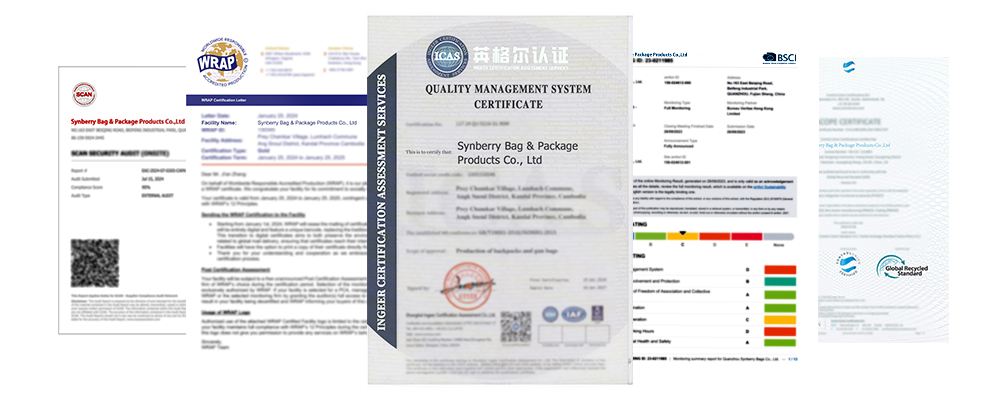
Synberry is certified with BSCI, WRAP, SCAN, GRS, and ISO, ensuring top-quality and sustainable production standards.
Our professional product customization service transforms your idea into reality, providing a seamless experience from the concept to product display on the retail shelf


With factories in China and Cambodia, you have the flexibility to select the production site that offers the most advantageous tariff benefits based on your specific situation.

What has made Synberry the choice of two generations? With clearly defined quality principles, well-managed documentation and records, and most importantly, in-depth process analysis and inspection, we are able to ensure consistent high quality.

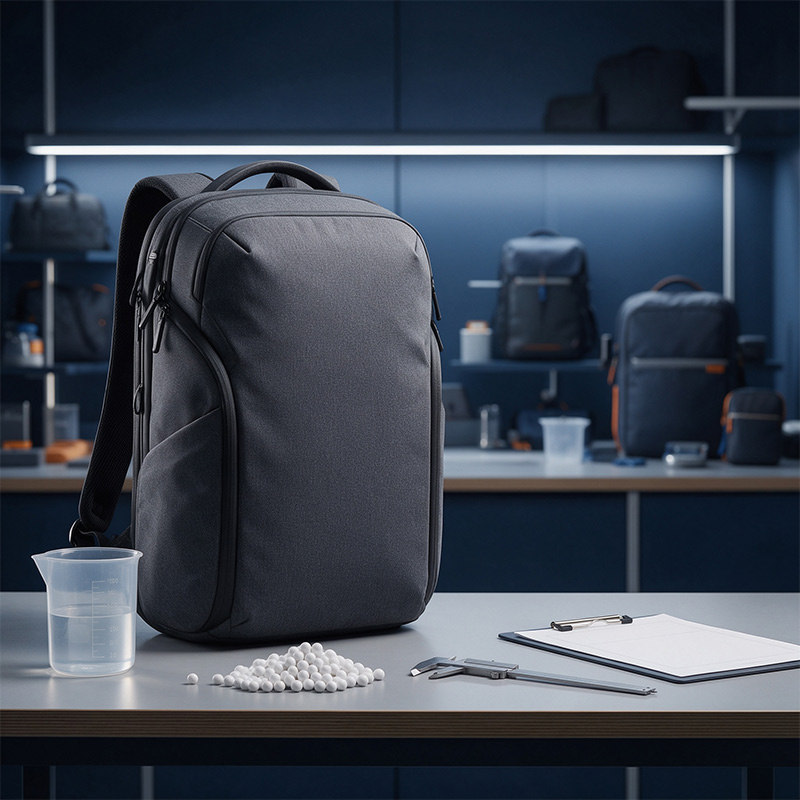
There are two widely used methods for measuring backpack capacity: geometric volume estimation and the ASTM F2153 fill test. During the design stage, the geometric formula (internal length × width × depth ÷ 1,000, multiplied by a pattern correction factor when necessary) can be used to estimate the maximum capacity. For sample approval and production capacity labeling, the unexpanded capacity measured using the ASTM F2153 fill test is generally used as the baseline. Geometric estimation is best suited to structured bags with regular shapes for preliminary space planning. Applying this method directly to sewn backpacks usually overestimates capacity. The fill test uses rigid plastic spheres with a diameter of 20 mm to fill all enclosed compartments; the spheres are then transferred to a calibrated measuring container to determine volume. The result can be used in purchase contracts, technical packs, inspection criteria, and product capacity labeling. For custom bag manufacturing, specifying the measurement method, included compartments, and tolerance alongside the capacity value helps align acceptance criteria between buyers and suppliers. Table of Contents Ⅰ. Why Backpacks with the Same Labeled Capacity Can Have Different Actual Volumes Ⅱ. Geometric Formula Estimation Ⅲ. ASTM F2153 Fill Test Ⅳ. Practical Recommendations for Backpack OEM Projects Ⅴ. Frequently Asked Questions (FAQ) Ⅵ. Conclusion Ⅰ. Why Backpacks with the Same Labeled Capacity Can Have Different Actual Volumes 1. Backpack Capacity Has No Globally Uniform Mandatory Labeling Standard Unlike shoe sizing or fabric weight, backpack capacity is not subject to a globally uniform mandatory labeling rule. Products labeled as 30 L may be measured using four common methods in the industry, producing different usable-volume results. Measurement method What is measured Typical result Notes Multiply external dimensions External length × width × height of the bag Likely to be overstated Counts fabric, foam, and back-panel structures as volume; unsuitable for labeled capacity. Main compartment only Largest enclosed main-compartment space Conservative Perceived usable space may exceed the labeled value, but the scope is limited and comparisons are less meaningful. Add all enclosed pockets Main compartment, zippered pockets, and covered enclosed pockets More comparable Closer to the logic of ASTM F2153; agree in advance whether open pockets are included. Promote expanded capacity Capacity with the roll-top or expansion zipper fully opened Represents maximum expanded state only Volume is lower in the normally closed state; some expanded bags may exceed airline carry-on limits. 2. Main Reasons for Differences in the Same Labeled Capacity For a daypack labeled 30 L, an external-dimension calculation includes space occupied by the back panel and shoulder-strap structure. Under the ASTM F2153 fill test, only enclosed compartments are counted; mesh water-bottle pockets and open front stash pockets are excluded. As a result, the unexpanded measured capacity may be only 24–25 L. Such differences are usually not manufacturing defects. They primarily result from different measurement methods and boundaries for what is included. 3. Capacity Must Be Matched to the Intended Use State Capacity can be reported as unexpanded capacity and expanded capacity. Unexpanded capacity refers to the bag in its normally closed, everyday-use configuration. Expanded capacity is the maximum volume available when a roll-top is fully opened or an expansion zipper is completely unzipped. A specification sheet that lists only one capacity value does not clearly identify the intended use state and makes inspection decisions more difficult. For roll-top bags and bags with expansion zippers, also verify the fully loaded external dimensions to determine whether the bag meets carry-on baggage size limits. Ⅱ. Geometric Formula Estimation 1. Basic Formula and Units A general geometric formula used in backpack OEM development is: Capacity (L) = Internal Length (cm) × Internal Width (cm) × Internal Depth (cm) ÷ 1,000 Example: With internal dimensions of 50 × 30 × 20 cm, the theoretical capacity is 50 × 30 × 20 ÷ 1,000 = 30 L. The formula uses centimeters and returns liters, based on 1 L = 1,000 cm³. For the North American market, capacity may also be listed in cubic inches; 1 L ≈ 61.024 cu in. 2. Appropriate Uses of the Geometric Formula • Reverse-engineering target dimensions during concept design: allocate internal usable dimensions based on the target capacity to support pattern and construction development. • Quickly estimating a capacity range during initial inquiries: when no physical sample is available, use external dimensions to make a preliminary assessment of the product category and support quotation and process evaluation. • Planning internal space before sampling: allocate space among the main compartment, laptop compartment, and front pockets, using the result as a theoretical upper-limit reference. 3. Why the Geometric Formula Can Be Inaccurate for Sewn Backpacks • The bag is not a perfect rectangular prism: daypacks that taper toward the top, roll-top bags, flap-top bags, and packs with curved suspension profiles have irregular shapes that cannot be accurately represented by a rectangular prism. • Fabric, foam, and suspension components reduce usable volume: laptop sleeves, back panels, and shoulder-strap anchor structures occupy space within the bag’s external profile. • Pocket-counting rules vary: external-dimension calculations may include side and front pockets, whereas standard fill testing counts enclosed compartments only and excludes open mesh pockets. • Seam allowances and lining thickness reduce usable space: sewing allowances, lining, and reinforcement materials reduce the effective internal volume. Conclusion: The geometric formula is a design-screening tool for estimating theoretical maximum volume; it should not be used directly as the labeled capacity of a sewn backpack. Results are more accurate for rectangular tote bags and simple travel duffels. For backpacks, technical outdoor packs, and styles with multiple complex compartments, capacity acceptance should be based on a fill test. 4. Early-Stage Estimation Before Sampling: Pattern Correction Factors During early development, before a physical sample is available, a pattern correction factor can help narrow the gap between theoretical and measured capacity. The adjusted formula is: Estimated capacity (L) ≈ [Internal length × internal width × internal depth (cm) ÷ 1,000] × K Select K according to the regularity of the bag’s shape. The ranges below are based on pattern databases and industry experience and are for design estimates only—not for official capacity labeling. The estimate must ultimately be calibrated against an ASTM fill test. Bag construction Reference correction factor Notes Boxy business backpack 0.80–0.85 Regular shape with high space efficiency. Standard daypack 0.75–0.80 Slightly contoured shape and space occupied by compartments. Outdoor hiking pack (internal aluminum-frame back panel) 0.70–0.75 Suspension system takes up more internal volume. Cylindrical duffel 0.72–0.78 Curved side walls reduce usable volume. Roll-top backpack 0.65–0.75 The rolled closure section is excluded from effective capacity. Tapered daypack, narrower at the top 0.70–0.78 The tapered cross-section makes the upper space less efficient. Example: A standard daypack with internal dimensions of 45 × 30 × 18 cm has a theoretical volume of 24.3 L. Using a correction factor of 0.78 gives an estimated capacity of approximately 19 L; subsequent fill testing will generally yield around 18–20 L. Important limitation: Correction factors are not universally transferable across factories or patterns. If the fabric weight or lining construction changes, re-test the bag and recalibrate K. In external technical communications, label this figure as a “design estimate,” not the contractual labeled capacity. Ⅲ. ASTM F2153 Fill Test 1. Standard Overview and Scope A commonly used industry standard for backpack capacity testing is ASTM F2153, “Standard Test Method for Measurement of Backpack Capacity.” It is a voluntary test method intended to establish consistent, comparable capacity-measurement rules among brands, factories, and inspection teams. Key principles: report both unexpanded and expanded capacity; count enclosed compartments only; exclude open mesh water-bottle pockets, open front stash pockets, and open compression pockets. The standard generally does not apply to small bags under 4 L. Crossbody mini bags, waist packs, and small organizers do not need to be labeled in liters; if a capacity value is provided, identify the alternative simplified test method used. 2. Standard Filling and Volume-Reading Procedure Step Procedure Control point 1. Prepare the test media Use uniform rigid plastic spheres with a diameter of 20 mm, commonly PP or PS. Foam beads and beans are for rough internal checks only; they compress or settle and have poor repeatability. Do not use them for official capacity labeling. 2. Fill all enclosed compartments Fill the main compartment and every zippered pocket. For roll-top bags, fill to the agreed number of rolls while ensuring normal closure. Close zippers after filling without pulling them taut. Do not omit any enclosed compartment. Exclude all open pockets. 3. Use a consistent settling procedure Gently shake the bag so the spheres settle naturally. A common procedure is three gentle shakes, approximately 10 seconds each. Do not deliberately press or compress the bag to inflate the reading. 4. Transfer the spheres to a calibrated measuring container Transfer all spheres into a graduated container calibrated by water-volume measurement. Gently agitate until the spheres settle, then record the volume. Large backpacks may be measured in multiple batches and the readings added together. Calibrate measuring equipment with water periodically and retain calibration records. 5. Repeat the test and average the results Conduct at least two independent tests. If the results differ by more than 1–2 L, filling or settling procedures may not have been consistent; repeat the test. Use the same spheres and measuring equipment for first-piece, in-line, and final inspections. 3. Limitations of the Standard and Its Relationship to Specification Sheets ASTM F2153 is voluntary and is not legally mandatory. Many retail product listings also omit the test method. The value of the test is that it allows the fill media, measuring equipment, included compartments, and tolerances to be defined in the specification sheet. If only a capacity number is listed without test details, results from different stages cannot be reliably compared. 4. When Full Laboratory Equipment Is Unavailable: Simplified Measurement Methods Not every inspection site has enough standard plastic spheres and calibrated measuring containers. A simplified method may be used during sampling, but the specification sheet must state that it differs from ASTM F2153. Scenario Simplified method Notes Compartments of 4 L or more Fill with 20 mm plastic spheres or uniform dry beans, then measure using a 1 L measuring cup and add the readings. Beans are for internal reference only; rigid plastic spheres are preferred for official capacity labeling. Compartments under 4 L Because small spheres stack with greater error, weigh the filling material first and convert to volume using a defined ratio if necessary. State in the documentation: “Not the ASTM F2153 standard procedure.” Curved or tapered bags Fill in vertical sections and add the readings from each section. A single rectangular-prism calculation will overestimate the capacity of tapered bags. Backpacks with multiple compartments Fill and measure each enclosed compartment separately, then total the results; list open pockets separately as excluded. Keep separate records to avoid confusion over what is included. Important: Capacity values obtained using different measurement methods should not be compared directly. Ⅳ. Practical Recommendations for Backpack OEM Projects 1. Recommended Capacity Fields for Specification Sheets To reduce the risk of a finished product’s capacity differing from expectations, include the following six items in the capacity section of the specification sheet: Field Recommended wording Purpose Measurement method “ASTM F2153 fill test using 20 mm PP spheres” / “Calculated from external dimensions; design reference only.” Identifies the method used to determine capacity. Unexpanded capacity Capacity in liters in the normally closed state. Matches typical use and product labeling. Expanded capacity Capacity in liters with the expansion zipper fully open or the roll-top fully unrolled. Distinguishes maximum expanded volume. Compartments included “Includes the main compartment and all zippered pockets; excludes mesh water-bottle pockets and open front stash pockets.” Removes ambiguity about which pockets count. Units List L and cu in together and specify the conversion. Supports reading preferences in different Western markets. Tolerance Agree on a tolerance by capacity range; use the same test method when judging compliance. Sets a reasonable acceptance range for inspection. 2. Example Wording for a Specification Sheet Capacity: 28 L unexpanded (approx. 1,709 cu in) / 34 L expanded (approx. 2,075 cu in), measured using the ASTM F2153 fill test with 20 mm PP plastic spheres. Includes the main compartment and all zippered pockets; excludes mesh water-bottle pockets and open front stash pockets. Tolerance: ±1.5 L. File the test record with the initial sample approval documents. 3. Suggested Tolerances and Contract Language Capacity range Suggested tolerance Application notes Under 20 L ±1 L Small bags are sensitive to compartment and opening design; test conditions must be controlled. 20–40 L ±1.5–2 L Common range for daypacks and commuter laptop backpacks. Over 40 L / large travel bags ±2–3 L Fill-test variation may be greater for large bags; additional repeats are recommended. Retail products with strict controls ±3%, or agree that “labeled capacity must not exceed measured unexpanded capacity.” Suitable for tightly controlled cross-border retail programs. Note: Tolerance criteria must correspond to the capacity test method. A tolerance established using external dimensions cannot be used to judge results from a fill test. 4. Common Capacity-Related Discrepancies in Custom Backpack Development Type of discrepancy Explanation Control measure Including open pockets in labeled capacity The counting method differs from ASTM and can produce inconsistent figures. Clearly list included and excluded pockets in the specification sheet. Advertising only expanded capacity Does not reflect volume in the product’s normally closed state. Provide both unexpanded and expanded capacity. Using external dimensions directly for sewn backpacks Foam, back panels, and lining take up space, so the calculated value is high. Use fill testing as the basis for labeled capacity; use external dimensions only as a supplementary reference. Using one capacity value for all sizes of a style Pattern and suspension structures change by size, affecting volume. Test each size independently. Testing only the first sample, with no production recheck Pattern adjustments, lining changes, and pocket revisions can change capacity. Test the approved reference sample and production trial units. Mixing metric and imperial units without labels Can lead to misinterpretation of readings. List both L and cu in in technical documents, with the primary unit suited to the target market. 5. Key Points When Comparing Multiple Samples Two products labeled with the same capacity may not perform equally in actual loading. Compare external dimensions, the main compartment’s internal usable dimensions, opening design, and photos of the bag when loaded. Even when both are labeled 30 L, a boxy pack and a tapered pack may accommodate different shapes of items. For travel backpacks and school backpacks, capacity is only one consideration. Flap-top designs are better suited to flat items, while top-loading roll-top bags offer good compression but can make items deep inside the bag harder to access. For a more complete assessment, include capacity, main-compartment internal dimensions, opening type, and fully loaded external dimensions in the specification sheet. 6. When to Conduct Capacity Tests Lock in the capacity baseline during initial sample approval. Once the first sample is complete, test capacity using the agreed method. After the parameters are approved, record them in the technical pack and purchasing documents before starting mass production. During inspection, use the same sphere specifications, measuring equipment, and settling procedure as for the approved sample, and assess the results against the agreed tolerance. 7. Capacity Records and Compliance Documentation Capacity testing is a technical specification activity and is separate from chemical testing of materials. Nevertheless, related records should be archived together for easy reference. If a product is labeled as using recycled fabric, the material claims should align with applicable GRS, GOTS, or OEKO-TEX documentation. Children’s backpacks sold in the United States must also meet applicable CPSIA requirements. A substantial discrepancy between labeled and measured capacity may create a risk of misleading advertising in the US and European markets. Store capacity test records and compliance certificates in the technical pack so they can be retrieved for customer factory audits and marketplace reviews. Ⅴ. Frequently Asked Questions (FAQ) Q1: Is backpack capacity accurately measured by multiplying length × width × height and dividing by 1,000? This formula estimates only the theoretical upper limit. It counts fabric, foam, and back-panel structures as volume and therefore generally overestimates usable space in sewn backpacks. The discrepancy is smaller for rectangular tote bags and simple travel duffels. For backpacks, outdoor packs, and styles with multiple compartments, capacity acceptance should be based on the ASTM F2153 fill test. A pattern correction factor can support early sampling estimates, but the result is for internal reference only and must not be used as the official labeled capacity. Q2: What is ASTM F2153? Are factories required to use it? ASTM F2153 is a voluntary test method for measuring backpack capacity; it is not legally mandatory. The core procedure is to fill all enclosed compartments with 20 mm rigid plastic spheres, transfer the spheres to a calibrated measuring container, and record both unexpanded and expanded capacity. Open water-bottle pockets and open stash pockets are excluded. The buyer and supplier should agree on whether to use the method in the technical documentation; once agreed, it becomes the basis for acceptance. Q3: Why does a factory label a backpack as 30 L when the fill-test result is only 25 L? This is usually due to differences in measurement methods—for example, using external dimensions or including open pockets in the calculation. A difference of around 20% between a daypack’s labeled capacity and its ASTM fill-test result is not unusual in the industry. Buyers and suppliers can establish a consistent basis for acceptance by agreeing in advance on the test method, pocket-inclusion rules, and tolerance range in the specification sheet. Q4: How should tolerances be set in a specification sheet, and which units should be used? For bags under 20 L, a tolerance of ±1 L is suggested; for 20–40 L, ±1.5–2 L; and for large bags over 40 L, ±2–3 L. For tightly controlled retail programs, the tolerance can be narrowed to ±3%, or the parties can agree that “the labeled capacity must not exceed the measured unexpanded capacity.” Use cubic inches (cu in) alongside liters for North America, while liters are generally preferred in Europe. Conversion: 1 L ≈ 61.024 cu in. Q5: How should capacity be tested for small bags under 4 L, waist packs, and organizers? ASTM F2153 generally does not apply to bags under 4 L. A simplified method can use a calibrated measuring cup, uniform dry beans, or a weight-to-volume conversion. The specification sheet must state that the method is “not the ASTM F2153 standard procedure.” Small spheres can stack inconsistently in small compartments, so external capacity claims for small bags should be made cautiously. Q6: Can rice or beans replace standard plastic spheres? They may be used for rough internal checks, but capacity figures used in contracts, specification sheets, or product labeling should not be based on rice or beans. Grains settle under pressure, and results vary between operators and batches, making repeatability poor. For formal testing, use 20 mm rigid PP/PS spheres and calibrated measuring equipment. Q7: For a roll-top backpack, how many rolls count as the unexpanded state under ASTM F2153? ASTM F2153 does not mandate a specific number of roll-top folds, which can lead to disagreement for this style. The buyer and supplier should agree in writing in the technical pack on the number of folds used for normal closure (commonly 2–3 rolls in the industry). Fill the bag to the agreed number of rolls and confirm that it closes normally without fabric tension; record this as the unexpanded capacity. The reading with the roll-top fully unrolled is the expanded capacity. Ⅵ. Conclusion From using geometric estimates to support early pattern planning, to determining labeled capacity through ASTM F2153 fill testing, and then specifying the test method, included compartments, and tolerances in clear technical terms, a verifiable capacity-assessment system is central to bag capacity management. Consistent criteria help project stakeholders avoid misunderstandings about specifications. As a professional bag manufacturer, we can support capacity-related technical requirements and help align project specifications with the agreed standards. Please contact us if you need assistance. Author
View More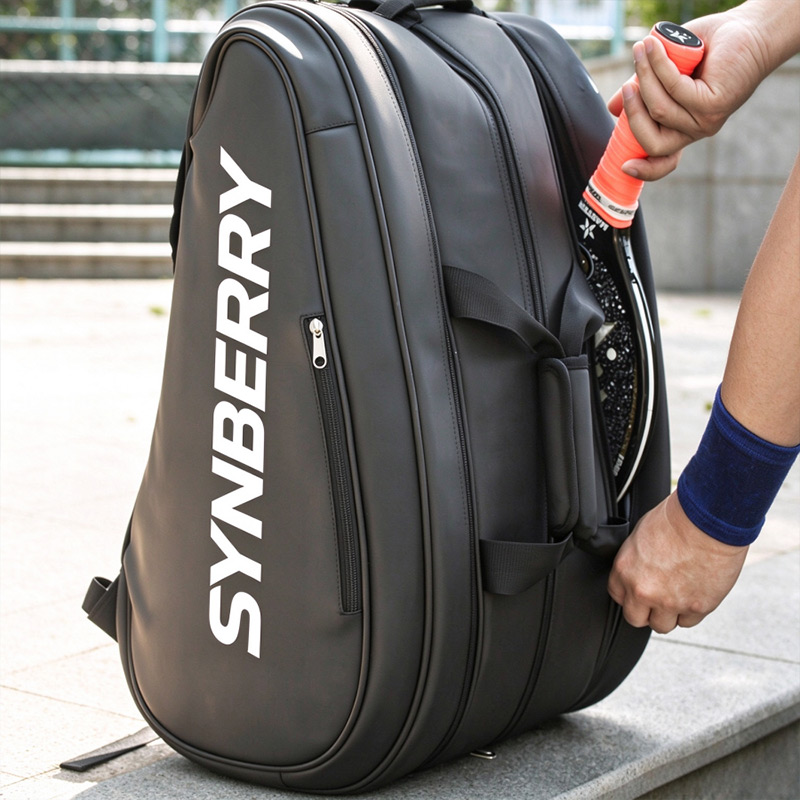
A quality pickleball bag should meet four core standards: a scientifically designed compartment layout, a comfortable carrying system, high-quality craftsmanship, and durable, water-resistant materials. Only when all four elements are combined can a pickleball bag truly be considered a good one. Table of Contents: Scientific Compartment Design Comfortable Carrying System High-Quality Craftsmanship Durable, Water-Resistant Materials Customization Recommendations for Brands Frequently Asked Questions About Pickleball Bag Customization Conclusion 1. Scientific Compartment Design Pickleball paddle faces are primarily made of carbon fiber or fiberglass composite materials, which are susceptible to pressure, scratches, and prolonged exposure to high temperatures and direct sunlight. Therefore, a dedicated paddle compartment is an essential feature of a good pickleball bag. Specifically, an excellent paddle compartment should have the following features: Thickened, Insulated Paddle Compartment: The dedicated paddle compartment should feature a thickened EVA or pearl cotton cushioning layer to absorb impacts when the bag is dropped or squeezed. In addition, an aluminum foil thermal insulation lining can effectively resist high outdoor temperatures and help prevent paddle face deformation caused by prolonged exposure to direct sunlight. Large-Capacity Main Compartment: The main compartment should provide sufficient space to accommodate all the essential gear needed for daily training or competitions, such as clothing, towels, water bottles, and other items. Quick-Access Ball Pocket: Add a dedicated mesh or elastic compartment inside the main compartment for storing pickleballs. The separate, quick-access ball pocket keeps balls physically separated from clothing, helping maintain the cleanliness and organization of the gear. It also allows players to quickly access spare balls during warm-ups or between matches without having to search through the entire main compartment, improving overall efficiency and user experience. Separate, Ventilated Shoe Compartment: Isolated from the main compartment, it prevents wet or dirty shoes from soiling paddles and clothing while helping reduce unpleasant odors. This is a key feature that distinguishes a professional pickleball bag from an ordinary gym bag. Multiple Small Pockets: Designed to store personal items and accessories such as mobile phones, keys, overgrips, protective gear, and towels. Hidden Valuables Pocket: Features a soft, suede-lined interior to safely store valuables that are susceptible to scratches. 2. Comfortable Carrying System Pickleball bags commonly come in three carrying styles: backpacks, shoulder/crossbody bags, and convertible bags that can be carried by hand or worn as backpacks. Backpack: Ideal for carrying multiple paddles and a full set of gear, its key features lie in the design of the shoulder straps and back panel. The shoulder straps of a high-quality backpack should be wide and thick, filled with high-density foam, and covered with breathable mesh fabric to distribute pressure across the shoulders and promote airflow, preventing excessive heat buildup and pressure marks during extended wear. The back panel should incorporate an EVA or PE pearl cotton support layer to prevent it from deforming or collapsing under heavy loads. It should also conform to the natural curvature of the spine, providing stable and reliable support. Shoulder Bags or Crossbody Bags: These bags prioritize lightweight convenience and flexibility, making them ideal for short training sessions or situations where only a small amount of gear is needed. The shoulder strap should be sufficiently wide to prevent slipping, while the shoulder pad should incorporate a cushioning layer to reduce the strain of carrying weight on one shoulder. An adjustable shoulder strap allows users of different heights to find a comfortable fit. Convertible Tote and Backpack: For users who value versatility, a convertible tote and backpack offers greater flexibility. This type of bag typically features a reinforced top handle for convenient carrying over short distances or placing the bag in a vehicle, as well as a padded side handle designed to reduce pressure on the hand and prevent discomfort when carrying the bag. When converted into backpack mode, the concealed shoulder straps should be easy to pull out and securely fasten, ensuring a seamless carrying experience in both configurations. Regardless of the style chosen, the ultimate goal of the carrying system is to ensure that players feel comfortable and at ease on their way to and from the court. 3. High-Quality Craftsmanship Craftsmanship details directly determine the service life and overall look and feel of a pickleball bag. Stitching: The stitching must be strong and durable, with consistent stitch spacing and neat, even seams. Key stress points, such as shoulder strap attachment points, handle bases, and zipper ends, should be reinforced with double or even triple stitching, combined with bar-tack reinforcement to improve tear resistance and prevent seams from splitting or breaking under prolonged heavy loads. Hardware: The choice of hardware is crucial. Zippers should be smooth, durable, and offer a certain level of water resistance, preferably from reputable brands such as YKK or SBS. Zipper pulls should be designed for easy gripping and operation, even when wearing sports gloves. Buckles: Buckles should undergo fatigue testing to ensure they resist cracking or deformation even after repeated fastening and release. In addition, fabric edges should be finished neatly, with no loose threads, and the bag should maintain a structured, well-defined shape without easily collapsing, even when empty. These details reflect professional quality and attention to detail. 4. Durable, Water-Resistant Materials Pickleball is often played outdoors, where bags may be exposed to sudden rain showers or morning dew on the court. Therefore, the water resistance of the fabric serves as the first line of defense in protecting the gear inside. 4.1 Main Fabric: Nylon vs. Polyester A high-quality pickleball bag should be made from high-density nylon (such as 600D or higher) or polyester fabric. These materials offer excellent abrasion resistance and tear resistance, along with good water-repellent properties. Nylon: When comparing these two common materials, nylon stands out for its higher strength-to-weight ratio and excellent abrasion resistance, making it a preferred choice for premium pickleball bags. It has a smooth surface and a soft feel, but comes at a relatively higher cost. Polyester: Polyester offers better UV resistance and color retention, making it less prone to fading or degradation after prolonged exposure to direct sunlight. It is also more affordable, making it a cost-effective choice. 4.2 Waterproof Coatings A high-quality fabric base alone is not sufficient to withstand harsh weather conditions. The surface waterproofing treatment is the key factor that determines a bag's water-repellent performance. Most professional pickleball bags on the market today use one of three main treatments: DWR (Durable Water Repellent) coating, PU coating, or TPU coating. DWR Water Repellency: DWR coating creates a lotus-leaf effect on the surface of the bag, causing water droplets to bead up and roll off quickly rather than penetrate the fabric. This effectively prevents rainwater from soaking the gear inside. PU Waterproof Coating: PU coating is typically applied to the inner side of the fabric, forming a dense waterproof membrane. It not only prevents external moisture from penetrating but also enhances the fabric's overall structure and tear resistance. TPU Waterproof Coating: As a thermoplastic polyurethane elastomer, TPU coating is typically laminated onto the inner side of the fabric as a thin film or incorporated as a separate layer. Compared with PU coating, TPU offers superior hydrolysis resistance and low-temperature flexibility. Even in cold and humid environments, it is less prone to degradation, hardening, or cracking, helping maintain the bag's waterproof performance over long-term use. 5. Customization Recommendations for Brands If you are planning to develop a pickleball bag under your own brand, the following recommendations across three key areas can help you strike the right balance between product performance, cost, and target audience. 5.1 Main Fabric Selection Recommendations Fabric determines a pickleball bag's look and feel, durability, and pricing potential. The following table provides fabric selection recommendations based on product positioning. Fabric Option Common Specifications Strength / Abrasion Resistance UV Resistance Cost Recommended Positioning Polyester 600D / 900D ★★★☆ ★★★★☆ (fade-resistant) Moderate Value-oriented models, entry-level models, and products for prolonged outdoor sun exposure Nylon 600D / 1680D ballistic nylon ★★★★★ (strong and lightweight) ★★★ (UV treatment recommended) Medium to high Mid-to-high-end models and bags for professional players Nylon + Ripstop / Jacquard Checkered nylon, honeycomb texture ★★★★★ ★★★ High Premium models and designer brands Composite Mesh Fabric (PVC/EVA) 500D–1000D ★★★★☆ ★★★☆ Moderate Enhanced waterproof models and bags for beach or multi-purpose use Key Selection Considerations: For high-volume sales models, prioritize 600D polyester. It offers manageable costs and good colorfastness, making it a popular choice for mainstream, entry-level products. For mid-to-high-end models, consider 1000D or 1680D ballistic nylon. Its high strength and good water resistance make it suitable for the mid-to-high-end market. Eco-friendly options: Consider recycled nylon, such as ECONYL®, or recycled polyester (RPET), and support internationally recognized certifications such as GRS to meet the growing demand for sustainable products in European and North American markets. 5.2 Capacity Selection Recommendations Bigger is not always better when it comes to capacity. The ideal size should match the target users' playing scenarios and carrying habits. The following table provides capacity design recommendations for OEM pickleball bag development. Capacity Category Paddle Capacity Typical Configuration Target Audience Reference Dimensions (L × W × H) Lightweight Model 1–2 paddles Main compartment + ball pocket + water bottle holder; usually no shoe compartment Casual players and people who combine walking with playing pickleball Approx. 45 × 20 × 25 cm Standard Model (Recommended) 2–4 paddles Padded paddle compartment + main compartment + separate shoe compartment + ball pocket + small-item compartments Core club members and regular doubles players Approx. 50 × 25 × 32 cm Professional Large-Capacity Model 4–6 paddles Padded paddle compartment + large main compartment + separate shoe compartment + ball pocket + waterproof pouch Professional players and coaches Approx. 55 × 30 × 38 cm Travel / Team Model 6 or more paddles Rolling suitcase-style bag or extra-large backpack with external attachment systems Team bulk purchases and players who travel frequently Approx. 60 × 35 × 45 cm Key Selection Considerations: The standard model is the sweet spot. A bag that holds 2–4 paddles can serve a broad range of players. Brands developing a new pickleball bag product line should consider making this capacity their flagship SKU Lightweight models are ideal for customer acquisition or promotional giveaways. Their simple construction and lower cost make them suitable as companion bags for entry-level sets or as commemorative gifts for club events, lowering the barrier to entry for new players. Professional large-capacity models should prioritize storage efficiency rather than simply adding more space. To address the challenge of organizing extensive equipment carried by coaches and professional players, consider removable dividers or modular inner compartments. These features allow users to accommodate different combinations of paddles and clothing while keeping the interior organized. Travel / team models should prioritize travel-friendly features. In addition to extra-large capacity, they should include a standard luggage strap and abrasion-resistant protective feet. These features help secure the pickleball bag to a suitcase during airport transfers and long-distance travel while reducing wear on the bottom of the bag 6. FAQ: Frequently Asked Questions About Pickleball Bag Customization Q1: What is the difference between a pickleball bag and a tennis bag? Can they be used interchangeably? They can be used interchangeably on a temporary basis, but it is not recommended. Pickleball paddles (approximately 40 cm long) are shorter than tennis rackets, so tennis racket compartments may leave too much empty space, allowing paddles to shift around and collide with other items. Pickleball bags also typically feature dedicated ball pockets, since hard plastic pickleballs can be damaged by excessive pressure, as well as shoe compartments and more small-item storage sections. If you play only pickleball, a dedicated pickleball bag offers a significantly better user experience. Q2: How can I tell a bag's waterproof rating? Does water repellency mean it is waterproof? No. Water repellency provided by a DWR coating is generally sufficient for light rain and splashes, but zipper areas can still allow water to seep in. For more comprehensive waterproof protection, the bag needs a combination of PU/TPU-coated fabric or laminated waterproof fabric and waterproof zippers, such as those in YKK's waterproof zipper series. When shopping, check whether the product specifications mention both fabric coating and waterproof zippers. Q3: Why does a pickleball paddle compartment need thermal insulation? Can summer heat really damage a paddle? Yes. Pickleball paddles made with carbon fiber or fiberglass faces and polypropylene honeycomb cores may experience face softening, delamination, or changes in playing feel after prolonged exposure to high temperatures and direct sunlight. An aluminum foil thermal insulation lining can significantly reduce the temperature inside the bag, making it one of the key features that distinguishes a professional pickleball bag from a budget model. Q4: What is the typical minimum order quantity (MOQ) and lead time for custom pickleball bags? SYNBERRY's standard MOQ is approximately 500 pieces. The sampling lead time depends on the complexity of the design and is typically 2–3 weeks. Mass production lead time varies according to order quantity and manufacturing complexity. Additional time should be allowed for special processes, such as full-surface printing, reflective strips, and custom-molded buckles. Q5: Should I choose nylon or polyester for a pickleball bag? Which is more durable? Both materials are durable, but each offers different advantages. Nylon provides greater strength and a better hand feel, making it suitable for mid-to-high-end products. Polyester offers better UV resistance, superior color retention, and a lower price, making it ideal for cost-effective models intended for prolonged outdoor sun exposure. Choose nylon if your budget allows; choose polyester if value for money is the priority. 7. Conclusion Pickleball is experiencing explosive growth in global participation, and pickleball bags are evolving from accessory equipment into a specialized product category. For sports bag brands, this represents not only an opportunity to enter an emerging market but also a critical window to establish professional brand recognition through more refined product development. An excellent pickleball bag should be more than a collection of storage compartments. It should reflect a deep understanding of end-user needs and deliver a thoughtful response to their expectations. From thermal insulation technology that protects expensive paddles, to compartment layouts that improve access efficiency, to weather-resistant materials designed for outdoor conditions, every detail demonstrates respect for the player's sporting experience. This article has been written from the perspective of a pickleball bag manufacturer, with the aim of providing brands developing pickleball bag product lines with a comprehensive reference guide, from understanding customer needs to bringing products into production. Author
View More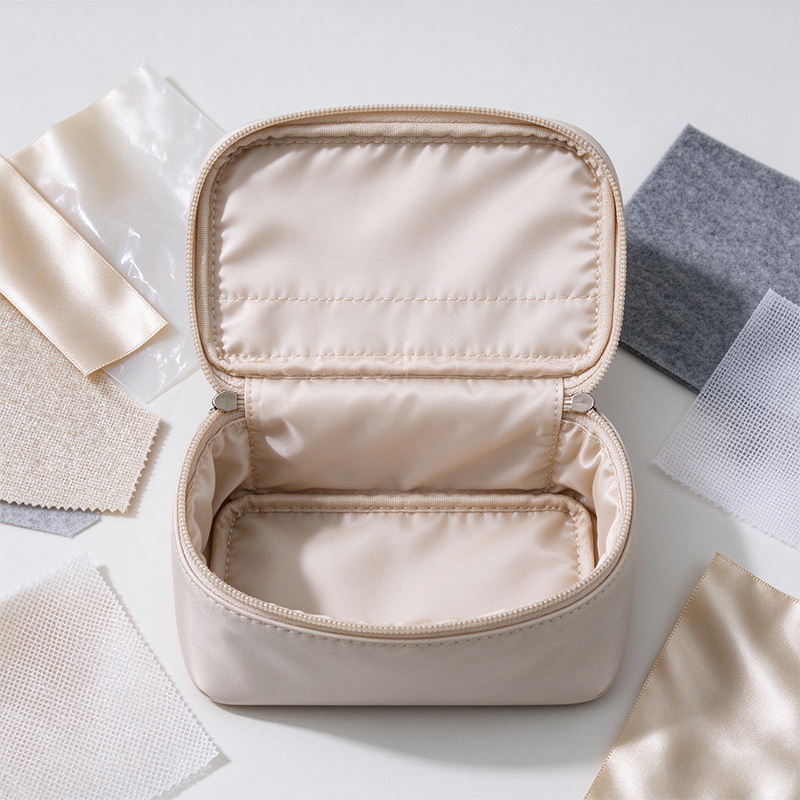
The most commonly used cosmetic bag lining materials are polyester-based fabrics, especially polyester plain weave, polyester taffeta, pongee, and coated polyester. In addition, nylon, TPU, PEVA, PVC, and EVA are frequently used for products with high waterproof and leak-proof requirements; RPET recycled polyester and recycled nylon are suitable for sustainable brand lines; microfiber, faux suede, velvet, and satin are suitable for high-end tactile feel and gift positioning. Cotton, canvas, cotton-polyester blends, and cotton-linen blends can also be used for cosmetic bag lining, especially for canvas cosmetic bags, natural style, eco-friendly positioning, or products requiring embroidery texture. However, their waterproof, stain-resistant, and easy-clean performance typically differs from coated synthetic fabrics and needs to be evaluated based on specific use scenarios. Table of Contents: • Selection by Functional Requirements • Key Technical Parameters for Lining Selection • Lining Customization Processes and LOGO Presentation Methods • How Do We Ensure Full-Process Material Quality Control for Brands? • Frequently Asked Questions • Conclusion Ⅰ. Selection by Functional Requirements and Analysis of Common Fabrics Cosmetic bag lining selection typically revolves around stain resistance and waterproofing, cosmetic protection, easy cleaning, and shape retention and support. The following section categorizes by functional requirements and explains the characteristics, applicable scenarios, and precautions of commonly used fabrics. 1. Waterproof and Easy-to-Clean Category • PVC/TPU Film: Commonly used for functional cosmetic bags and wet-dry separation compartments, with outstanding waterproof and leak-proof performance. Liquids are easy to wipe clean after splashing. PVC offers outstanding waterproof performance and transparency, but its compliance risks under REACH and Prop 65 must be carefully evaluated for European and American markets; TPU performs better overall in eco-friendliness, UV resistance, and flexibility, making it the preferred direction for high-end waterproof styles. • PEVA: Chlorine-free, it is an eco-friendly alternative direction to PVC, offering good waterproof performance and easy-wipe characteristics, suitable for brands with sustainability requirements. Long-term UV exposure may cause slight yellowing, which needs to be evaluated during the sampling stage. • EVA: Commonly used for rigid inner trays or molded linings, with good waterproof performance and structural support, suitable for cosmetic bag inner cores that require shape retention. • Coated Polyester and Coated Oxford Cloth (e.g., PU coating, TPU coating): After adding a coating to polyester or Oxford cloth, a continuous film forms on the lining surface, effectively blocking liquid splashes such as liquid foundation and skincare water from penetrating. Wear-resistant and tear-resistant, with good cost-effectiveness, suitable for affordable large-capacity cosmetic bags and daily functional styles. Note that coatings and stitching are not absolutely leak-proof. • Polyester Plain Weave, Pongee, Polyester Taffeta: Stable supply, high cutting and sewing efficiency, and stable color fastness, ensuring lining color consistency across different batches in bulk orders. Among them, polyester taffeta is lightweight and high-density, smooth and snag-resistant, with light weight; pongee and plain weave are suitable for mass-market styles. For basic waterproof requirements, light-coated versions can be selected. • Nylon Taffeta: Smooth hand feel, tear strength superior to polyester of the same specification, suitable for mid-to-high-end cosmetic bag products. Nylon itself has certain waterproof properties and is commonly used for waterproof and easy-to-clean linings. If the product emphasizes lightweight, durability, and travel scenarios, nylon is a selection direction worth considering. [Additional Note] Coated fabrics can only resist splashes. Ordinary sewing creates needle holes, and liquids may still seep through the stitching. If complete leak-proofing is required, an additional seam-sealing heat-sealing process is needed. 2. Shape Retention and Cushioning Category • Felt: High stiffness, strong support, helps the cosmetic bag maintain a three-dimensional silhouette, and provides certain cushioning and shock-absorbing effects, suitable for custom inner bags and products that need to protect powder compacts and eyeshadow palettes. Attention should be paid to weight, cleaning methods, and thickness. • Fleece Category (e.g., microfiber fleece, faux suede, velvet): Delicate touch, with slight damping feel, can reduce cosmetic bottle sliding and scratching, suitable for mid-to-high-end cosmetic bags. Microfiber, faux suede, and velvet offer premium tactile feel and anti-slip properties, mostly used for high-end brand matching. 3. High-End Texture Category • Acetate Satin: Smooth and soft touch, warm luster, good drape and wrinkle resistance, smooth for taking out and putting in cosmetics, will not snag makeup brush bristles, suitable for light luxury positioning. • Ordinary Satin/Sateen: Smooth surface, skin-friendly, with soft luster, can enhance refinement, suitable for gifts and products that value visual design. Need to evaluate snagging, abrasion resistance, and color fastness. Polyester satin and nylon satin have excellent printing effects, suitable for high-end linings. 4. Eco-Friendly Recycled and Sustainable Category • RPET: Made from recycled PET bottles through crushing, cleaning, and spinning into yarn. Its hand feel, color fastness, and abrasion resistance are minimally different from virgin polyester, and it can seamlessly replace traditional polyester plain weave or taffeta, suitable for most conventional cosmetic bag linings. It is a commonly used material for brands practicing ESG concepts. • Recycled Nylon: Mainly derived from discarded fishing nets, carpet fibers, and other industrial waste, regenerated through depolymerization and polymerization. Compared with RPET, recycled nylon performs better in strength, elasticity, and chemical resistance, with a more delicate and smooth touch, but market supply is less stable than RPET, and cost is usually higher than RPET. 5. Natural Style and Blended Category • Cotton: Natural hand feel, skin-friendly, moisture-absorbing, suitable for natural style, eco-friendly positioning, and canvas cosmetic bag linings. • Canvas: Higher gram weight, good structural support, wear-resistant, suitable for canvas cosmetic bags, toiletry bags, travel storage bag linings or outer pockets. When used as lining, weight, thickness, and sewing processes need to be comprehensively considered. All-cotton canvas has good breathability and is lightweight, suitable for powder products and makeup brushes and other items that need ventilation. Ordinary cotton and canvas are not waterproof, easily absorb color and stains. If directly exposed to liquid cosmetics, cleaning is difficult. A common approach is to combine with removable washable inner bags, coating finishing, independent waterproof bags, or internal compartment structures. • Cotton-Polyester Blend: Balances the natural hand feel of cotton with the durability and dimensional stability of polyester, suitable for projects that need to balance texture and bulk production consistency. • Cotton-Linen Blend: Prominent natural texture, suitable for specific style brands, but stain resistance and color fastness need to be confirmed during the sampling stage. 6. Other Practical Categories • PU Lining: Textured, easy to wipe, suitable for daily commuting and mid-range positioning products. Its surface is dense, effectively blocking oil-based stains such as liquid foundation and lipstick from penetrating. A damp cloth can easily wipe it clean, with low maintenance cost. Note to choose PU materials with good hydrolysis resistance to avoid coating peeling or stickiness after long-term use, especially in high-temperature and high-humidity environments where aging tests are required. • Mesh/Three-Layer Mesh: Excellent breathability, light weight, commonly used for internal compartment bags or brush storage layers of cosmetic bags, facilitating quick identification of items and accelerating internal moisture dissipation, reducing mold growth risk. However, due to its uneven surface and large pores, it easily traps dirt and is difficult to thoroughly clean. It is not recommended as the main lining directly contacting liquid cosmetics, and usually needs to be used with a waterproof inner bag. Ⅱ. Key Technical Parameters for Lining Selection When selecting lining fabrics for cosmetic bags, the following parameters directly affect final product quality and user experience. It is recommended to confirm each item during the sampling stage. 1. Gram Weight and Thickness • Low Gram Weight (e.g., 30-50gsm polyester taffeta or pongee): Lightweight and soft, maximizes internal space saving, reduces overall weight, suitable for travel cosmetic bags pursuing ultimate portability and lightweight. • Medium Gram Weight (e.g., 60-100gsm plain weave polyester, nylon, or cotton): Balances hand feel and durability, the mainstream choice for most conventional cosmetic bags. Fabrics in this range have moderate stiffness, can maintain the basic silhouette of the bag, while providing good sewing stability and abrasion resistance, suitable for daily commuting and multi-functional storage scenarios. • High Gram Weight (e.g., 120gsm+ thick canvas, thickened coated fabric, or composite felt): Excellent stiffness and structural support, effectively maintaining the three-dimensional shape of the cosmetic bag, preventing deformation from internal item compression, commonly used for hard-case cosmetic bags or inner designs that need to stand independently. 2. Coating Type and Waterproof Performance Coating Type Waterproof Performance Abrasion Resistance Eco-Friendliness Typical Application PU Coating Good Good Medium Daily cosmetic bags TPU Composite Excellent Excellent Excellent High-end waterproof styles PEVA Good Medium Good Eco-friendly positioning styles PVC Excellent Good Compliance requires careful assessment Transparent styles EVA Good Good Medium Molded inner trays, rigid linings 3. Color Fastness, Rubbing Resistance, and Color Selection • Linings need to pass dry rubbing and wet rubbing color fastness tests, meeting order target market and brand requirements (refer to ASTM/ISO industry testing standards). • Color selection needs to combine brand vision, target market usage habits, cleaning and maintenance expectations, and overall design. • Dark or medium color systems are generally less likely to show stains in daily use; light color systems look fresh and suit some brand tones, but may show cosmetic residue more easily, so coating, easy-clean finishing, or removable washable inner bags can be combined. 4. Breaking Strength and Tear Strength • Lining fabric breaking strength and tear strength need to comply with industry general testing standards, such as ASTM D5034. • Specific indicators need to match product positioning, usage scenarios, and brand quality requirements. 5. Hand Feel, Noise, Folding Resilience, and Sewing Compatibility • Nylon and coated fabrics may generate friction noise, which needs to be evaluated during the sampling stage. • Microfiber, faux suede, canvas, and other materials need attention to the impact of thickness on sewing efficiency and finished product weight. • Coated and film materials need attention to whether they whiten after folding, whether resilience is stable, and whether stitching leaks. 6. Cleaning Methods and Consumer Usage Scenarios • If the product is oriented toward daily office, travel, fitness, and other scenarios, the lining should prioritize easy-wipe and leak-proof performance. • If the product emphasizes natural style or removable washable design, cotton, canvas, and cotton-polyester blends can be considered, combined with removable inner bags or waterproof storage bags. • If the product is positioned as gifts or high-end brands, satin, microfiber, and faux suede can be considered, and maintenance methods should be clearly stated in the instructions. Ⅲ. Lining Customization Processes and LOGO Presentation Methods 1. Lining Customization Dimensions • Color Customization: Dyeing according to Pantone color numbers. First orders need to reserve a color confirmation cycle. • Texture Customization: Plain weave, twill, jacquard, satin, pearlescent, and other surface effects. • Print Customization: Full-print brand patterns, LOGO repeat printing, seasonal graphics, etc. • Structure Customization: Brush pockets, transparent inner bags, zippered hidden pockets, elastic band fixing positions, etc. • Material Composite: Coating, lamination, bonding, embossing, and other processes can be combined according to waterproof and hand feel requirements. 2. LOGO Process Selection Process Applicable Lining Types Durability Process Characteristics Silk Screen Printing Polyester, nylon, canvas, and other fabrics Medium Direct color expression Heat Transfer Printing Polyester, nylon, canvas, and other fabrics Good Good pattern detail expression Embroidery Polyester, nylon, canvas, and other fabrics Excellent Strong three-dimensional effect Woven Label All types Excellent Low cost Metal Label All types Excellent High-end feel Hot Stamping/Foil Stamping Satin, faux suede, PU leather Medium High-end feel 3. Added Value of Branded Linings • Custom printed linings or brand woven labels can enhance product unboxing experience and brand recognition. • For DTC brands and gift channels, branded linings are an important means to enhance perceived value. • Lining customization does not affect the flexibility of outer bag design, and can form an overall brand solution with outer bag fabric, zippers, and packaging. Ⅳ. How Do We Ensure Full-Process Material Quality Control for Brands? 1. Communication Before Cosmetic Bag OEM: • Requirement Confirmation: Understand customer product positioning and target market. • Fabric Selection: Confirm lining material, gram weight, coating, and color. 2. Sampling Stage • Sampling: Produce samples, confirm hand feel, color, and structure. (It is recommended to complete at least one round of physical sample confirmation before formal order placement.) • Sample Confirmation: During the sampling stage, simultaneously confirm lining color, hand feel, thickness, coating, LOGO process, sewing effect, and cleaning performance. • Compliance Requirements: If the product is oriented toward European and American markets, target market compliance documents and testing arrangements can be confirmed simultaneously during the sampling stage. 3. Key Quality Control Checkpoints • Incoming Material Inspection: Verify fabric color difference, gram weight, and width. • Cutting Stage: Check fabric surface defects and coating uniformity. • Sewing Stage: Check whether the lining and zipper junction is flat and whether there are skipped stitches. • Finished Product Stage: Conduct lining cleaning tests and zipper smoothness tests. • Outgoing Inspection: Execute appearance and function inspection according to SYNBERRY AQL 1.5/4.0 sampling standards. 4. Lining Cleaning Test Method Reference • In actual product development, real cosmetics can be used for lining cleaning comparison tests, rather than only testing with water. • Candidate lining samples can be respectively exposed to liquid foundation, lipstick, sunscreen, and other cosmetics, then treated with the same cleaning method and wiping frequency, comparing residue conditions. • This method can effectively screen the practical performance of lining solutions during the sampling stage. Ⅴ. Frequently Asked Questions (FAQ) Q1: What is the most common choice for cosmetic bag lining? Can cotton and canvas be used? A: Polyester plain weave, polyester taffeta, pongee, and coated polyester are widely used cosmetic bag lining materials, especially suitable for mass-market and conventional functional styles. Cotton, canvas, cotton-polyester blends, and cotton-linen blends can also be used for cosmetic bag lining, especially suitable for canvas cosmetic bags, natural style, eco-friendly positioning, or products requiring embroidery texture. However, cotton and canvas are usually not waterproof and easily absorb stains and color. It is recommended to combine with removable washable inner bags, coating finishing, or independent waterproof bag designs. If emphasizing waterproof and leak-proof, TPU, PEVA, PVC, and EVA are more common; if emphasizing sustainability, RPET recycled polyester and recycled nylon are growing options. Q2: How long does lining fabric sampling take? A: Conventional polyester or nylon lining sampling is relatively fast, generally 15-20 days. Coated fabrics or custom printed linings require more time. If custom dyeing or Pantone color matching is involved, an additional color confirmation cycle needs to be reserved. It is recommended to complete at least one round of physical sample confirmation before formal order placement. Specific sampling schedules need to be confirmed with the factory. Q3: How to choose between PVC lining and PEVA lining in European and American markets? A: PVC lining has the strongest waterproof performance and high transparency, but due to chlorine and phthalate issues, it faces high compliance risks under EU REACH and California Prop 65. PEVA is chlorine-free and is a more eco-friendly alternative, suitable for brands with sustainability requirements. Q4: How are MOQ and lead time for custom printed linings determined? A: The MOQ for custom printed linings is usually negotiated based on pattern complexity, printing method, and fabric customization degree. Silk screen printing is suitable for larger batches, while digital printing can support small batches but with higher unit costs. In terms of lead time, the production cycle for printed linings is usually longer than plain color linings. Conventional printing MOQ starts at 500 pieces. Specific MOQ and lead time are subject to factory evaluation. Q5: How to judge the quality of lining fabric? A: Factories usually evaluate from the following dimensions: whether gram weight meets specification requirements, whether coating is uniform without peeling, whether color fastness passes industry general tests, whether breaking strength meets standards, and whether wrinkling or thread breakage occurs after sewing. During the sampling stage, real cosmetics can be used for cleaning comparison tests, rather than judging only by visual inspection. During mass production, systematic control can be carried out through incoming material inspection, cutting inspection, sewing inspection, and outgoing sampling inspection. Q6: Can cosmetic bag lining achieve both waterproofing and custom LOGO? A: Yes. Common solutions include: heat transfer printing LOGO on coated polyester lining, silk screen printing brand logo on TPU fabric, adding woven labels or printed labels on the lining. Note that some coating surfaces may affect ink adhesion. It is recommended to test the adhesion firmness of the LOGO process during the sampling stage. Q7: Will lining fabric fade and contaminate cosmetics? A: This risk exists, so lining fabrics must complete dry rubbing and wet rubbing color fastness tests, meeting target market standards. Dark fabrics especially need key verification of wet rubbing indicators. During sampling, color fading tests can be conducted simultaneously to avoid after-sales issues of lining dyeing contaminating cosmetics in finished products. Ⅵ. Conclusion As a professional bag OEM/ODM manufacturing factory, we provide brands and buyers with one-stop services from lining fabric selection, sampling confirmation, LOGO process customization to bulk production and outgoing quality control. Whether you need basic styles for mass markets, functional styles with waterproof and leak-proof features, high-end styles focusing on tactile feel, or sustainable brand lines, we can match suitable lining solutions and supply chain resources according to your target market and product positioning. To obtain lining fabric samples or discuss specific project requirements, please feel free to contact our business team. Author
View More
Yes, it's perfect choice for some categories of bags but not all type. Neoprene (scientific name: chloroprene rubber, CR) is a material that is highly suitable for specific types of bags. It is soft, water-resistant, highly shock-absorbent, and offers excellent formability. It is particularly suitable for beach bags, diving equipment bags, camera insert bags, gym bags, lunch bags, and various types of trendy soft bags. If your product requires any two of the following features — “softness + water resistance + protection + foldability” — neoprene is almost an ideal choice. However, if you are designing a structured business briefcase, a high-end handbag that aims for a leather-like texture, or a mass-produced product where cost sensitivity is extremely high, neoprene may not be the optimal solution. Whether it is “good” depends on your product positioning, target usage scenarios, and cost structure. In the following sections, we will start from the fundamental properties of the material and go through the production considerations step by step to help you determine whether it is suitable for your product. Table of Contents: What is Neoprene? Advantages of Neoprene Disadvantages of Neoprene What types of bags are suitable for using Neoprene? Practical Recommendations for Neoprene Bag Customization Frequently Asked Questions Conclusion 1. What is Neoprene? Neoprene (Chloroprene Rubber, abbreviated as CR) was invented by the American company DuPont in the 1930s. It was originally developed for wetsuits, which is why many people’s first impression of it comes from the term “diving material.” Its scientific name is polychloroprene rubber, a type of synthetic rubber produced through the polymerization of chloroprene monomers. In the bag manufacturing industry, the material we actually use is usually not pure rubber sheets, but neoprene foam composite material — a layered material made by bonding a neoprene foam layer with nylon fabric or polyester fabric. A common structure consists of: an outer layer made of nylon/polyester fabric, a middle layer of neoprene foam sponge, and an optional inner layer of lining fabric. The foaming ratio (such as thicknesses of 2mm, 3mm, and 5mm, with softness and firmness differentiated by Shore hardness and density) determines the final product’s structure, stiffness, and cushioning performance. Once you understand its “sandwich structure,” you can understand all the advantages and disadvantages of neoprene as a bag material. This is the logical starting point for all the evaluations and decisions that follow. 2. Advantages of Neoprene 2.1 Excellent Water and Moisture Resistance Neoprene itself has a closed-cell foam structure, with an extremely low water absorption rate that allows very little water vapor to penetrate. This characteristic makes it naturally suitable for the following applications: Beach bags / Swimming bags: Wet swimsuits and wet towels can be placed directly inside without water seeping through to the outer layer and wetting other belongings. It is also less prone to mold growth. Lunch bags / Insulated bags: The closed-cell structure itself acts as an insulating layer. When combined with an aluminum foil lining, it can keep contents cool for several hours, making neoprene a mainstream material in the lunch bag market in Europe and North America. Outdoor and Water Sports Bags: Suitable for paddleboard bags, canyoning bags, and sailing equipment bags. 2.2 Natural Cushioning and Protective Properties The foam layer acts like a built-in shock absorber. This is the core advantage that distinguishes neoprene from almost all traditional bag fabrics: Camera Bags / Drone Bags / Instrument Bags: A 3mm–5mm neoprene layer can provide drop and shock protection for precision equipment, eliminating the need for additional pearl cotton or EVA foam lining. Laptop Sleeves: This is one of the most well-established markets for neoprene applications. The material is lightweight and flexible, yet capable of absorbing impact when dropped. Wine Bottle Bags: Single-bottle and double-bottle neoprene wine bags are common product categories in the gift market. To achieve the same level of protection, traditional fabrics require additional padding and cushioning, which comes at the expense of softness and lightweight performance. 2.3 Softness and Foldability Neoprene bags can be folded and stored away when not in use, making them easy to tuck into a drawer or another bag. Once filled, they can also conform to the contours of the body. This makes them particularly suitable for: Gym Bags / Yoga Bags: The soft bag body can be easily tucked into a gym locker. Travel Organizer Bags: They can be folded and stored in a suitcase, yet offer considerable capacity when unfolded. Diaper Bags / Baby Bags: The soft bag body will not press uncomfortably against the baby and is also easier to fit into a stroller's storage basket. In comparison, canvas and leather bags often face a trade-off: “if they are soft, they lack structure; if they are rigid, they become bulky and heavy.” Neoprene achieves a better balance between “softness” and “shape retention.” 2.4 Excellent Printing and Design Versatility The nylon/polyester fabric bonded to the surface of neoprene is an excellent printing medium. Digital printing, screen printing, and heat transfer printing all deliver very good results, with vibrant colors and sharp details. Moreover, the printed patterns are less likely to crack when the material is stretched. In addition, the bag body can be designed with wavy edges, contrasting-color zippers, color-blocked panels, and other distinctive features. In recent years, neoprene has become a popular choice for trendy fashion brands, IP collaboration collections, and customized corporate gift bags. The rising popularity of designer brands such as Jacquemus has also helped bring soft, sculptural-style neoprene fashion bags into the spotlight. 2.5 Easy to Maintain and Stain-Resistant The neoprene foam layer provides a barrier against liquid penetration. When laminated with a lightly water-resistant, easy-to-wipe outer fabric, such as high-density waterproof nylon or polyester fabric, everyday stains (such as coffee spills, mud splashes, and sweat marks) are unlikely to penetrate the interior. In most cases, the surface can be restored to a clean condition simply by gently wiping it with a damp cloth and a small amount of mild, neutral detergent. There is no need for frequent washing as with canvas, and the hassle of regular maintenance associated with leather can also be avoided. 3. Disadvantages of Neoprene Neoprene is a material designed for specific applications rather than a universal bag fabric. When it solves a practical problem, it can perform very well. However, if you choose it simply because a sample feels soft and premium to the touch, we would typically review the complete product specifications carefully before proceeding to the sampling stage. A rational evaluation of a material cannot focus solely on its advantages. The disadvantages of neoprene are also determined by its structure: 3.1 Finished Bags May Be Heavier Than Expected A small piece of neoprene may not feel particularly heavy. However, once the large surface area of the sandwich structure is combined with zippers, webbing, and hardware, the overall weight can increase significantly. Taking commonly used 3mm-thick neoprene laminated fabric as an example, its weight per square meter is considerably higher than that of ordinary 210D nylon or 600D Oxford fabric. This becomes particularly important when the product is intended to be lightweight or designed for extended periods of carrying. 3.2 Limited Breathability Because the core layer of neoprene consists of a closed-cell foam structure, its dense physical properties not only prevent moisture from penetrating but also effectively block air circulation. This means that neoprene bags have virtually no breathability. When air circulation is the primary consideration, we generally do not choose neoprene as the material. 3.3 Sewing Requires Specialized Expertise Due to the unique elasticity of foam materials, neoprene can be prone to fabric feeding issues, skipped stitches, and wrinkling during sewing. It requires careful control of stitch length, needle type, and fabric feeding methods. Thick materials are also prone to seam splitting at corners, so experienced sewing operators are essential. If a small factory has no prior experience sewing foam materials, the initial defect rate may be relatively high. In addition, ultrasonic seamless welding cannot completely replace stitching to achieve waterproofing with neoprene. High-frequency welding is an option, but it requires substantial investment in equipment. Most products still need to be paired with water-resistant zippers to achieve a level of water resistance beyond basic splash protection. 3.4 Prone to Creasing and Compression Marks During long-term folded storage or transportation, the neoprene foam layer is prone to developing compression marks along fold lines, affecting the smoothness and overall appearance of the product. After receiving a folded or compressed product, users typically need to leave it undisturbed and allow the material to recover naturally before it gradually returns to its original shape. For products designed for “ready-to-use” convenience or positioned as premium gifts, additional support structures should be incorporated into the packaging design to prevent excessive compression. 3.5 Higher Cost Than Conventional Fabrics The price of conventional 3mm neoprene laminated polyester fabric is approximately 3–5 times that of ordinary 600D Oxford fabric. In addition, cutting waste is higher (the elasticity of foam materials makes fabric layout less compact than with plain-woven fabrics), and sewing efficiency is lower. As a result, the overall cost is significantly higher than that of polyester- or nylon-based products. This makes neoprene unsuitable for low-priced, high-volume products, but more appropriate for functional or design-oriented products with medium-to-high profit margins. 4. What Types of Bags Are Suitable for Neoprene? By weighing the advantages and disadvantages discussed in the previous two sections, we can establish a clear decision-making framework. Recommended product categories: Camera / Drone / Instrument Sleeves and Organizer Bags: Ideal when cushioning and protection are the primary requirements. Laptop Sleeves: An established product category with a well-defined competitive landscape. Lunch Bags / Insulated Bags: Ideal for products that require both thermal insulation and leak protection. Wine Bottle Bags / Cup Sleeves: Suitable for products that combine protective functionality with gift appeal. Beach Bags / Swimming Bags / Water Sports Bags: Ideal for applications where water resistance is the primary requirement. Sports Waist Bags: Suitable for products that prioritize softness and ease of cleaning. Diaper Bags / Cosmetic Bags: Suitable for products that require softness, stain resistance, and water resistance. Not Recommended Product Categories: Briefcases and Structured Commuter Bags High-End Handbags Requiring a Premium Leather-Like Texture Low- to Mid-Range Mass-Produced Bags: The cost structure is not viable. Short-Term Products with Strong Seasonality 5. Practical Recommendations for Neoprene Bag Customization For brands and backpack factories, selecting the material is only the first step. There are five key factors to control during implementation: 5.1 Thickness and Hardness The standard thickness of neoprene used for bags is typically 2mm–5mm. A thickness of 2–3mm is sufficient for inner sleeves. For tote bags that need to stand upright, 4–5mm is recommended, or a lining can be added through lamination. During sampling, be sure to test the material's recovery after folding and the degree of sagging under load. This ensures that the thickness matches your expectations for the bag's structure and shape retention. 5.2 Lamination Quality The lamination quality of the three-layer material structure (outer fabric + foam layer + lining fabric) determines the product's service life. Poor-quality lamination may begin to delaminate or form bubbles after just a few months of use, whereas high-quality laminated layers should be firmly bonded together and difficult to separate by hand. Therefore, choosing a professional bag factory with experience manufacturing similar products is essential. 5.3 Odor Control During the foaming and lamination processes, neoprene may inevitably retain a certain amount of chemical odor, commonly referred to as a “rubber smell” or “glue smell.” Although materials that meet environmental standards will gradually lose their odor after ventilation, unpleasant smells when opening the package can easily lead to negative reviews, especially among odor-sensitive users, such as parents purchasing products for babies and recipients of high-end gifts. Therefore, during the Neoprene Bag OEM process, we pay particular attention to the following factors: Material Source Lamination Process Packaging Conditions Ventilation Time Before Shipment 5.4 Zipper Selection Determines the Level of Water Resistance Ordinary nylon zippers are one of the main points where water can seep into splash-resistant products. For products with higher water-resistance requirements, waterproof or watertight zippers (such as YKK's waterproof zipper series) must be used, or a waterproof zipper flap should be added to the inside of the zipper. It is important to note that waterproof zippers generally feel stiffer than ordinary zippers, offer greater resistance when opening and closing, and cost more. If the product is not intended for professional diving or extreme outdoor environments, there is no need to blindly pursue the highest level of waterproof zipper performance. Doing so may compromise the user experience while unnecessarily increasing costs. 5.5 Rust Resistance of Metal Hardware Considering that neoprene bags are often used in humid environments, the metal hardware must have excellent rust resistance. In practice, salt spray testing can be used to evaluate the corrosion resistance of the hardware. Priority should be given to zinc alloy hardware with a thick electroplated coating or stainless steel hardware. This helps prevent rapid oxidation and rusting caused by exposure to coastal environments or perspiration, which could otherwise compromise the overall appearance and perceived quality of the product. 6. Frequently Asked Questions Q1: What Is the Difference Between Neoprene and SBR? CR (chloroprene rubber / neoprene) and SBR (styrene-butadiene rubber) are both synthetic rubbers, and both can be made into a “sandwich” structure consisting of outer fabric + foam layer + lining fabric. Their appearance, feel, and thickness can even be made virtually identical. However, based on practical experience in neoprene bag OEM manufacturing, there are two notable differences between the two materials: Resilience and Shape Recovery: CR offers better resilience and recovers more quickly from compression marks after folding, making it less prone to deformation during long-term use. SBR, by contrast, has relatively weaker resilience and is more likely to develop permanent creases or collapse after repeated folding or heavy compression. Durability and Weather Resistance: CR offers better durability and weather resistance, with significantly greater resistance to UV radiation, ozone, and seawater corrosion than SBR. When exposed to sunlight or humid environments for extended periods, SBR is more susceptible to aging, hardening, and surface powdering. The following table compares the inherent performance characteristics and costs of the two materials: The following table compares their inherent performance characteristics and costs: Comparison Factor CR (Genuine Neoprene) SBR (Styrene-Butadiene Rubber) Abrasion Resistance Good, but not as good as SBR Excellent; commonly used in bags requiring higher abrasion resistance Temperature Resistance Approximately -40°C to +120°C Approximately -20°C to +80°C Durability Excellent; less prone to powdering during long-term use Average; prone to cracking and powdering outdoors Elasticity and Feel Flexible with good resilience Relatively weaker resilience than CR Cost High; CR costs approximately twice as much as SBR Lower; the predominant material used in many “diving fabric” products on the market Odor Relatively mild Usually more noticeable Summary: SBR is a “budget-friendly substitute for neoprene.” If your product's selling points are softness, cushioning, water resistance, and stain resistance (such as beach bags, camera bags, and lunch bags), SBR is generally a cost-effective choice. However, if you intend to promote “genuine neoprene quality,” position the product at a premium price point, or meet higher customer requirements for temperature resistance, crease recovery, and weather resistance, CR may be the better option. The cost difference should also be factored into your pricing strategy. Q2: Can Neoprene Bags Be Machine-Washed? Machine washing is not recommended. Although neoprene itself can withstand washing, the bonding layers (adhesive) and stitching in the “sandwich structure” cannot withstand the vigorous agitation and high centrifugal forces of a washing machine's spin cycle. Machine washing can easily cause fabric delamination, bubbling, and even irreversible deformation or damage to the hardware. The correct cleaning method is to use lukewarm water and a neutral detergent, gently wiping the stained areas with a soft cloth or sponge. Then wipe away any remaining detergent with clean water and allow the bag to air-dry naturally in a cool, well-ventilated area. Avoid direct sunlight and high-temperature tumble drying, as heat can accelerate rubber aging, causing it to harden or even crack. For persistent odors or deep cleaning, consider seeking assistance from a professional dry cleaner. However, inform them of the material's properties in advance to ensure that strong solvents are avoided. Q3: Can Neoprene Bags Be Customized into Different Shapes? Yes, but the possibilities are limited by the material's properties. Neoprene has a certain degree of flexibility and can be formed into simple textured patterns through mold-based heat pressing. However, unlike EVA or injection-molded plastics, it cannot easily achieve complex geometric structures or sharp right angles. If a highly structured, rigid appearance is required, internal reinforcement (such as PP boards or EVA sheets) or a thicker foam layer (over 5mm) is usually needed. For designs that aim to achieve a “soft sculptural effect,” we recommend discussing the construction with the factory during the design stage and using multi-panel construction and structural segmentation to create the desired shape, rather than relying on the natural structural support of a single material. Q4: Are Neoprene Bags Heavy? Neoprene bags may be heavier than buyers expect, especially when large areas of neoprene fabric are combined with lining, webbing, zippers, and metal hardware. They can be considerably heavier than ordinary polyester and nylon bags. Q5: Are Neoprene Bags Environmentally Friendly? This question needs to be addressed from several perspectives. In terms of the materials themselves, both chloroprene rubber (CR) and styrene-butadiene rubber (SBR) are synthetic rubbers that are difficult to biodegrade naturally and are not considered biodegradable materials. However, their environmental performance during actual production and use depends on the specific manufacturing processes and standards employed. The first consideration is the adhesive and lamination process. Traditional solvent-based adhesives may contain volatile organic compounds (VOCs), which not only produce strong odors but are also environmentally unfriendly. Today, many mid- to high-end supply chains have shifted to water-based adhesives or hot-melt adhesive lamination processes, significantly reducing harmful residual substances and helping products meet major environmental regulations such as the EU's REACH and RoHS requirements. Q6: Is Neoprene Better Than Nylon or Polyester for Making Bags? Not necessarily. If you prioritize extremely low weight, low cost, and high breathability, choose nylon or polyester. If you need water resistance, cushioning, a soft feel, or a distinctive fashion aesthetic, and can accept higher costs and product weight, neoprene may be the better choice. Many high-end brands even adopt a “hybrid strategy,” using neoprene for the main body and incorporating polyester or nylon panels in key areas to combine the advantages of both materials. 7. Conclusion There is no absolute distinction between good and bad materials; what matters is whether the material is the right fit for the application. For bag manufacturers and brands, the best practice is to work backward from the “application scenario–function–material” framework during the product development stage. Use neoprene where it performs best, and address its limitations through manufacturing processes and quality inspections. When applied correctly, neoprene can become a valuable asset in your product line, offering significant potential for both product differentiation and profit margins. SYNBERRY BAG has over 30 years of experience in bag OEM/ODM manufacturing and specializes in advanced material processing and precision manufacturing across a wide range of materials. We understand the specific requirements of neoprene in lamination, sewing, and quality control, and provide professional support throughout the entire process, from material selection to finished product delivery. Whether you are developing functional protective sleeves that prioritize maximum cushioning or designer handbags that showcase contemporary fashion aesthetics, SYNBERRY BAG can help brands translate creative concepts into finished products with precision, balancing performance, cost, and aesthetics to create high-quality products that stand the test of the market. Author
View MorePlease Read On, Stay Posted, Subscribe, And We Welcome You To Tell Us What You Think.




Copyright @2024 Synberry Bag & Package Products Co.,Ltd All Rights Reserved.
 Network Supported
Sitemap / Blog / Xml / Privacy Policy