Inside the Build: How A Premium Backpack is Manufactured?
Aug 07, 2026
At Synberry, our Sample Room advances the development and refinement of dozens of new samples in parallel every day. For us, sampling is never the end of a standalone service—it is the starting point of bulk production. Once every material, zipper, metal hardware component, plastic buckle, and craftsmanship detail is finalized during the sampling stage, the exact same specifications are carried directly into the bulk manufacturing line.
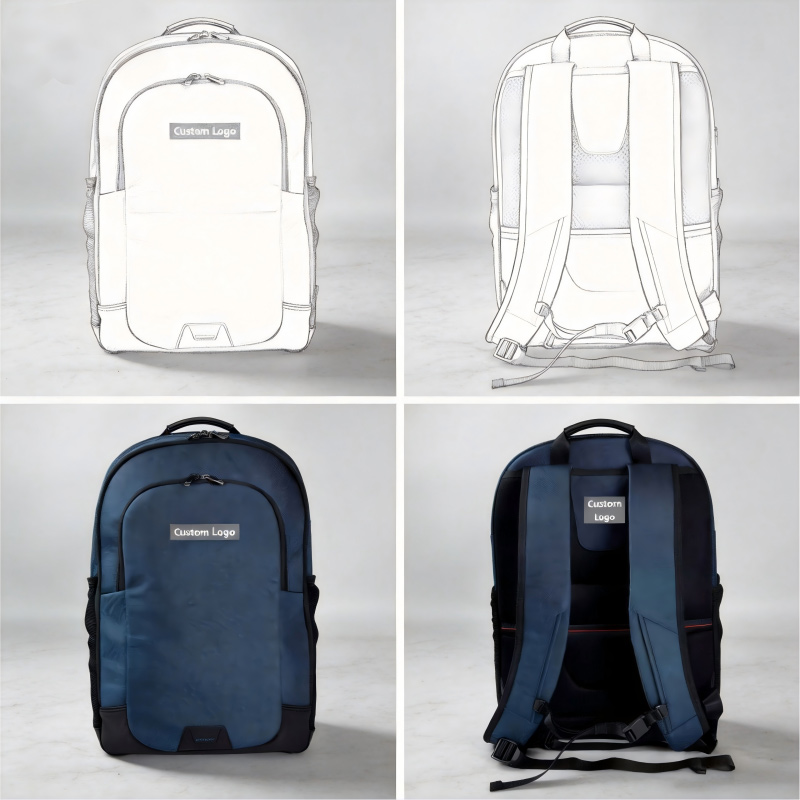
This edition documents the complete sampling journey of a premium nylon business backpack custom-developed for a Swiss client. Every design detail you will see below is ultimately replicated to the same standard across all 3,000 finished backpacks. The following is a step-by-step breakdown of the entire process, from technical drawing to the finished physical sample.
Table of Contents:
1.Fabric Selection
2.Hardware Mold Development
3.Plastic Component Selection
4.Craftsmanship Details for Enhancing Quality and Comfort
5.Sample Inspection and Approval
6.FAQ
7.Conclusion
1. Fabric Selection
1.1 Main Body Fabric Selection and Color Matching
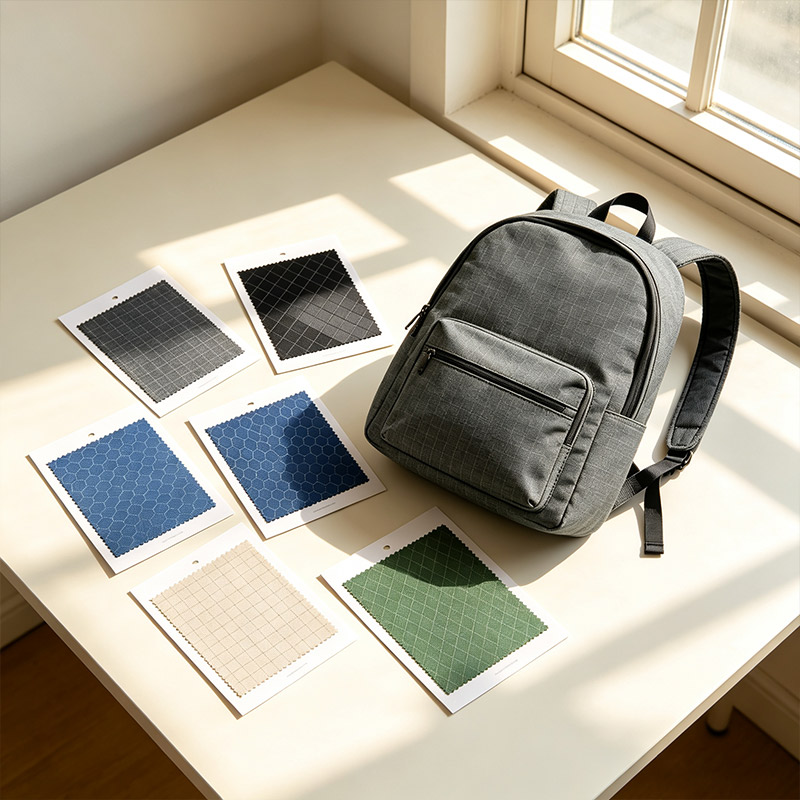
The main body fabric is made of 1680D ballistic nylon. This type of nylon features a higher yarn count and a tighter weave, providing a refined surface texture with a subtle sheen. At the same time, it offers excellent abrasion resistance and tear resistance. Even after long-term use, it is less likely to pill or snag, making it perfectly suited to meet the performance requirements of a high-end backpack.
The next step was color selection. Based on the client's preferred color description, we selected three closely matching options from our in-stock color swatch library for review. After comparison and evaluation, the client ultimately chose Color No. 16 as the final color for the project.
1.2 Lining Fabric Selection
After finalizing the main fabric for the backpack, we proceeded to select the lining material. The client requested a compact, high-density fabric with a matte finish and a subtle velvet-like appearance, creating a balanced sense of premium quality that would complement the exterior 1680D Ballistic Nylon.
After evaluating numerous lining options, we selected 150D High-Density Pongee. This fabric features a higher warp density and a tighter weave, giving it a firm, smooth hand feel and excellent structural support. It helps the interior of the backpack maintain a clean, neat appearance even after long-term use. In addition, its tightly woven construction naturally creates a subtle velvet-like visual texture, perfectly matching the client's expectations for both aesthetics and performance.
1.3 Custom Logo Printing on the Lining Fabric
As a premium branded backpack, its identity extends far beyond the logo displayed on the exterior. The brand's logo is also thoughtfully incorporated into the finer details throughout the product.
For this project, we used clear gloss printing to apply a transparent logo onto the lining fabric. Unlike conventional heat transfer printing, which typically produces a flat appearance with limited visual depth, clear gloss printing creates a logo that catches the light from every angle. Its distinctive glossy texture allows the pattern to reflect light differently depending on the viewing angle, giving the logo a refined and dynamic visual effect.
The tone-on-tone finish also enables the logo to blend naturally with the lining fabric, enhancing the overall harmony and consistency of the interior design. Subtle yet sophisticated, this understated branding approach elevates the perceived quality of the backpack and perfectly aligns with the product's pursuit of premium craftsmanship and attention to detail.
2. Metal Hardware Mold Development
Metal Logo
The metal logo is manufactured using zinc alloy die casting with a silver electroplated finish. Mounting pins on the back of the logo are used to securely fasten it to the fabric.
Based on the artwork provided by the client, we first created the mold design drawing, carefully adjusting the logo proportions and confirming the final dimensions. Once our design team and Sample Room verified that the visual proportions met the intended design expectations, we proceeded with the fabrication of the steel mold for production.
For customer privacy protection, the brand logo shown in the images has been blurred.
Metal Puller
The metal puller also requires custom mold development, allowing it to be designed as a unique symbol representing the customer’s brand and creating a visual connection with the main body logo.
The mold development process for the metal puller is largely the same. Based on the overall thickness of the backpack and the handle dimensions, we adjust the length-to-width ratio and curvature of the puller to ensure a comfortable grip during use while maintaining consistency with the overall design style.
Every curve, edge, and surface finish is carefully refined to ensure that the hardware not only meets functional requirements but also becomes a distinctive detail that enhances the overall texture and premium feel of the backpack.
For customer privacy protection, the brand logo shown in the images has been blurred.
3. Plastic Components: YKK Zipper and DURAFLEX Buckles
For a backpack, zippers and buckles are the accessories that are used most frequently. They directly determine the daily user experience and service life of the backpack.
For this high-end backpack, we selected the industry-renowned YKK zipper. The zipper teeth of YKK zippers are evenly arranged and densely structured, providing a smooth pulling experience without sticking or jamming. Even after hundreds of thousands of pull tests, they rarely experience failures. Their durability is far superior to ordinary zippers, allowing the backpack to maintain a consistently smooth and reliable user experience over a long period of time.
Similarly, DURAFLEX plastic hardware was selected for this backpack. These buckles have undergone rigorous impact resistance and fatigue testing, maintaining excellent toughness even in low-temperature environments. They are designed to withstand long-term heavy loads without cracking or loosening, ensuring both safety and durability.
In addition, the crisp clicking sound and precise locking mechanism provide a satisfying tactile experience every time the backpack is opened or closed, allowing users to immediately perceive the product's premium quality through its refined functionality and attention to detail.
Materials, hardware, plastic components, and zippers are usually arranged as the first steps of the sampling process. Once all materials have been collected, the backpack officially enters the sewing and assembly stage.
Next, we will focus on the following production steps and discuss the details that truly reflect our pursuit of quality. These details are exactly what create the difference between a high-end backpack and an ordinary product.
In areas that are often unseen or easily overlooked, we have invested significant effort in optimizing every detail to enhance the overall user experience.
4. Craftsmanship Details for Enhancing Quality and Comfort
4.1 Genuine Leather Handle
The handle is one of the most frequently touched areas during daily backpack use, and its hand feel directly influences the user’s first impression of the backpack’s quality. For the top handle of this backpack, we added a section of full-grain leather.
The warm, refined touch of genuine leather creates a contrast with the sleek and structured texture of ballistic nylon. It not only provides a more comfortable feel when carrying the backpack by hand for extended periods but also enhances the visual layering of the entire bag through the combination of different materials, breaking away from the monotony of a purely nylon design.
To further improve the grip comfort, we added a 2mm thick layer of high-density foam padding inside the leather handle. This maintains sufficient support, preventing the handle from becoming soft or losing its shape after prolonged carrying, while also cushioning pressure and reducing strain on the palm. Even when carrying heavier items, the handle remains comfortable without causing discomfort.
During the stitching process, we adopted a double-needle topstitching technique, using evenly spaced stitches along the edge of the handle for reinforcement. The stitch density is controlled at approximately 8 stitches per inch (SPI), ensuring both strong stitching durability and a clean, refined appearance. Combined with the genuine leather material, this detail further highlights the craftsmanship and premium quality expected from a high-end product.
4.2 One-Piece Molded EVA Shoulder Straps
The shoulder straps do not use the conventional webbing-and-PE-foam construction. Instead, this backpack features an integrated EVA molding process. One of the key advantages of one-piece molding is the absence of stitched joints or connection points, allowing pressure to be distributed more evenly. At the same time, this manufacturing process enables the shoulder straps to maintain a smoother, more uniform shape, providing a better fit to the natural contours of the shoulders, effectively dispersing the weight of the backpack and reducing shoulder fatigue during extended periods of carrying.
In addition, the inner side of the shoulder straps is lined with 3D breathable mesh fabric. Air can circulate freely through the mesh structure, allowing heat and moisture to dissipate quickly after perspiration. This helps prevent the sticky, stuffy feeling caused by prolonged carrying, significantly enhancing comfort during long-term use.
4.3 PP Board + PE Pearl Cotton Back Panel
In the carrying system, the back panel is the core structure responsible for maintaining the backpack’s shape and distributing weight. For this backpack, we adopted a composite structure combining a PP board and PE pearl cotton.
https://www.synberry.com/what-is-backpack-back-panel-engineering
The PP board serves as the structural support layer, providing vertical reinforcement and preventing the backpack from becoming soft or losing its shape when carrying heavy loads. The PE pearl cotton is placed between the PP board and the inner lining, providing cushioning and shock absorption.
We selected a 1mm thick PP board combined with a 0.8mm thick PE board. This combination allows the back panel to maintain a firm and supportive structure while using the elastic properties of pearl cotton to effectively cushion pressure on the back, improving overall comfort during carrying.
4.4 Reinforcement and Bartacking
The stress points of a backpack are mainly concentrated at areas such as the connection points between the shoulder straps and the main body, as well as the connection points between the handle and the bag body. If these areas are not properly reinforced, long-term load-bearing use can easily lead to broken stitching or fabric tearing, directly affecting the backpack’s service life. Therefore, reinforcement and bartacking are essential processes to ensure the durability of the backpack.
Bartacking refers to using a specialized bartack sewing machine to create multiple layers of interlocking rectangular stitch patterns at all stress points. The high-density stitching securely locks multiple layers of material together, significantly improving the tensile strength of the connection areas.
For this backpack, we adjusted the size and structure of each bartack according to the specific load requirements of different stress points. The stitches are evenly spaced and densely arranged, providing sufficient pulling strength while avoiding excessive thread buildup that could affect the clean appearance of the product. Through solid craftsmanship, durability is built into every detail, ensuring that the backpack remains reliable and resistant to seam failure even during long-term heavy-load use.
4.5 Enhancement of Practical Functions
Although this backpack follows a minimalist design approach in appearance, we have carried out many targeted optimizations for the internal storage system. Based on the different items users may carry in various usage scenarios, we created dedicated compartments so that every type of item has its own suitable storage space. This avoids the need to search through the main compartment when looking for items, significantly improving everyday convenience.
During the sampling process, we divided the internal structure into four functional layers.
4.5.1 Zippered Hidden Pocket
After opening the front pocket, there is a hidden zippered pocket inside. The depth of this pocket is precisely controlled at 12cm, making it ideal for storing flat items such as passports, air tickets, and business card holders. Once the zipper is closed, these items remain securely in place without sliding around inside the front compartment.
A key hook is also designed in the upper-right area of the front pocket. Keys can be attached directly to this hook, allowing users to quickly access them with a simple pull. This eliminates the inconvenience of searching through the entire bag for keys and also prevents keys from scratching the surfaces of other electronic devices.
4.5.2 Vertical Slip Pockets
The second compartment is designed with four vertical slip pockets. The two outermost pockets have been widened to better accommodate items such as smartphones, pens, and power banks, allowing each item to have its own dedicated storage space. Users can see and access their belongings at a glance without having to search through a pile of miscellaneous items.
The vertical design also helps keep items standing upright, preventing them from shifting, stacking, or falling over due to movement. This makes items easier and more convenient to take out while also meeting the needs of short trips and daily commuting.
Through thoughtful compartmentalization, the internal design truly serves the convenience of everyday use.
4.5.3 Wave-Shaped Elastic Retaining Straps
The third compartment is designed with wave-shaped elastic retaining straps. A 2.5cm wide high-elastic polyester webbing is sewn onto the lining fabric to form a continuous “arched bridge” structure.
The different widths of the strap sections allow them to accommodate items with varying thicknesses. The elastic webbing automatically tightens and conforms to the shape of the stored items, preventing them from slipping out or disrupting the internal organization when the backpack is moved or shaken.
Compared with fixed-size pockets, this design offers greater versatility and adaptability, allowing it to accommodate various small personal items more flexibly. It helps keep the interior of the backpack neat and organized at all times, further improving convenience in everyday use.
4.5.4 Hidden Cushioning Protection in the Main Compartment
The quilted embossed structure creates tiny air gaps between the lining fabric and the padding layer. This not only makes the cushioning layer softer and more resilient but also helps secure the filling material in place, preventing it from shifting. This design provides additional cushioning protection for the laptop stored inside the main compartment.
When a laptop is placed inside, the back side is supported by PE pearl cotton, while the front side is protected by the quilted padding layer. This dual-layer protection structure helps disperse and absorb impact from everyday bumps and vibrations, preventing the laptop from directly contacting the inner wall of the backpack. Even when commuting in crowded environments or carrying the backpack on long journeys, the risk of impact damage and scratches to the laptop is significantly reduced.
A horizontal webbing retention strap is also added above the compartment. Combined with the suspended laptop compartment design, it keeps the laptop securely positioned along the center line of the back panel.
During testing, we evaluated four laptop sizes ranging from 13 inches to 16 inches. The length of the retention strap was designed according to the width of a 16-inch laptop. For smaller laptops, the device naturally settles downward under its own weight, while the strap can still secure the upper edge and prevent the laptop’s center of gravity from shifting outward when the backpack tilts forward.
4.6 Enhancing the Visual Experience
The black-and-red dual-color edge binding adds a clear sense of structure and definition to the backpack, enriching the visual layering of its otherwise understated silhouette. Following the panel seams, the contrasting trim reinforces the overall shape of the backpack while introducing subtle color accents that break up the monotony of the all-black exterior.
Rather than being overly bold, these carefully considered details create a memorable visual highlight that catches the user's eye naturally, while maintaining the refined and sophisticated aesthetic of the backpack.
5. Pre-Production Sample Approval
After carefully refining each of the key details described above, the sample of this premium nylon business backpack is finally complete.
Sample approval is not the end of the project, but the starting point for bulk production and delivery. This step allows the client to directly experience the final result after all design concepts have been brought to life before official mass production begins.
During this stage, the client can carefully verify whether the fabric colors, hardware finishes, craftsmanship details, and structural dimensions fully meet expectations. This process helps prevent any potential deviations during mass production and ensures that all 3,000 finished backpacks delivered to the client maintain the same quality standards as the approved sample.
6. FAQ
Q1: How long does the sampling process for this backpack take?
A: Since the project involves separate mold development for the metal hardware, the initial sample development process takes approximately 3 weeks.
Q2: What brands of accessories are available for premium backpacks? Is it necessary to use YKK zippers and DURAFLEX buckles? Can other accessory brands be selected?
A: Yes, the accessory selection can be adjusted according to specific requirements. There are also many high-quality accessory suppliers available on the market today. For zippers, domestically produced SBS zippers offer reliable quality, while brands with higher requirements can choose YKK or even RIRI. For buckles, options include DURAFLEX, WOOJIN, FIDLOCK, and others.
The final selection can be matched according to the product budget and positioning to best meet the project's requirements.
Q3: Can this premium nylon backpack be customized or modified based on existing designs?
A: Absolutely. We can adjust the fabric colors, internal compartment layout, brand logo design, and even the overall dimensions according to your requirements. Making modifications based on an existing sample is faster and more cost-effective compared with developing a completely new product from scratch.
Q4: What is the minimum order quantity (MOQ) for bulk production?
A: Since this backpack involves multiple craftsmanship processes and requires high sewing precision from skilled workers, the MOQ for bulk production is 1,000 pieces. For simpler backpack designs, the MOQ can be as low as 500 pieces.
Q5: Is there a minimum order quantity requirement for developing metal logos and zipper pulls?
A: There is no specific minimum order quantity requirement. However, since metal logos require the development of dedicated metal molds, the mold cost is approximately USD 200–USD 2,000, depending on the complexity of the design. Customers will need to evaluate the amortization of the mold cost based on the order quantity.
Conclusion
The production of a premium backpack is never simply about combining various high-end materials together. It is a continuous process of refining every detail related to user experience, durability, and product quality. From the selection of base materials to the fine adjustments of manufacturing techniques, every step reflects our commitment to quality. Only through this meticulous approach can we create products that combine aesthetics, functionality, and brand value, allowing users to experience a level of performance and refinement far beyond ordinary products in every aspect of daily use.
With more than 30 years of backpack OEM customization experience, we have developed the capability to consistently replicate sample-level quality standards across every bulk production unit. From incoming material inspections, to quality control throughout every production process, and finally to AQL inspections before shipment, we have established a mature quality management system. This ensures that every backpack produced in bulk maintains the same quality standard as the approved pre-production sample, helping brands fully realize their product vision and deliver it to end consumers.
If you are looking for premium backpack OEM customization, please feel free to contact us anytime to discuss your project requirements in detail.
Author





 Network Supported