china backpack manufacturer
Home

OEM Bags

OEM Bags

  • What Does PFAS-Free Mean?
    What Does PFAS-Free Mean? Nov 18, 2026
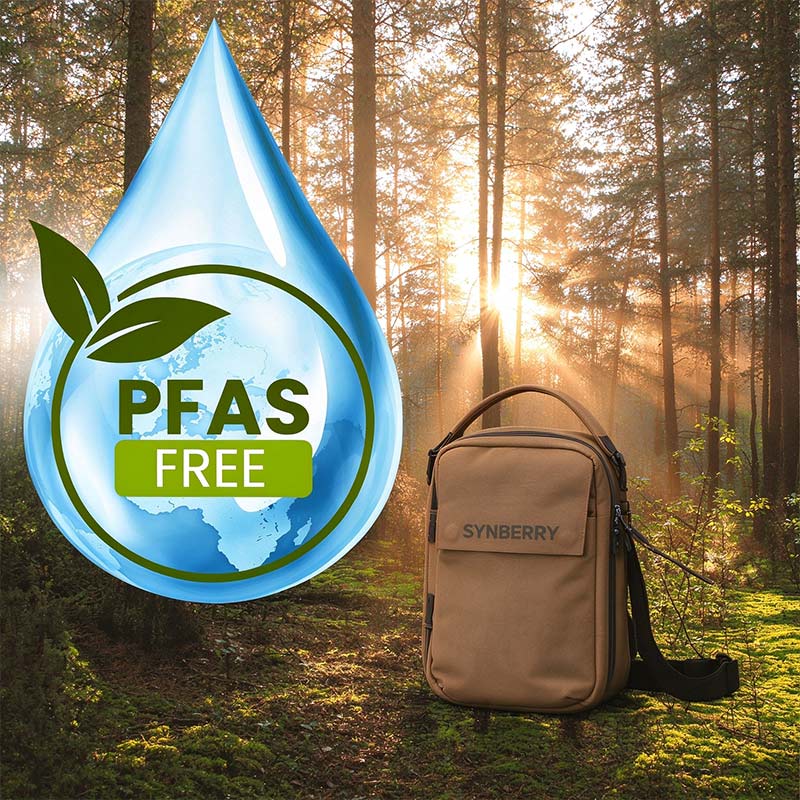
      PFAS-free (free of per- and polyfluoroalkyl substances) is a claim or certification mark meaning that no PFAS has been intentionally added to a product, and that testing confirms any residual content is below the limit of detection or below specific strict thresholds. PFAS are a class of man-made chemicals known as "forever chemicals." Widely used for their water-, oil-, and heat-resistant properties, they resist degradation in the environment and may pose risks to human health. What qualifies as "PFAS-free"? Currently, there is no unified, mandatory legal definition of "PFAS-free" worldwide. Mainstream third-party certification bodies generally evaluate products on two levels: •Supply-chain declaration — proving "no intentional use." The company must demonstrate that no PFAS was intentionally used in its production or sourcing processes. •Finished-product testing — below trace limits. SGS certification, for example, requires total fluorine (TF) below 20 ppm, or total targeted PFAS below 25 ppb (depending on the test method). NSF certification likewise requires total organic fluorine (TOF) to approach zero detection. Contents •What is PFAS, and why is it in the textile industry? •How do you achieve PFAS-free? •Does going fluorine-free compromise performance? •2026 global regulations explained •How we help bag brands achieve PFAS compliance •FAQ •Conclusion   1. What Is PFAS, and Why Is It in the Textile Industry?   1.1 Definition and characteristics PFAS stands for per- and polyfluoroalkyl substances — a large family of synthetic chemicals defined by at least one fully fluorinated carbon atom (—CF2— or —CF3) in the molecular structure, with more than 10,000 known variants. Familiar members of the family include PFOA (perfluorooctanoic acid), PFOS (perfluorooctane sulfonic acid), and PTFE (polytetrafluoroethylene). The defining feature of PFAS is the carbon–fluorine bond (C–F), one of the strongest bonds in organic chemistry. It gives PFAS two "superpowers": •Extreme stability: resistant to heat, acids, alkalis, and oxidation, with virtually no degradation in nature — hence the name "forever chemicals"; •Exceptional surface performance: simultaneously repelling water, oil, and stains, which makes PFAS the most effective raw material ever used in water-, oil-, and stain-repellent finishes. 1.2 Typical applications of PFAS in bag fabrics For the bag industry, PFAS are used widely. Common applications include: •DWR (durable water repellent) finishes: the "lotus-leaf effect" water repellency on backpacks and travel bags has traditionally relied on fluorinated (C8/C6) water repellents; •Triple-protection finishes: oil- and stain-resistant treatments, common on laptop bags, cosmetic bags, and diaper bags; •Coating and lamination: fluorinated auxiliaries used in certain PU/PVC coating processes; •Zippers, webbing, and sewing thread: these accessories may also carry fluorinated finishes; •Membranes: PTFE-based waterproof-breathable membranes (used in some premium outdoor fabrics). 1.3 Why restrict PFAS? The stability of the carbon–fluorine bond is a double-edged sword. Once released into the environment, PFAS barely break down and accumulate through water systems and the food chain. Certain PFAS (such as PFOA and PFOS) have been linked to immunotoxicity, endocrine disruption, and liver and kidney damage. Both PFOA and PFOS are listed under the Stockholm Convention on Persistent Organic Pollutants (POPs) and are banned or severely restricted worldwide. In addition, the production of fluorinated water-repellent finishes is itself a significant industrial source of PFAS emissions.   2. How Do You Achieve PFAS-Free?   2.1 Formulation: switch to "C0" water repellents In the bag industry, C8, C6, and C0 refer to the length of the fluorocarbon chain in a water repellent: C8 is the original long-chain chemistry (now largely phased out), C6 is the short-chain replacement (still a PFAS), and C0 is a fluorine-free water repellent. Switching to fluorine-free (C0) finishes is widely recognized in the Customized bag industry as the most direct technical route. In principle, fluorine-free repellents rely on long-chain alkyl, polyurethane, or polyacrylate structures to form a low-surface-tension layer on the fiber, creating the "lotus-leaf" water-repellent effect. Compared with fluorinated finishes, their water repellency can approach similar levels, but oil and stain resistance is inherently weaker — which is why fluorine-free adoption has been slower in categories with high stain-resistance requirements, such as laptop bags and cosmetic bags. Brands should first clarify the true functional priorities of the product: if water repellency is the core need, fluorine-free solutions are relatively mature; if oil and stain resistance is also essential, achieving it usually requires changes to fabric construction or additional functional finishes, rather than relying on a single water-repellent agent.   2.2 Process •Pre-treatment: Fluorine-free repellents are far more sensitive to pre-treatment cleanliness than fluorinated systems. Residual sizing, incompletely scoured oils, dye residues, and even calcium and magnesium ions in the water compete for adsorption with the active ingredients, preventing uniform film formation on the fiber surface. The visible results are low initial spray ratings, patchy "water marks," or uneven repellency. When switching to fluorine-free, the thoroughness of pre-treatment washing often matters more than repellent selection itself; an extra soaping step, or adjusted washing temperature and cycles, may be needed to ensure a clean, evenly hydrophilic fabric surface. •Curing: Curing parameters must be reset as well. Crosslinking and orientation of fluorine-free finishes on the fiber require sufficient, uniform heat input. Under-curing produces a weak film whose performance decays rapidly with washing; excessive or uneven heat can cause a harsh hand feel, shade change, or loss of strength. •Production-line changeover: Fluorine-free processing is extremely sensitive to cross-contamination. If a stenter or finishing bath previously handled fluorinated agents and was not thoroughly cleaned, residual fluorine alone can push total fluorine test results over the limit. Cleanliness management on the process side is, in effect, a precondition for passing compliance testing after a fluorine-free switch. 3. Does Going Fluorine-Free Compromise Performance? This is brands' most common concern. Objectively speaking: •Water repellency: modern fluorine-free DWRs (C0, silicone-, wax-, dendrimer-, and polyurethane-based) can achieve initial spray ratings comparable to fluorinated products (e.g., 90–100 in spray tests) — more than enough for everyday backpacks and commuter bags; •Wash durability: fluorine-free finishes decay slightly faster after washing; performance can be reactivated by tumble drying or low-temperature ironing, or improved by choosing durable formulations; •Oil and stain resistance: this is the genuine weakness of fluorine-free technology — no fully equivalent replacement for the oil repellency of carbon–fluorine bonds currently exists. For categories with demanding oil-resistance requirements (such as outdoor cookware storage or industrial protective bags), compensation comes through dense fabric constructions, soil-release finishes, or liner design. Category recommendations: Category Recommended approach City commuter bags, laptop bags C0 fluorine-free DWR is sufficient; no perceptible performance difference Outdoor backpacks, travel bags High-performance fluorine-free DWR + water-repellent zippers + structural waterproofing Diaper bags, cosmetic bags Fluorine-free triple-protection alternatives; prioritize stain-resistant, soil-release finishes Professional protective / industrial use Monitor "essential use" exemptions in national regulations, but assess long-term supply risks   4. 2026 Global Regulations Explained Below is a market-by-market summary of the regulatory requirements and timelines directly relevant to bag products.   4.1 European Union: a multi-layered regulatory web (1) POPs Regulation (in force): Regulation (EU) 2019/1021 has long prohibited the use of PFOS, PFOA, PFHxS, their salts, and precursor substances on the EU market (subject to specific exemptions). (2) REACH Annex XVII Entry 79 — PFHxA restriction: Commission Regulation (EU) 2024/2462 provides that, from 10 October 2026, textiles, leather, fur, and footwear placed on the market for the general public must not contain PFHxA and its salts above 25 ppb in total, or PFHxA-related substances above 1,000 ppb in sum. PFHxA is the typical degradation product of C6 repellents, so this rule effectively restricts the use of short-chain fluorinated finishes in EU consumer applications.   (3) Universal PFAS restriction proposal (in progress): submitted in 2023 by Denmark, Germany, the Netherlands, Norway, and Sweden, this REACH restriction proposal targets all roughly 10,000 PFAS. Latest progress: ECHA's Risk Assessment Committee (RAC) adopted its final opinion in March 2026, confirming that the risks are sufficient to support a strict restriction; the Committee for Socio-Economic Analysis (SEAC) is expected to deliver its final opinion by the end of 2026, after which the proposal enters the European Commission's legislative process. The industry generally expects adoption around 2028–2029 — the "final act" hanging over all fluorinated materials. (4) PPWR packaging regulation: from 12 August 2026, the EU Packaging and Packaging Waste Regulation (PPWR) imposes PFAS limits on food-contact packaging. The direct takeaway for bag brands: EU PFAS controls are spreading across all product categories.   4.2 France: the first national ban in force Law No. 2025-188 (adopted in February 2025) and its implementing Decree No. 2025-1376 are currently the world's most aggressive consumer-product PFAS legislation: Timeline Requirement 1 January 2026 Ban on manufacturing, importing, and selling cosmetics, clothing textiles, footwear, waterproofing products, and ski waxes above PFAS thresholds 31 December 2026 Sell-through deadline for stock produced before 2026 1 January 2030 Ban extends to all textiles (except industrial and defense protective uses)   Content thresholds (aligned with the EU PPWR): •Any single PFAS (excluding polymers): < 25 ppb •Sum of all PFAS (excluding polymers): < 250 ppb •Sum of all PFAS (including polymers): < 50 ppm, equivalent to 50 mg/kg total fluorine   4.3 Denmark: total fluorine as the benchmark From 1 July 2026, Denmark prohibits the import and sale of clothing, footwear, and waterproofing products with total fluorine content at or above 50 mg/kg. Using "total fluorine" as the criterion means fluorine from any source — including fluoropolymers — counts toward the limit.   4.4 United States: dense state-level legislation •California AB 1817: from 1 January 2025, intentionally added PFAS is banned in textiles (apparel, bedding, towels, etc.), and manufacturers must provide a certificate of compliance (CoC); outdoor apparel for severe wet conditions has a transition period through 1 January 2028. California's threshold is expressed as total organic fluorine (TOF) in ppm and tightens over time. •New York S5648: from 1 January 2025, the sale of apparel with intentionally added PFAS is banned; extreme-condition outdoor apparel follows in 2028. •Vermont Act 131: from 1 January 2026, intentionally added PFAS is banned across multiple product categories, including textiles, cosmetics, and juvenile products. •Other states: Washington, Colorado, Maine, and others have their own bans or reporting requirements (Maine requires reporting of intentionally added PFAS in products from 2026). The US market is characterized by parallel state rules with inconsistent definitions. Brands typically standardize their supply to the strictest standard (dual control of total fluorine and intentional use) to avoid the complexity of splitting inventory by state.   5. How We Help Bag Brands Achieve PFAS Compliance   5.1 Inquiry stage — declare the standard early We recommend that brands state their specific compliance requirements and target markets at the inquiry stage of a waterproof backpack OEM project. Fluorine-free water repellency usually requires custom development — off-the-shelf water-repellent fabrics rarely qualify — so the standard must be locked in at this stage.   5.2 Sampling stage — sample testing For larger backpack OEM/ODM projects, fluorine-free fabrics can be custom-developed against the target market's regulatory standards and submitted for targeted testing; costs are typically high, making this approach best suited to volume orders. Recommended test standards: total fluorine only tells you "is there fluorine," not "which PFAS." Choose the method by material: •Textiles: EN 17681-1:2025 (the current mainstream EU method), GB/T 31126.1-2025 (Chinese national standard); •Leather and coated leather: ISO 23702-1:2023. Test reports should come from an ISO/IEC 17025-accredited laboratory and correspond to specific production batches.   5.3 Pre-production stage — bulk sample testing Passing at the sampling stage only proves that the swatch or custom fabric meets the standard. For volume bag buyers, passing pre-production bulk-sample testing is the most critical step in locking compliant fabric into production. Bulk production often involves different fabric lots and dye lots, plus re-sourced accessories such as zippers, webbing, and sewing thread. Any process adjustment in any link can push total fluorine or targeted PFAS content back over the limit. The point of pre-production testing is therefore not to re-confirm the compliance of the material itself, but to verify that the actual combination of fabrics, accessories, and processes used in production remains consistent with the sampling stage.   5.4 Production stage — segregated incoming-material control Once bulk production begins, the focus of compliance management shifts from "verifying samples" to "holding the batches." Segregated incoming-material control physically isolates PFAS risk at both the warehouse and the production line: •Material segregation: store approved fluorine-free fabrics and accessories separately from materials awaiting testing, with dedicated labels and color coding to prevent mixing or misuse; •Line segregation: fluorine-free orders should, in principle, run on dedicated lines or in dedicated time slots; •Supplier segregation: fix the source and formulation of each material, avoiding untraceable differences in total fluorine between "same-named" fabrics from different suppliers. With these four stages under control, a brand can compress PFAS risk from the "uncontrollable raw-material end" down to a "traceable batch end" — achieving a closed loop of traceability from raw material to production. 6. FAQ   Q1. Is PFAS-free certification mandatory for the bag industry? Apart from a few markets such as France and Denmark, which set mandatory limits by law, there is no unified mandatory "PFAS-free" certification worldwide. Certifications from bodies such as SGS and NSF are voluntary; their value lies in providing verifiable, third-party evidence for both "no intentional use" and "below the limit."   Q2. Does C0 equal PFAS-free? C0 is a formulation-level attribute — a precondition for PFAS-free, but not a sufficient condition on its own. Only when formulation, process, and testing all close the loop can C0 be converted into a PFAS-free claim that can actually be delivered to customers and regulators.   Q3. Is total fluorine testing alone enough? Total fluorine testing answers "is there fluorine" but not "which PFAS." For rules targeting specific substances or "intentional use" — such as the EU PFHxA restriction or California AB 1817 — total fluorine results alone are usually insufficient to demonstrate compliance; targeted PFAS testing is needed. In practice, the common approach is to use total fluorine for batch screening and add targeted testing for high-risk batches, balancing cost against compliance certainty.   Q4. How much more do fluorine-free fabrics cost? The cost increase depends on fabric construction, performance requirements, and order volume — there is no single answer. Generally speaking, fluorine-free water repellency requires customization and is rarely available from stock, so the amortized cost for small orders is significantly higher. We recommend that brands state their compliance requirements and target markets clearly at the inquiry stage and have the supplier quote against the actual solution, avoiding rework caused by late changes to standards.   Q5. What should we do with existing fluorinated inventory? This must be judged market by market. France, for example, sets a sell-through deadline for stock produced before 2026, during which it may still be sold; some markets allow no transition for products placed on the market after the ban takes effect. Brands should promptly inventory the fluorine status and production dates of their stock, and build sell-through or diversion plans around each market's effective dates, so that inventory does not end up stranded.   Q6. Do accessories and packaging need to be controlled too? Yes. Zippers, webbing, sewing thread, labels, and packaging materials may carry fluorinated finishes or contain fluorine themselves, and they count toward total fluorine in finished-product testing. Controlling only the main fabric while ignoring accessories is one of the most common sources of total-fluorine failures. Incoming-material segregation should include accessories and packaging, with fixed sources and formulations, ensuring the compliance of the whole product rather than a single fabric.   7. Conclusion As the sections above show, PFAS regulation is not an isolated move by any single market but a dense network taking shape across the EU, France, Denmark, and multiple US states, with timelines highly concentrated around 2026. For bag brands, early action pays off on three levels: •Controllable compliance costs: selecting materials and locking in suppliers and standards early lets the cost increase of fluorine-free customization be amortized over a longer stocking cycle, rather than forcing the brand to accept rush-order premiums just before a ban takes effect. •Supply-chain leverage: a backpack factory that can stably supply compliant fluorine-free fabrics will inevitably prioritize long-term customers with clear standards when orders flood in; brands entering late will struggle to secure capacity. •Market trust: as end consumers and channel partners begin to care about PFAS, a brand that can produce batch-specific, lab-verifiable test reports and compliance declarations has built a competitive barrier in itself. As a professional bag manufacturer with over 30 years of production experience, SYNBERRY BAG keeps pace with evolving market compliance requirements in practice, building deployable experience in material selection, process validation, and batch control — and turning that experience into reusable compliance workflows that help brands convert regulatory requirements into stable, deliverable product capability.   Author        
  • Bag Lining Selection Guide: A Complete Guide to 16 Lining Materials for B2B Buyers
    Bag Lining Selection Guide: A Complete Guide to 16 Lining Materials for B2B Buyers Aug 06, 2026
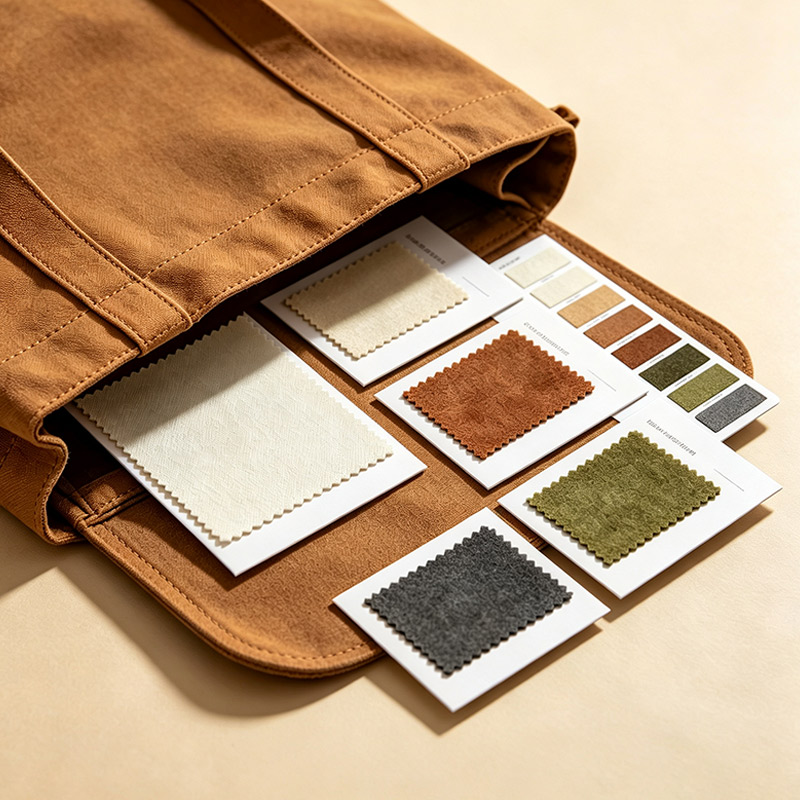
    When customizing bags, many B2B buyers focus solely on the exterior fabric while overlooking the lining selection. The lining not only determines the interior feel and aesthetics of the bag but also indirectly affects the product's durability, functionality, and overall perceived quality. As a professional bag manufacturer, this article systematically outlines 16 types of lining materials suitable for bags, covering Twill Nylon, Peach Skin, Shantung, Suede, Linen, and more industry-standard options. This guide will help B2B buyers make optimal decisions based on product positioning, budget, and functional requirements.   Part 1: 16 Types of Lining Materials 1. Twill Nylon Characteristics: Features a diagonal weave pattern, softer hand feel than plain weave, subtle sheen, understated luxury Advantages: Excellent abrasion resistance, tear-resistant, smooth hand feel Common Specifications: 210D, 420D Twill Nylon   2. 210D Nylon Ripstop / Grid Characteristics: Reinforcement threads woven in both warp and weft directions, creating a grid or crosshatch pattern Advantages: Superior tear resistance; even if damaged, the tear will not spread easily Common Specifications: 210D, 420D Ripstop Nylon   3. Nylon Taffeta Characteristics: Plain weave structure, smooth surface with bright luster Advantages: Wrinkle-resistant Common Specifications: 190T, 210T, 230T, 290T   4. Polyester Taffeta Characteristics: Plain weave structure, less lustrous than nylon taffeta, produces a subtle "rustling" sound when rubbed Disadvantages: Prone to wrinkling Common Specifications: 170T, 190T, 210T, 230T, 240T, 290T   5. Polyester Twill Taffeta Characteristics: Modified from standard taffeta with a twill weave structure, soft luster Advantages: Softer hand feel, better drape, enhanced perceived quality Common Specifications: 210T, 230T Polyester Twill Taffeta   6. Polyester Pongee Characteristics: Woven with polyester DTY textured yarn, flat and smooth surface with matte finish Advantages: Soft and smooth hand feel, good breathability, softer than taffeta Common Specifications: 190T, 210T, 240T, 300T Difference from Taffeta: Pongee is softer, matte, with slight elasticity; taffeta is stiffer and more lustrous   7. Peach Skin / Microfiber Peach Characteristics: Woven from ultra-fine fibers, brushed to create a short pile of approximately 0.2mm on the surface Advantages: Delicate and soft hand feel, comfortable suede-like texture, elegant appearance, warm touch   8. Shantung Characteristics: Traditionally a silk fabric; in bag manufacturing, typically polyester imitation silk is used, with slight slub texture on the surface Advantages: Genuine silk Shantung offers premium quality, natural luster, and smooth hand feel. Polyester Shantung has a matte surface with a slightly dry touch Note: Genuine silk Shantung is expensive and generally not used for bag linings   9. Satin / Five-Harness Satin Characteristics: Satin weave structure, high surface luster, smooth hand feel Advantages: Luxurious appearance, silky touch, enhances product quality Note: Average abrasion resistance; not suitable for high-friction applications   10. Polyester Mesh Characteristics: Mesh structure with excellent breathability Advantages: Lightweight, breathable, allows visibility of interior items Note: Generally not used as a primary structural lining; more commonly used for inner pockets or compartment dividers   11. Cotton Lining Characteristics: Natural fiber, moisture-absorbing and breathable Advantages: Eco-friendly, skin-friendly, static-free Disadvantages: Prone to wrinkling, shrinkage, stains easily, higher price   12. Ramie Ramie is the strongest natural fiber, even surpassing cotton and linen, with a silk-like luster and excellent moisture absorption and breathability. As a bag lining, it is a niche but highly differentiated choice. Characteristics: 100% natural plant fiber, long and tough fibers, natural silk-like sheen on the surface Advantages: Eco-friendly and biodegradable, high strength, moisture-wicking, antibacterial and mildew-resistant, heat-resistant Disadvantages: Stiff hand feel, prone to wrinkling, higher price, average color fastness, inferior abrasion resistance to synthetic fibers Recommendation: Often blended with cotton (e.g., 55% Ramie + 45% Cotton) to improve hand feel and wrinkle resistance; suitable for pairing with natural exterior materials such as canvas and linen   13. Linen Linen is a time-honored natural fiber renowned for its excellent breathability and unique rustic texture. As a bag lining, it is a niche but highly stylized choice, particularly suited for products pursuing natural aesthetics and sustainable concepts. Characteristics: 100% natural plant fiber, natural texture and subtle luster on the surface, presenting a rustic premium feel Advantages: Eco-friendly and biodegradable, excellent moisture absorption and breathability, antibacterial and odor-resistant, high strength, good heat dissipation, cool touch Disadvantages: Stiff hand feel, prone to wrinkling and difficult to recover, average abrasion resistance, high shrinkage rate, higher price, average color fastness Recommendation: Often blended with cotton to improve softness and wrinkle resistance; pre-shrinking treatment required before use; recommend natural colors such as raw and beige to minimize dyeing and fading issues   14. Bamboo Fiber Bamboo fiber has become a popular choice in the eco-friendly bag sector in recent years. Sourced from renewable bamboo, which grows rapidly without pesticides or chemical fertilizers, it has an extremely low carbon footprint. Its natural antibacterial properties and soft hand feel make it an ideal lining that combines environmental sustainability with functionality. Characteristics: 100% natural renewable fiber, contains "bamboo kun" antibacterial components, soft and smooth touch Advantages: Eco-friendly and biodegradable, natural antibacterial and bacteriostatic properties, superior moisture absorption and breathability to cotton, soft hand feel, UV-resistant, excellent deodorizing properties Disadvantages: Low wet strength (strength decreases when wet), average abrasion resistance, higher price, prone to shrinkage, average dark color fastness Recommendation: Can be blended with cotton or polyester to improve wet strength and abrasion resistance; pre-shrinking treatment required; recommend light colors   15. Suede Suede is a leather material with a fine, velvety nap on the surface, divided into genuine suede (reverse side of cowhide, sheepskin, or pigskin) and synthetic suede (microfiber synthetic suede). As a bag lining, it is renowned for its luxurious touch and excellent protective properties, making it a classic choice for high-end bags. Characteristics: Surface covered with fine, dense nap, soft and warm hand feel, extremely high visual and tactile quality Advantages: Luxuriously soft touch, excellent slip resistance (prevents items from sliding inside the bag), strong cushioning and protection (protects delicate items such as jewelry, eyewear, and electronics), genuine suede versions offer excellent durability, enhances overall product value Disadvantages: Genuine leather is expensive, easily attracts dust and stains, dark colors prone to color bleeding, hardens and deforms when wet, relatively heavy weight, synthetic suede has poor breathability Recommendation: Genuine suede is suitable for premium positioning products; mid-range products can use microfiber synthetic suede to reduce costs; not suitable for large-area use in daily backpacks or outdoor bags; light-colored items should avoid direct contact with dark suede to prevent dye transfer   16. Sheepskin / Lambskin Characteristics: One of the softest leather types, fine pores, lightweight hand feel Advantages: Extremely soft touch, natural and elegant luster, lighter than cowhide Disadvantages: Poor abrasion resistance, easily scratched, higher price, requires careful maintenance Note: Sheepskin lining is more suitable for small-area applications or light-duty bags     Part 2: Functional Lining Materials 1. Waterproof Lining Process: Base fabric of taffeta, pongee, or oxford cloth with PA/PU/PVC coating treatment Advantages: Waterproof, moisture-proof, mildew-resistant   2. Anti-Static Lining Process: Conductive fibers added during weaving or finishing Advantages: Prevents static electricity from attracting dust, protects electronic products   3. Flame Retardant Lining Process: Post-finishing impregnation method, primarily using phosphorus-based or phosphorus-nitrogen synergistic flame retardants, applied through padding-drying-baking to fix the flame retardant on the fiber surface or within the fiber Characteristics: Achieves specific fire protection standards through the above flame retardant treatment   4. Anti-Bacterial Lining Anti-bacterial lining is a specialty lining that incorporates antibacterial components during fiber weaving or finishing, giving the fabric the ability to inhibit bacterial growth and reduce odor. Characteristics: Through fiber modification or finishing processes, the fabric is endowed with lasting antibacterial properties. Common antibacterial components include nano silver ions, zinc ions, copper ions, quaternary ammonium salts, and natural bamboo kun extracts. Advantages: Effectively inhibits the growth of common pathogenic bacteria such as E. coli and Staphylococcus aureus, reduces odors caused by sweat or food residue inside the bag, extends the bag's cleaning cycle, enhances the product's hygiene and safety image, some components also offer mildew-resistant properties Disadvantages: Antibacterial effect gradually diminishes with washing (particularly noticeable in post-finishing types), silver ion-containing products have higher costs, some chemical antibacterial agents raise skin sensitivity concerns, need to confirm whether antibacterial agents comply with OEKO-TEX or REACH environmental standards     Part 3: How to Select Lining Based on Bag Type? Bag Type Recommended Lining Rationale Business Laptop Backpack Twill Nylon, Pongee, Anti-Static Lining Abrasion-resistant, anti-static protection for electronics, good hand feel, professional aesthetic Outdoor Hiking Backpack 210D Nylon Ripstop, Nylon Oxford, Waterproof Coated Lining Tear-resistant, waterproof, durable, lightweight Fashion Women's Bag Peach Skin, Shantung, Satin, Sheepskin Premium touch, enhances quality, elegant visual appeal Cosmetic / Toiletry Bag Peach Skin, Polyester Taffeta, Nylon Taffeta, Bamboo Fiber, Anti-Bacterial Lining Soft, beautiful, easy to clean, good waterproofing Student Backpack Pongee, Polyester Twill Taffeta Cost-effective, durable, rich colors, eco-friendly concept popular Tool Bag / Industrial Bag Nylon Oxford, Waterproof Coated Lining, Flame Retardant Lining Abrasion-resistant, waterproof, easy maintenance, high safety Eco-Friendly Concept Bag Cotton Lining, RPET Recycled Polyester, Recycled Nylon, Bamboo Fiber, Ramie, Linen Eco-friendly, skin-friendly, sustainable, brand differentiation Trolley Case / Travel Bag Nylon Oxford, Polyester Taffeta, Pongee Abrasion-resistant, lightweight, easy maintenance, controllable cost Sports / Gym Bag Polyester Mesh, Pongee, Waterproof Coated Lining, Bamboo Fiber Breathable, quick-drying, lightweight, antibacterial and deodorizing Children's Bag / Maternity Bag Cotton Lining, Bamboo Fiber, Peach Skin, Anti-Bacterial Lining Skin-friendly and safe, antibacterial, soft, eco-friendly Jewelry / Accessory Storage Bag Suede, Peach Skin, Satin Cushioning protection, slip-resistant, luxurious touch, scratch-resistant Evening Bag / Clutch Satin, Sheepskin, Shantung, Peach Skin Luxurious luster, premium quality, lightweight and elegant Photography Equipment Bag Anti-Static Lining, Nylon Taffeta, Waterproof Coated Lining Protects precision equipment, moisture-proof, anti-static Diving / Water Sports Bag Recycled Nylon, Waterproof Coated Lining, Nylon Taffeta Quick-drying, eco-friendly, durable Military / Tactical Bag 210D Nylon Ripstop, Nylon Oxford, Flame Retardant Lining, Anti-Bacterial Lining Extreme durability, tear-resistant, safety compliant High-End Leather Bag Shantung, Sheepskin, Suede, Cotton Lining Matches genuine leather exterior, unified texture, premium positioning Foldable Storage Bag / Lightweight Bag Nylon Taffeta, Polyester Taffeta, RPET Ultra-lightweight, easy to fold, low cost, eco-friendly option Shoe Bag / Breathable Compartment Polyester Mesh, Pongee Breathable, visible, lightweight, mildew-resistant Gift Bag / Promotional Bag Polyester Taffeta, Pongee, RPET Low cost, rich colors, printable logo, eco-friendly selling point Summer Casual Bag / Beach Bag Linen, Ramie, Cotton Lining, Nylon Taffeta Breathable and cool, natural texture, moisture-wicking     Part 4: Key Considerations When Selecting Lining 1. Product Quality Positioning The lining is the material that users directly touch every time they open the bag. Its tactile quality directly determines the product's first impression and perceived value. Premium Luxury Touch: Consider Peach Skin, Shantung, Satin, Sheepskin, Suede. Mid-Range Business Touch: Consider Twill Nylon, Polyester Twill Taffeta, Pongee. Mass Market: Consider 210D Polyester, Polyester Taffeta. Natural Rustic Touch: Choose Cotton Lining, Linen, Ramie, Bamboo Fiber — suitable for natural aesthetics and sustainable concepts. Tip: The lining's tactile quality should harmonize with the exterior material's texture. For example, genuine leather exteriors pair with sheepskin or Shantung lining; canvas exteriors pair with cotton or linen lining; nylon exteriors pair with nylon-based linings.   2. Product Functional Requirements Based on the bag's usage scenario and target users, functional lining selection is crucial: Waterproof & Moisture-Proof Lining: Outdoor bags, cooler bags, tool bags, and rain gear bags require waterproof coated lining (PA/PU/PVC coating). Anti-Static Lining: Laptop bags, camera bags, and precision instrument bags must use anti-static lining to prevent static electricity from attracting dust or damaging electronic components. Flame Retardant Lining: Industrial tool bags, firefighter equipment bags, and special operation bags must meet specific flame retardant standards. For these products, we recommend considering flame retardant requirements for both the exterior and interior materials. Anti-Bacterial & Deodorizing Lining: Sports bags, gym bags, and maternity bags can use bamboo fiber or antibacterial-treated lining to inhibit bacterial growth and reduce odors. Breathable & Visible Lining: Sports bags, shoe bag compartments, or pet carrier bags can use polyester mesh, which is breathable and allows easy viewing of interior items.   3. Cost Budget Low-Cost Range: Polyester Taffeta (170T–210T), Pongee (190T–210T), Polyester Mesh — suitable for mass market, promotional items, student backpacks. Mid-Cost Range: Nylon Oxford (210D–420D), Twill Taffeta, Satin, Nylon Taffeta, 210D Nylon Ripstop — suitable for mid-range market, business bags, outdoor bags. High-Cost Range: Twill Nylon, Peach Skin, Shantung— suitable for mid-to-high-end market, fashion women's bags, premium travel bags. Ultra-High-Cost Range: Suede, Sheepskin, Genuine Silk Shantung — suitable for luxury market, high-end customization.   Conclusion Though small, the lining directly impacts the overall quality and user experience of a bag. As a professional bag OEM/ODM manufacturer, we have an extensive lining resource library. We can recommend the most suitable lining solution based on your product positioning, budget, and functional requirements. Whether you're pursuing cost-effectiveness with Pongee, premium quality with Peach Skin and Shantung, or environmental sustainability with RPET and Recycled Nylon , we can provide you with one-stop customization services. If you are looking for a reliable bag customization partner, please contact us for samples and quotations.   Author        

Contact Us
Address : Unit 905, Block B, Jinri Building, No. 88 Anling Second Road, Huli District, Xiamen, Fujian, China
Get in Touch

Please Read On, Stay Posted, Subscribe, And We Welcome You To Tell Us What You Think.

Linkedin WhatsApp Facebook instagram

Copyright @2024 Synberry Bag & Package Products Co.,Ltd All Rights Reserved. Network Supported

Sitemap / Blog / Xml / Privacy Policy

Contact Us

Contact Us
Hi there, I hope you're having a lovely day! Thank you for reaching out to us at Synberry --- where 30 years of craftsmanship meets everyday style. With three decades of expertise in bag manufacturing, we don't just make bags --- we build trust, stitch by stitch. Whether you're looking for timeless design, durable quality, or a partner who truly understands your needs,feel free to talk to us.
submit

home

products

WhatsApp

Contact Us