china backpack manufacturer
Home

OEM Bag Manufacturing

OEM Bag Manufacturing

  • Edge Painting & Durability: How They Affect the Quality Grade of Leather Bags
    Edge Painting & Durability: How They Affect the Quality Grade of Leather Bags Jun 23, 2026
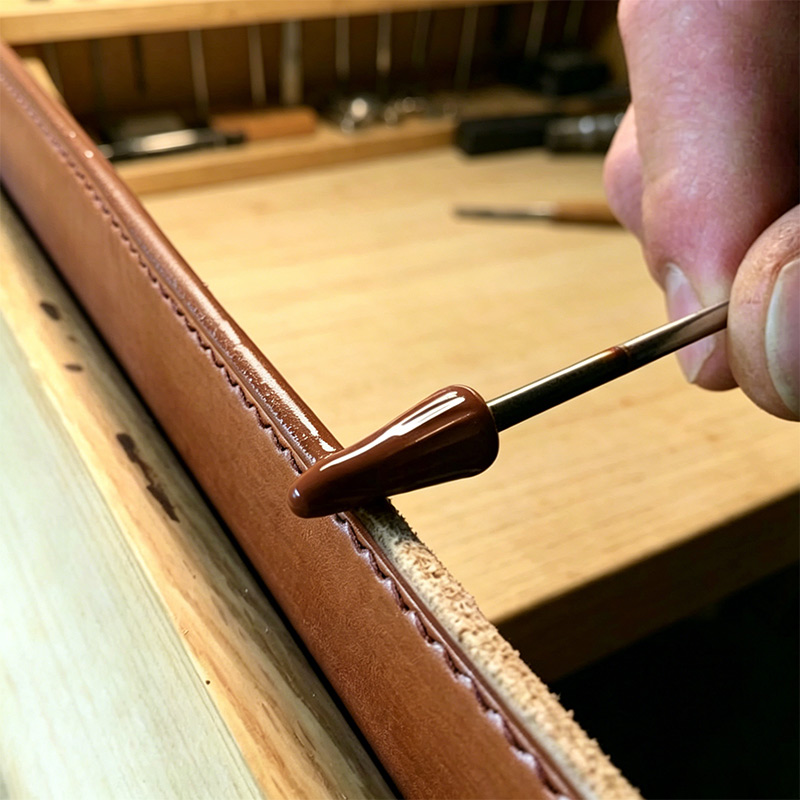
    *A Must-Read Edge Finishing Guide for B2B Buyers Selecting Leather Bag Manufacturers*   In leather bag manufacturing, edge painting (also known as edge coating or edge finishing) is one of the key details that determines the final product grade. A smooth, evenly colored edge that resists cracking and peeling can often command a 20%–30% price premium; conversely, rough or cracked edge treatment, even on premium leather, will directly downgrade a brand's positioning. For B2B buyers, understanding the differences in edge finishing techniques is an essential skill for screening quality leather bag OEM/ODM factories and controlling bulk production quality.   1. What Is Edge Painting? Edge painting, also referred to as edge coating, edge dyeing, or waxed edge finishing, is the process of treating the exposed cut edges of leather with a series of steps including sanding, priming, painting, and polishing to achieve a smooth, rounded, and color-coordinated finish.   Three Core Functions of Edge Painting Function Specific Performance Impact on Product Grade Protects Leather Fibers Seals the exposed cross-section after cutting, preventing moisture and dust from penetrating and causing fiber loosening Extends product lifespan and reduces after-sales complaints Enhances Visual Appeal Smooth, rounded edges with uniform color create a cohesive visual effect with the leather surface Directly determines the "first-impression quality" and influences end-market pricing Strengthens Structural Integrity Multiple layers of edge paint form a protective film, increasing edge abrasion resistance and tear strength Reduces edge damage during shipping and use, lowering return rates   2. Types of Edge Painting & Grade Comparison Based on process complexity and material quality, edge painting can be categorized into several grades. B2B buyers can use this framework to assess a factory's true craftsmanship level during factory audits or inspections.   Four Common Edge Painting Techniques Compared Technique Process Flow Finished Effect Durability Target Market Single-Layer Thin Coat Cut → apply one thin layer of edge paint → quick drying Fiber texture visible; slightly rough to the touch; prone to color inconsistency ★☆☆☆☆Prone to cracking and peeling Low-end market, promotional items Multi-Layer Sanded Edge Paint Cut → sand → paint → dry → sand → repeat 3–5 times Smooth, rounded edges with uniform color; no visible step marks ★★★★☆Resists cracking for 2–3 years under normal use Mid-to-high-end brands, premium leather bags Heat-Pressed Edge Paint(Ironed Edge) Apply paint → shape with high-temperature mold under pressure Extremely smooth, semi-circular arc; refined tactile feel ★★★★★Best abrasion resistance Luxury goods, high-end custom orders Hand-Waxed Edge Polish repeatedly with natural beeswax; no chemical edge paint used Natural leather luster; develops a patina over time ★★★★☆Requires periodic maintenance Vegetable-tanned leather, artisan/retro-style bags   3. Key Factors Affecting Edge Paint Durability Cracking and peeling of edge paint are among the most common after-sales issues for leather bags. The following five factors directly determine the lifespan of edge paint and are also the key areas B2B buyers should focus on during factory audits.   3.1 Edge Paint Material Quality Low-quality edge paint contains insufficient resin content, resulting in poor flexibility and susceptibility to brittle cracking in low temperatures. High-end factories typically use imported polyurethane (PU) edge paint or water-based eco-friendly edge paint, which offers excellent elasticity and adhesion.   3.2 Leather Thickness & Cutting Precision When leather is too thin (<1.0mm), the edge fibers lack sufficient support, causing the edge paint to peel off entirely. Inconsistent cutting or rough edges directly reduce the bonding surface area for the paint.   3.3 Sanding & Primer Treatment Inadequate sanding leads to weak adhesion between the paint and leather. Missing the primer (primer/base coat) step causes the edge paint to peel off in sheets when subjected to bending stress.   3.4 Drying Time Superior edge painting requires adequate natural drying. In conditions of high humidity or continuous rainy weather, insufficient drying time means solvents within the edge paint fail to evaporate completely. The surface may appear dry while the interior remains "dry outside, wet inside"—a hidden defect that inevitably leads to bubbling and cracking later. Machine drying should be avoided whenever possible. Leather contains substantial amounts of natural oils, moisture, and amino acids. Under high temperature and pressure, the leather may shrink, harden, or even deform, ultimately compromising product quality.   3.5 Usage Environment & Maintenance Areas subject to frequent bending (such as flap edges and handle attachments) place the greatest stress on edge paint. If end consumers expose the product to humid or high-temperature environments for extended periods, it will also accelerate the aging of the bag.     4. B2B Factory Audit: How to Assess Edge Painting Capability? Before partnering with a leather bag factory, B2B buyers can quickly evaluate its edge painting capabilities using the following methods: Request close-up photos of existing sample edges to check for bubbles, granules, color inconsistencies, or uneven thickness. Ask about the number of sanding steps: edge painting with fewer than 3 sanding cycles usually lacks durability. Perform a flex test: repeatedly bend the edge-painted area to observe whether cracks or peeling occur. Confirm whether the factory offers after-sales warranty terms, especially regarding responsibility for edge paint-related issues.   5. Edge Painting Strategy by Price Tier As a B2B buyer or brand owner, the choice of edge painting technique should align with product positioning, target retail price, and expected service life—avoiding both over-investment and insufficient quality. Product Positioning Recommended Edge Painting Fast Fashion / Promotional Single-layer thin coat or simplified multi-layer edge paint Mid-Range Brand Standard multi-layer sanded edge paint (3–4 layers) High-End / Luxury Heat-pressed edge paint or hand-waxed edge     6. FAQ Q1: Does the edge paint color have to match the leather surface exactly? A: Not necessarily. Common approaches include: ① Same-color edge paint (most conventional, creates a unified look); ② Contrasting edge paint (fashion-forward design, requires precise color matching); ③ Transparent edge paint (preserves the natural edge color of the leather, suitable for vegetable-tanned leather). The choice depends on the bag's design style.   Q2: Can cracked edge paint be repaired? A: Yes, it can be repaired locally, but the durability of repaired edge paint is usually inferior to the factory finish. For high-end products, it is recommended to replace the leather panel and re-apply the edge paint. B2B buyers should clarify after-sales responsibility for such issues in the contract.   Q3: How do environmental regulations affect edge paint materials? A: Regulations such as EU REACH and U.S. CA Prop 65 restrict heavy metals and phthalates in edge paint. Export orders must confirm that the factory uses compliant, eco-friendly edge paint and request relevant test reports.   Q4: Why do edge paint costs vary significantly between factory quotes? A: The main differences come from: ①Number of process cycles (single-layer vs. multi-layer); 2.Whether heat-pressing or hand-waxing is included; 3. Material loss rate (complex-shaped panels have higher edge paint loss). It is recommended to request itemized quotes from the factory to avoid hidden surcharges.   7. Conclusion Edge painting may seem like a small detail, but it is the "touchstone" of leather bag quality. For B2B buyers, mastering edge paint evaluation methods not only helps screen more reliable OEM/ODM partners but also provides leverage in product pricing and after-sales management. If you are looking for a leather bag manufacturer with mature edge painting capabilities, our team is ready to assist. We offer full-process OEM/ODM services—from material selection and sample confirmation to bulk production—supporting multi-layer sanded edge paint, heat-pressed edge paint, and other advanced techniques. Let us help your brand create premium leather bags that stand up to the closest inspection.     Author        
  • 6 Hidden Costs in Custom Bag Sourcing
    6 Hidden Costs in Custom Bag Sourcing Jun 10, 2026
    The quoted price per unit is never the total cost of ownership. If you source custom bags for retail, commercial campaigns, or corporate gifting, you have likely experienced this: the unit price looked competitive, but by the time the goods landed in your warehouse, your margin had vanished. After 30+ years in OEM/ODM bag manufacturing, we’ve seen how "hidden costs" erode budgets and damage buyer-supplier relationships. Here are the six most common traps—and how to avoid them.   1. Sample Iteration Costs: The "Death by a Thousand Revisions" Most buyers budget for one or two prototypes. In reality, achieving the right shape, material hand-feel, color match, and functionality often takes 3–5 rounds—sometimes more for complex constructions like molded backpacks or multi-compartment travel bags. The hidden cost:  Each time sample modification carries below costs: Sample labor and material charges Shipping costs (international couriers such as FedEx, UPS, DHL) Internal design time and opportunity cost Delayed market entry How to avoid it:  Before committing to sampling, invest time in thorough alignment with your bag manufacturer on materials, workmanship, structure, and quality requirements. The goal is to realize your design intent as closely as possible in the very first sample, keeping any subsequent revisions to minor details only. Should you have concerns about materials or colors, confirm fabric swatches or color cards before sampling begins. With this preparatory work done properly, you can typically reduce sample rounds by up to 60%.   2. Material MOQ & Dead Stock Liability You need 500 bags, but your supplier’s leather vendor requires a 600yards minimum. Your lining fabric MOQ is 1,000 yards. Your custom zipper puller requires a 2,000-piece per mold. The hidden cost: You either absorb the excess material cost into your 500-unit order (inflating unit cost by 20–40%), or you pay for dead stock that sits in the factory’s warehouse. How to avoid it: Choose a manufacturer with consolidated material purchasing power and established vendor relationships. Bag manufacturer’s volume across multiple clients allows them to get lower material MOQ sometime or just to pay a small dyeing fee for requested colors and absorb regularly used material into their inventory pool, reducing your exposure.     3. Tooling, Dies, and Mold Amortization Custom bags often require: Die-cutting dies for unique panel shapes Embossing plates for logos Woven webbing with customized logos Metal patch with customized logo Injection molds for custom buckles  Metal molds for customized zipper pullers The hidden cost: Many factories’ quotes did not show tooling or only indicate after unit price confirmed and PO placed.  How to avoid it: Clarify tooling fee upfront, ask if product unit price including amortization of tooling, if not ask supplier to list for molding and plates fee at initial quotation stage when customized logos exist.   4. Product Compliance At manufacturing side, when they confirm products can be compliance with REACH, CPSC, CA Prop 65, it doesn’t naturally mean that they would provide testing report. In fact, unless brands required beforehand, manufacturers normally do not consider product testing fee into product quotation, testing is either done by clients or suppliers send samples to third party labs but testing bill is paid by buyers.  How to avoid it: Partner with a manufacturer that understands destination-market compliance before production begins, clarify which party will be taking care of testing and testing bills.    5. Shipping Terms and Logistics Different shipment terms can generate unexpected costs that may not be immediately apparent. EXW — Ex Works Definition: The seller completes delivery by making the goods available at their premises (factory, warehouse, or workshop). From that point onward, the buyer assumes all costs and risks. The buyer must independently coordinate with freight forwarders, customs brokers, and transport carriers, resulting in substantial time investment and coordination overhead. FOB — Free On Board The seller delivers the goods to the designated port of shipment and loads them onto the vessel nominated by the buyer. Risk and all subsequent transportation costs transfer to the buyer once the goods cross the ship's rail (or are loaded on board). Under FOB terms, the buyer typically arranges the vessel booking. If supplier delays necessitate rebooking or cause container detention, associated demurrage and detention charges are for the buyer's account. CIF — Cost, Insurance and Freight Definition: The seller charters the vessel, pays freight to the destination port, and arranges marine insurance with minimum coverage. However, risk transfers to the buyer the moment the goods are loaded aboard the vessel at the port of shipment. DDU — Delivered Duty Unpaid Definition: The seller transports the goods to the buyer's specified destination (e.g., warehouse), but does not handle import customs clearance or duty payment. The buyer is responsible for import clearance and all applicable taxes. As DDU/DAP excludes customs duties, buyers unfamiliar with HS code classification may encounter unexpectedly high tariffs or inspection costs. DDP — Delivered Duty Paid Definition: The seller assumes all costs and risks to deliver the goods to the buyer's designated location, including export clearance, international freight, import clearance, and all customs duties and taxes. Should the supplier under-declare values or misclassify HS codes to minimize duties, the buyer—as the legal importer—may face tax retroactive assessments and compliance risks.   6. Rework, Recall, and Reputation Damage This is the cost no one puts in the RFQ, but it is the most expensive. If your bulk order arrives with color discrepancies, zipper failures, or incorrect logo placement, your options are limited: Ship anyway and damage your brand reputation Rework locally at 3–5 times of the manufacturing cost Return to factory (expensive, slow, and sometime logistically impossible) Scrap and reproduce (catastrophic for timelines and budgets) The hidden cost: Beyond the direct financial hit, there is the cost of lost shelf space, disappointed clients, and damaged supplier trust. How to avoid it: Invest in prevention, not correction. Therefore, find with the right bag manufacturer is the most important decision before you move for your project. Then a multi-stage QC system—including material incoming inspection, in-line process verifications along each procedure, and pre-shipment 100% AQL inspection —is designed to catch defects before they leave the factory floor.  The Real Math: Total Cost of Ownership  Cost Category Typical "Hidden" Impact Ideal Approach Sample iterations $500–$2,000 + lost time Structured development, fewer rounds Material MOQ surplus 20–40% unit cost inflation Pooled purchasing, lower MOQs Tooling amortization Hidden in unit price Transparently shared Compliance & logistics $0.50–$2.00 per unit surprise Pre-planned, destination-ready Rework / recall Potentially catastrophic Multi-stage QC, prevention-first   Final Thought The lowest unit price often carries the highest total cost. Smart B2B buyers evaluate suppliers on landed cost predictability and risk mitigation, not just the number on the quotation sheet. At SYNBERRY, we believe transparency is a competitive advantage. Every quotation we issue include clear breakdown of molding, product unit cost, logistic options—so you can plan accurately and protect your margin.   Don’t let hidden costs eat your margin. Request a transparent TCO quote for your next custom bag project. We’ll map out the full cost picture before you commit to production.   Author        
  • Bag Factory Sampling Process: A Complete Guide for B2B Buyers
    Bag Factory Sampling Process: A Complete Guide for B2B Buyers Jun 09, 2026
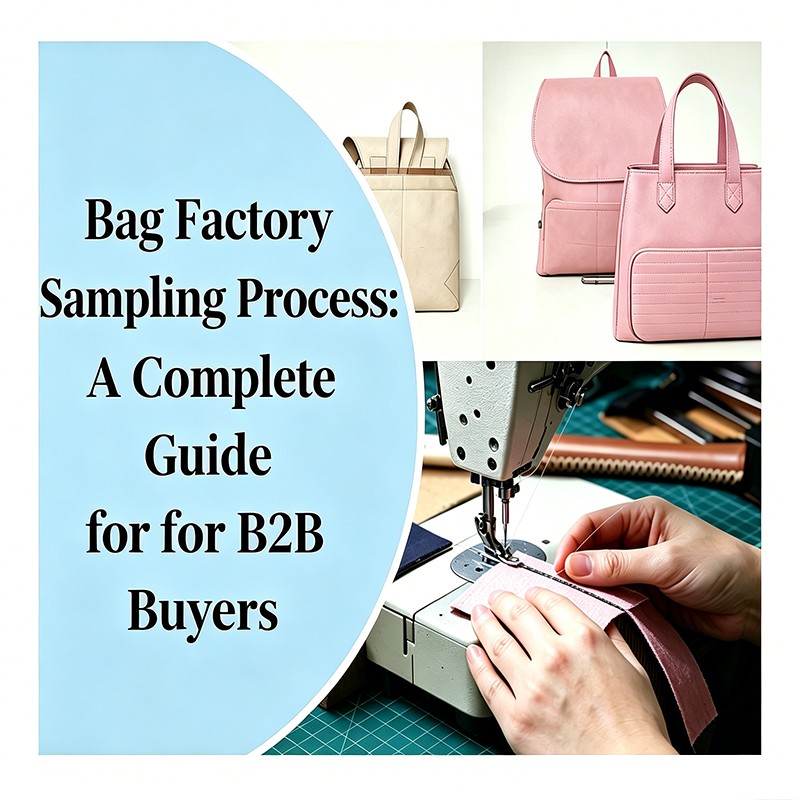
    For brands and wholesalers planning to customize bag products, understanding the professional bag factory sampling process is the key to ensuring bulk production quality and shortening development cycles. This article breaks down every step from design drawings to confirmed samples, helping you efficiently advance your OEM/ODM bag customization projects.   I. Pre-Sampling Requirements Communication & Documentation Before sampling officially begins, clear requirements communication is the foundation for avoiding repeated revisions and controlling development costs. As a professional bag manufacturer, we recommend clients prepare the following materials before sampling: Documentation Type Specific Content Remarks Physical Sample Having a physical sample as reference is ideal; it provides the clearest quality benchmark for the factory. If no physical sample is available, please refer to the process description below. Design Drawings 1) Bag dimensions, structure, and functional design; 2) Fabric material details (e.g., 840D nylon, canvas, genuine leather, or vegan leather), color, and thickness; 3) Accessory requirements: zipper brand (e.g., YKK, SBS), buckle type (e.g., FIDLOCK buckle, ITW Nexus), hardware color; 4) Craft details: print/embroidered logo placement, stitching technique (e.g., standard stitching, or unconventional processes like HOT SEAL). 1) PDF/AI files preferred; experienced factories can also proceed from hand sketches or concept drawings. 2) Provide physical color swatches or Pantone codes. 3) Premium accessories like YKK zippers or FIDLOCK buckles often require significantly longer lead times. 4) Consider load-bearing requirements. Quantity & Purpose Sample quantity, estimated final order volume, target market. Influences sampling strategy and quotation approach. Product Positioning For niche or startup brands, providing product grade positioning and target audience positioning is recommended. This ensures both parties share a consistent understanding of product requirements from the outset. Testing or Compliance Requirements If testing or compliance requirements exist, they must be clearly stated at the initial development stage. So that sample materials and process design can meet requirements.   II. Six Core Stages of the Sampling Process Stage 1: Drawing Review & Process Evaluation (1–3 Business Days) Upon receiving design materials, the factory technical team conducts a Design for Manufacturing (DFM) feasibility assessment. Key review areas include: Whether material requirements are clear and specific. Often, clients request "Saffiano Leather," but this term only describes the surface texture (crosshatch pattern) and does not indicate actual material standards. Leather grades vary widely, with prices potentially ranging from $2/yd to $10/yd or higher. Whether manufacturing processes align with factory capabilities. Whether any special processes require mold development. Whether design detail requirements can be scaled for mass production. This stage may generate process modification recommendations for client confirmation.   Stage 2: Material Preparation & Procurement (3–7 Business Days) Based on the sample or design drawings, the factory procures materials, including: Outer fabric, lining, and special materials such as RPET or organic cotton. These materials are not as widely available as conventional options, so buyers are advised to request factory color swatches during the initial communication phase (Stage I). Zippers, webbing, buckles, and hardware accessories. If branded zippers or buckles like Lambo/Fidlock are used, material procurement cycles will be longer. Logo production or mold development according to process requirements.   Stage 3: Pattern Making & Prototype Construction (3–7 Business Days) Based on the physical sample or design drawings, the sampling room master first creates a PAPER PATTERN. Experienced pattern makers can often construct a 3D product mockup from the paper pattern alone. The quality of the product silhouette depends heavily on this paper pattern. Using the finalized paper pattern, fabric is cut at 1:1 scale. Logo production according to process requirements (e.g., silk screen, heat press, or embroidery). Assembly of inner pockets, zippers, buckles, straps, and other accessories. Completion of overall stitching.   Stage 4: Internal Sample Review & Corrections (1–2 Business Days) After the initial sample is completed, a professional bag manufacturer does not immediately ship it to the client. Instead, an internal three-step review is conducted: Sample maker self-inspection: Appearance and dimensional checks. Joint review by product engineers and pattern makers: When a new product is developed, professional factories conduct product evaluation at this stage to assess potential process difficulties and structural rationality, ensuring mass production feasibility while guaranteeing that future bulk product quality will match the sample. Internal product testing: Professional bag manufacturers perform much work that clients may not be aware of. For example, after sample completion, the factory conducts basic physical tests such as load-bearing tests (particularly for straps and handle stress points), zipper smoothness, and open-close cycle tests. Stage 5: Client Confirmation & Feedback Collection After receiving the sample, clients are advised to verify the following dimensions: Verification Item Inspection Points Common Issues Appearance & Dimensions Consistency with drawings, proportional harmony. For elastic fabrics such as quilted cotton materials, the high stretchability of finished fabric can lead to discrepancies in how both parties interpret specifications. Material Texture Leather hand feel and thickness against expectations; hardware thickness, weight, and texture against expectations. Color differences may occur when confirming colors via email-sent images due to screen color variations. Function Testing Zipper smoothness, carrying comfort, etc. Discrepancies between client-expected zipper smoothness and actual sample performance. Craft Details Stitch density, logo process refinement. Potential differences between initial handmade samples and mass production batches.   Stage 6: Pre-Production Sample (PP Sample) Confirmation (for Bulk Orders) Once the client confirms the initial sample and places a formal order, the factory will produce a pre-production sample using bulk materials and molds: Validating mass production process stability. Confirming consistency between bulk colors and sample colors. Serving as the standard reference for bulk production and final inspection.   III. Key Factors Affecting Sampling Cycle & Cost Factor Impact on Cycle Impact on Cost Product Design Complexity Unconventional structures and special opening designs — such as the fully open-top cosmetic bags and backpacks that have been popular in recent years, which require mold-formed wire-frame supports inside the bag top — increase sampling cycles. Higher process difficulty requires more labor hours, resulting in increased sample fees. Main Material Availability Imported or specially customized fabrics take longer than conventional stock fabrics. Imported/custom fabrics incur additional costs; conventional stock materials involve limited expenses. Hardware Customization When hardware buckles or zipper pulls with client logos require mold development, the mold cycle is generally 10–15 days. Mold fees are listed separately or incorporated into sample fees. Logo Process Type Embroidery requires pattern development, silk screen requires mesh preparation, and hot stamping requires plate making — generally 3–5 days production time. Embroidery pattern fees, silk screen mesh fees, and heat press mold fees are incurred. Number of Revisions Each round of revision adds 3–5 days. Major revisions may generate secondary sample fees.   IV. How B2B Buyers Can Collaborate Efficiently with Bag Factories on Sampling 1.Provide complete documentation at once: Avoid fragmented information transfer that may lead to confusion or misinterpretation.   2. Define clear priorities: Clearly indicate which points are mandatory requirements and which areas the factory can self-correct or optimize during sampling. Clear boundaries enable both product quality and cost to reach optimal levels.   3. Maintain revision records: Document each round of modifications via email or documentation to prevent version confusion.   4. Conduct photo or video call sample verification: Before shipping the sample, preliminary confirmation can be made through clear multi-angle photos and videos to ensure no major errors exist before dispatch — saving time and reducing unnecessary expenses.   5. Confirm bulk standards in advance: During sample confirmation, clearly define acceptance standards (required AQL level). For components with special requirements — such as rainbow-film zippers requiring >1,000 open-close cycles without color fading — establish standards before bulk production to reduce subsequent disputes.   V. FAQ: Common Questions About Bag Customization Q1: Can we proceed with sampling if we have no design drawings but have a physical sample or just an idea? Absolutely. Providing a physical sample to the factory is ideal. The factory can perform reverse engineering based on the physical sample, disassembling and analyzing the structure to replicate and reproduce it — this is the most commonly adopted model by major brands when conducting OEM bag production. For some startup brands or small buyers who may only have concepts and preliminary ideas without physical samples or standardized design drawings, ODM services are available. The factory provides proposals for the client to evaluate and select.   Q2: Is the sampling fee refundable? Most factories adopt an "order offset" model — when the bulk order reaches the agreed quantity (e.g., 5,000+ pieces), the sampling fee is fully deducted from the order payment.   Q3: How many color samples can be produced for one style? For the first sample, it is recommended to produce one primary color first. After sample confirmation, additional colorways can be added. This approach enables more efficient sample receipt and reduces unnecessary costs from re-sampling all colorways simultaneously.   Q4: Will there be differences between the sample and final bulk production? Many factories explain that handmade samples are completed independently by sampling room masters with superior craftsmanship, while bulk production is assembly-line work with dedicated personnel for each process, resulting in quality differences. However, based on our 30+ years of production experience, if a factory has clear quality standard guidelines and consistently enforces them over the long term, there should be no visible difference between samples and bulk goods.   Conclusion: Choose a Professional Bag Manufacturer and Make Sampling a Preview of Bulk Quality Sampling is not simply "making a sample." It is the core stage of the entire OEM/ODM customization process for validating design feasibility and aligning quality standards between both parties. An experienced bag factory can anticipate bulk production risks during the sampling phase, helping clients reduce costs and enhance product competitiveness through process optimization recommendations. If you are looking for a reliable bag customization partner, welcome to contact our business team for detailed sampling plans and quotations. Whether it is Nylon Backpack OEM, Premium Leather Handbag OEM, or Elegant Cosmetic Pouch Manufacturing, we can provide worry-free OEM services that meet your expectations.   Author        

Contact Us
Address : Unit 905, Block B, Jinri Building, No. 88 Anling Second Road, Huli District, Xiamen, Fujian, China
Get in Touch

Please Read On, Stay Posted, Subscribe, And We Welcome You To Tell Us What You Think.

Linkedin WhatsApp Facebook instagram

Copyright @2024 Synberry Bag & Package Products Co.,Ltd All Rights Reserved. Network Supported

Sitemap / Blog / Xml / Privacy Policy

Contact Us

Contact Us
Hi there, I hope you're having a lovely day! Thank you for reaching out to us at Synberry --- where 30 years of craftsmanship meets everyday style. With three decades of expertise in bag manufacturing, we don't just make bags --- we build trust, stitch by stitch. Whether you're looking for timeless design, durable quality, or a partner who truly understands your needs,feel free to talk to us.
submit

home

products

WhatsApp

Contact Us